India, IOM discuss global migration trends and expanding mobility opportunities
Synopsis
IOM Director General Amy Pope's India visit this week brought high-level talks at the MEA and the Labour Ministry, spotlighting India's push to formalise ethical recruitment, secure skills recognition, and shape regular migration corridors — an agenda that could directly affect millions of Indian workers seeking overseas opportunities.
Key Takeaways
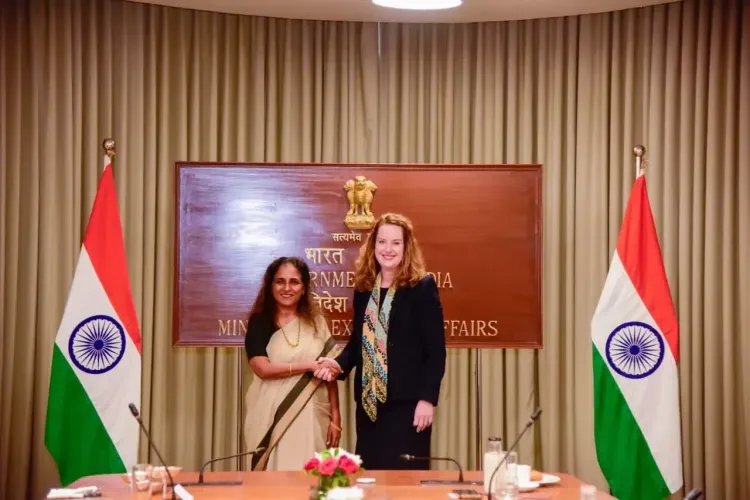
India and IOM Director General Amy Pope held migration talks in New Delhi on 16 October 2026 , hosted by MEA Secretary Sripriya Ranganathan .
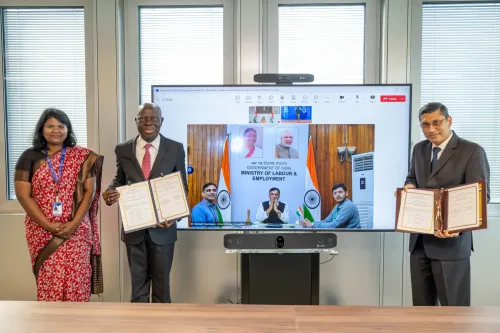
Amy Pope separately met Union MoS for Labour Shobha Karandlaje on 15 October to discuss ethical recruitment, skills recognition, and regular labour pathways.
Pope visited Chennai to meet workers supported by IOM's Mobile Worker Resource Centres , backed by private sector partners.
India and IOM had earlier met at IMRF2026 in New York in May , focusing on the Global Compact for Migration (GCM) implementation.
The engagements reflect India's strategic push to formalise and diversify global migration pathways for its large working-age population.
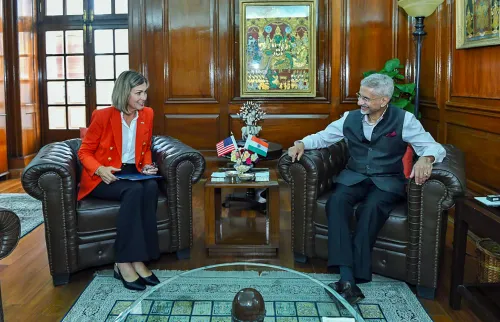
India and the International Organisation for Migration (IOM) on Friday, 16 October 2026, held high-level discussions on global migration and mobility trends, with a focus on identifying and expanding opportunities for Indian workers and migrants in an evolving international landscape. The talks took place in New Delhi during a meeting between Secretary (CPV and OIA) in the Ministry of External Affairs (MEA), Sripriya Ranganathan, and IOM Director General Amy Pope.
Key Discussions at the MEA Meeting
The Ministry of External Affairs confirmed the meeting on its official X account, noting that the two sides discussed 'global migration and mobility trends and ways of expanding India's opportunities in this situation.' The engagement signals India's continued intent to position itself as a proactive voice in shaping global migration governance rather than merely responding to external frameworks.
This comes amid growing international demand for skilled Indian workers and India's ongoing push to formalise and diversify labour migration pathways — a priority that has gained urgency as demographic pressures mount in ageing economies across Europe and the Gulf.
Labour Cooperation on Ethical Recruitment and Skills Recognition
A day earlier, on Thursday, 15 October, IOM Director General Amy Pope met Union Minister of State for Labour and Employment Shobha Karandlaje in New Delhi. The meeting centred on skills recognition, ethical recruitment practices, and regular labour pathways that protect workers while broadening opportunity.
Pope noted after the meeting: 'Skills can open doors, but mobility must be safe and work for people. With Labour Minister Shobha Karandlaje today, we discussed practical cooperation on skills recognition, ethical recruitment and regular labor pathways that protect workers and expand opportunity.'
The emphasis on ethical recruitment is notably significant — India has long grappled with concerns around predatory recruitment agents and irregular migration channels that leave workers vulnerable to exploitation.
IOM's Mobile Worker Resource Centres in Chennai
During her India visit, Pope also travelled to Chennai, where she met workers benefiting from IOM-supported Mobile Worker Resource Centres. These centres provide on-the-ground support, offering workers timely information and guidance at their place of residence or work.
'Good information, at the right time, can change a life. With private sector partners, UN Migration is helping more workers get this support,' Pope said following the visit, highlighting the role of public-private collaboration in extending outreach to vulnerable workers.
India-IOM Engagement: A Continuing Dialogue
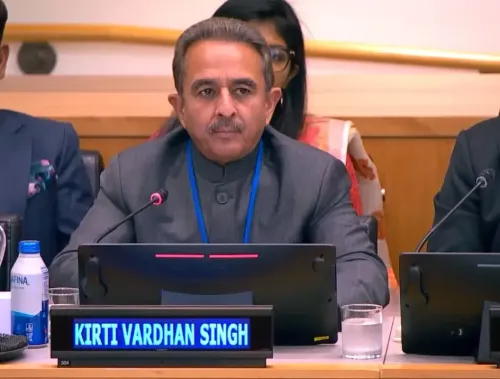
This visit builds on a meeting held earlier this year in May, when Union Minister of State for External Affairs Kirti Vardhan Singh met Pope on the sidelines of the International Migration Review Forum 2026 (IMRF2026) in New York. Those discussions focused on expanding and diversifying regular migration pathways and India's proactive approach to implementing the Global Compact for Safe, Orderly and Regular Migration (GCM) as well as IOM activities within India.
Singh had described the talks as centred on 'India's proactive approach to the implementation of GCM and IOM activities in India,' signalling that New Delhi views structured migration governance as a strategic priority rather than a bureaucratic obligation.
What to Watch
With India's working-age population continuing to grow and global demand for skilled labour intensifying, the outcomes of these engagements — particularly around skills recognition agreements and formalised recruitment corridors — will be closely watched by industry bodies and diaspora organisations alike. Formal agreements or memoranda of understanding, if any emerge from this visit, are expected to be announced through official MEA channels in the coming weeks.
Point of View
Multi-ministry engagement with IOM in a single visit — MEA, Labour, and on-the-ground in Chennai — signals that migration diplomacy is no longer a peripheral foreign policy issue. The focus on ethical recruitment and skills recognition is overdue: India sends millions of workers abroad annually, yet formal bilateral corridors with legally binding protections remain thin. The IMRF2026 meeting and this New Delhi visit suggest India is angling to be a norm-setter in global migration governance, not just a labour exporter. Whether that ambition translates into enforceable agreements — rather than high-table statements — will determine its real impact on Indian workers.
NationPress
16 Oct 2026
Frequently Asked Questions
What did India and IOM discuss during Amy Pope's visit to New Delhi?
India and IOM discussed global migration and mobility trends and ways to expand India's opportunities in an evolving international landscape. The talks were held on 16 October 2026 between MEA Secretary Sripriya Ranganathan and IOM Director General Amy Pope.
What was discussed at the meeting with Labour Minister Shobha Karandlaje?
IOM Director General Amy Pope met Union Minister of State for Labour and Employment Shobha Karandlaje on 15 October 2026 to discuss practical cooperation on skills recognition, ethical recruitment, and regular labour pathways that protect workers and expand opportunity.
What are IOM's Mobile Worker Resource Centres in Chennai?
These are IOM-supported centres that provide on-the-ground guidance and information to workers at their place of residence or work. Pope visited them during her India trip, highlighting their role in helping vulnerable workers make informed decisions about migration and employment.
How does this visit relate to earlier India-IOM engagements?
It follows a meeting in May 2026 at the International Migration Review Forum (IMRF2026) in New York, where MoS for External Affairs Kirti Vardhan Singh and Amy Pope discussed expanding regular migration pathways and India's implementation of the Global Compact for Migration (GCM).
Why does India's engagement with IOM matter?
India is one of the world's largest sources of migrant workers. Formalising ethical recruitment corridors and securing skills recognition can protect millions of Indian workers from exploitation while opening more structured, higher-quality overseas employment opportunities.