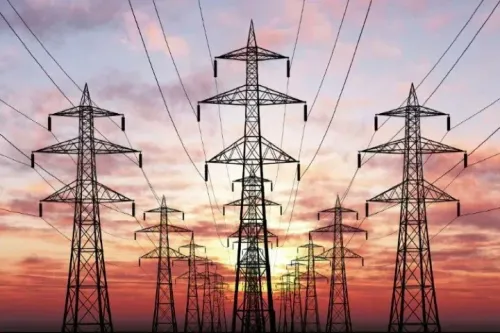
India-Bangladesh power supply held steady despite political crisis in 2024
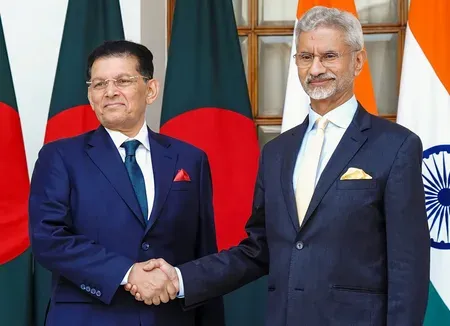
Synopsis
Even as Bangladesh's new post-Hasina government turned hostile toward India in 2024, New Delhi kept the lights on — literally. Official data shows 47.7 million units of electricity crossed the border in a single September day. The story of how deeply embedded infrastructure outlasted political rupture is a masterclass in quiet energy diplomacy.
Key Takeaways
India continued supplying electricity to Bangladesh without disruption despite the political crisis following the ouster of Sheikh Hasina 's government in August 2024 .
India's National Load Despatch Centre recorded nearly 47.7 million units of electricity supplied to Bangladesh on 18 September 2024 alone.
The energy link held because it was embedded in long-term agreements and technical coordination mechanisms, not dependent on political goodwill.
Bangladesh was managing foreign exchange pressure, elevated fuel costs, and post-transition institutional fragility — making an electricity disruption especially dangerous.
According to the Eurasia Review analysis, India's decision not to weaponise energy leverage amounted to a form of quiet but durable diplomacy.
Despite the political upheaval triggered by the ouster of former Prime Minister Sheikh Hasina's government in August 2024 and a wave of anti-India rhetoric from the new administration in Dhaka, India's electricity exports to Bangladesh continued without disruption — a quiet but consequential act of energy diplomacy, according to an analysis published in Eurasia Review.
Power Flows Held Even as Politics Soured
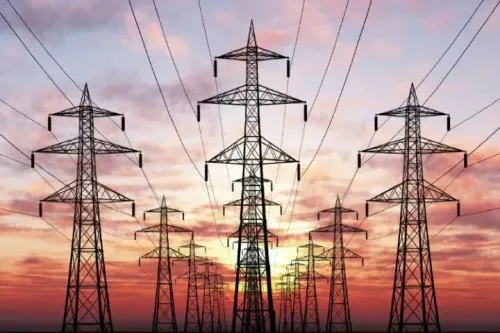
Through September 2024, as diplomatic communication between New Delhi and Dhaka entered a difficult phase and administrative processes — including visa normalisation — slowed considerably, India's power exports to Bangladesh continued at virtually unchanged levels. Official data from India's National Load Despatch Centre, recorded on 18 September 2024, showed nearly 47.7 million units of electricity supplied to Bangladesh in a single day, underscoring just how deeply the two countries' energy systems remained intertwined even as the political relationship navigated serious turbulence.
Why the Energy Link Did Not Break
The Eurasia Review analysis argues that the India–Bangladesh power relationship had, by 2024, moved well beyond dependence on the goodwill of particular leaders or the warmth of any given diplomatic moment. It was embedded in long-term agreements, technical coordination mechanisms between grid operators, and interconnected infrastructure whose suspension would have imposed immediate and serious costs on both sides.
As the article noted, Bangladesh's factories, hospitals, and urban power networks had come to rely on imported Indian electricity as a baseline of supply, while India's grid operators had corresponding obligations and commercial arrangements. The system had its own institutional, contractual, and operational momentum — one that political weather alone could not easily interrupt.
Bangladesh's Economic Fragility Raised the Stakes
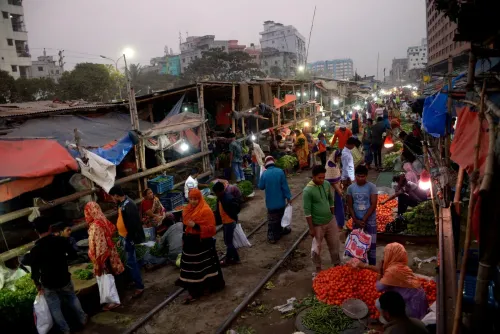
The stakes were particularly high given Bangladesh's already fragile economic situation at the time: foreign exchange reserves were under pressure, fuel import costs were elevated, and public confidence in institutions had not yet fully recovered following the political transition. According to the analysis, an electricity disruption layered on top of these pressures — darkening factories, extending urban load-shedding, amplifying public frustration — 'would have been deeply damaging.' Instead, industrial production held at workable levels, and the new administration was spared a crisis it could ill afford.
India's Restraint as Quiet Diplomacy
The analysis credits India with choosing not to exploit the leverage that Bangladesh's political transition had, in principle, created. A country dependent on a neighbour for essential energy imports is vulnerable to pressure during periods of internal weakness — but India did not apply that pressure. It allowed institutional commitments to run their course, treating the energy relationship as separate from the political complications that had arisen between the two governments.
'That restraint was itself a form of diplomacy — quieter and more durable than anything that could have been communicated in a press statement,' the article observed. This approach reflects a broader pattern in which infrastructure-level interdependence can outlast political friction, provided both sides have built deep enough institutional ties over time.
What This Signals Going Forward
The episode offers a template for how regional energy partnerships can serve as stabilising anchors during political transitions. India and Bangladesh had spent years constructing a shared energy architecture — pipelines, power grids, joint infrastructure — that had become genuinely load-bearing for Bangladesh's economy. The fact that it held through one of the most turbulent political moments in recent bilateral history suggests that the architecture is more resilient than critics anticipated. How both governments choose to manage and expand this interdependence in the months ahead will be closely watched.
Point of View
But the more important story is structural: India and Bangladesh have built an energy interdependence so deep that even a hostile regime change could not unwind it overnight. What mainstream coverage misses is that this is not simply goodwill — it is contractual and operational lock-in that happens to produce a diplomatic dividend. The harder question is whether New Delhi will leverage this demonstrated reliability to reset the bilateral relationship on more durable terms, or allow the political frost to quietly erode the institutional architecture that made this continuity possible in the first place.
NationPress
26 Sept 2026
Frequently Asked Questions
Did India cut power supply to Bangladesh after Sheikh Hasina's government fell?
No. India continued supplying electricity to Bangladesh without disruption after the ouster of Sheikh Hasina's government in August 2024. Official data from India's National Load Despatch Centre recorded nearly 47.7 million units supplied in a single day on 18 September 2024.
Why did India's power supply to Bangladesh continue despite the political crisis?
The energy relationship had moved beyond dependence on political goodwill, embedded instead in long-term agreements, technical grid coordination, and interconnected infrastructure. Suspension would have imposed serious costs on both sides, making continuity the path of least resistance institutionally and commercially.
How vulnerable was Bangladesh to an electricity disruption in 2024?
Highly vulnerable. Bangladesh was simultaneously managing pressure on foreign exchange reserves, elevated fuel import costs, and fragile public confidence following its political transition. An electricity disruption would have darkened factories, extended urban load-shedding, and deepened public frustration at a critical moment.
What is the significance of India not using energy as leverage over Bangladesh?
According to the Eurasia Review analysis, India's restraint amounted to a form of quiet diplomacy — more durable than any press statement. A country dependent on a neighbour for essential energy imports is in principle vulnerable to pressure; India chose not to apply it, allowing institutional commitments to run their course.
What does this episode reveal about India-Bangladesh energy ties?
It demonstrates that the cross-border energy architecture built over years — power grids, pipelines, joint infrastructure — has become genuinely load-bearing for Bangladesh's economy. The fact that it held through a major political rupture suggests a resilience that outlasts individual governments on either side.