India-Netherlands elevate ties to Strategic Partnership; Tata-ASML deal signed
Synopsis
Modi's The Hague visit delivered more than diplomatic optics — the Tata-ASML deal directly plugs India into the world's most critical semiconductor supply chain, while the Netherlands joining the IPOI quietly expands Europe's footprint in India's Indo-Pacific architecture. The elevation to a Strategic Partnership is the formal capstone of a relationship that has quietly outgrown its water-sector origins.
Key Takeaways
India and Netherlands elevated bilateral ties to a 'Strategic Partnership' on 17 May 2025 at The Hague .
Tata Electronics and ASML signed a landmark agreement supporting India's semiconductor facility at Dholera .
Netherlands announced it will join the Indo-Pacific Oceans Initiative (IPOI) , deepening European engagement with India's Indo-Pacific framework.
Two sets of ancient copper plates bearing charters of Rajendra Chola I and Kulothunga Chola I will be repatriated to India.
16 top Dutch CEOs attended a CEO roundtable spanning semiconductors, maritime, renewable energy, healthcare, and logistics.
Key focus areas included green hydrogen , agricultural supply chains , port connectivity , AI , and talent partnerships .
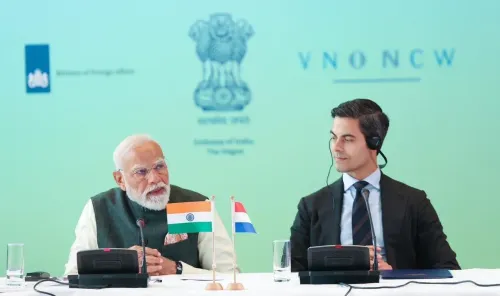
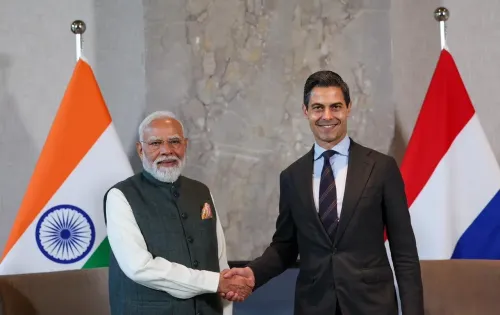
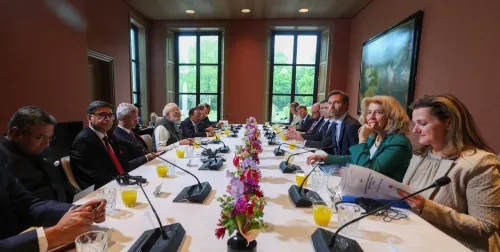
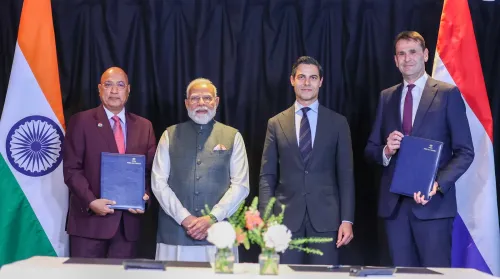
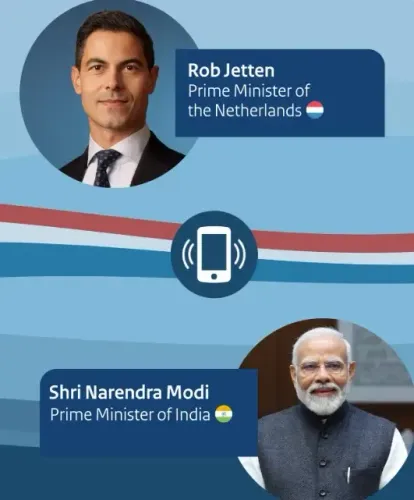
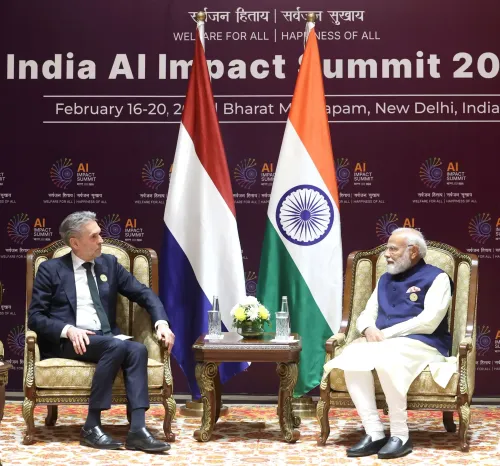
Prime Minister Narendra Modi and his Netherlands counterpart Prime Minister Rob Jetten on Saturday, 17 May adopted an ambitious bilateral roadmap at The Hague, formally elevating the India-Netherlands relationship to a 'Strategic Partnership'. The upgrade, announced by the Ministry of External Affairs (MEA) following delegation-level talks, spans defence, trade, technology, water, and culture.
The Tata-ASML Semiconductor Deal
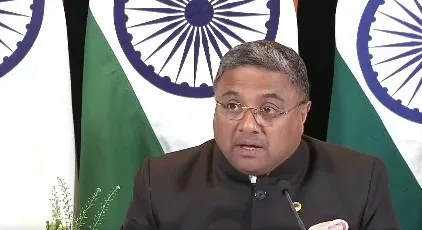
The centrepiece of the visit was the signing of a partnership agreement between Tata Electronics and ASML, the Dutch semiconductor equipment giant. MEA Secretary (West) Sibi George described it as a 'game-changing agreement' that will support India's semiconductor facility at Dholera and the creation of high-skilled jobs. The deal is widely seen as a cornerstone of India's ambition to build a robust domestic semiconductor ecosystem — a strategic priority that has gained urgency amid global chip supply disruptions.
Defence and Indo-Pacific Cooperation
On the defence front, the two sides discussed further enhancing ties through defence industrial collaboration, building on a Letter of Intent on defence cooperation signed last year. Significantly, the Netherlands announced its intention to join the Indo-Pacific Oceans Initiative (IPOI), which George described as 'a very important initiative that is growing and building partnerships in the Indo-Pacific region.' This marks a meaningful extension of European engagement with India's Indo-Pacific framework, which already counts several major democracies as partners.
Trade, Technology, and Green Hydrogen
The two leaders also pushed for expanded trade and investment flows, with specific focus on fintech, critical minerals, green hydrogen, AI, robotics, semiconductors, and agricultural supply chains. Connecting Indian ports with Dutch ports emerged as another priority project. George noted that sixteen top Dutch CEOs attended a CEO roundtable with both Prime Ministers, representing sectors including semiconductors, maritime, renewable energy, healthcare, and logistics. The ongoing India-EU free trade agreement negotiations were cited as offering additional opportunities for bilateral commerce.
Water Cooperation and the Kalpasar Project
Water management — a longstanding pillar of India-Netherlands ties — featured prominently. George noted that both Prime Ministers are scheduled to visit the Kalpasar project site, which bears similarities to the dike infrastructure in the north of the Netherlands. The two sides already hold a strategic partnership specifically on water, and Dutch expertise in this domain is expected to deepen India's large-scale water infrastructure ambitions.
Cultural Restitution and Talent Partnership
In a significant cultural gesture, the Netherlands agreed to return two sets of copper plates — 21 large and 3 small — bearing royal charters of Emperor Rajendra Chola I and Emperor Kulothunga Chola I to India. George described these as 'a cultural treasure for us,' in line with Prime Minister Modi's 'Vikas bhi Virasat bhi' vision. Discussions also covered talent partnerships, global mobility, and skills — with India described as a 'talent engine' and the concept of 'innovate in India, for India and for the world' gaining traction among Dutch industry leaders.
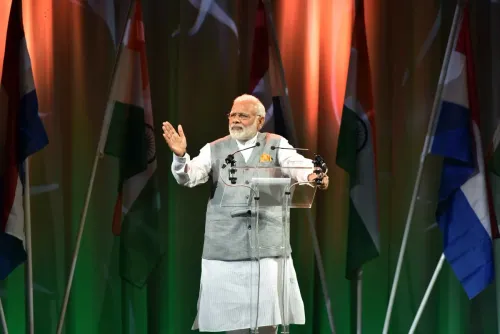
Prime Minister Modi, in posts on X, called the outcomes 'substantive and important,' adding that they 'will add unparalleled momentum to the friendship between India and the Netherlands.' The visit signals a clear intent by both nations to move beyond traditional bilateral ties toward a deeper, multi-sectoral strategic alignment.
Point of View
But the Tata-ASML deal is where the real weight lies — it positions India inside the world's most consequential semiconductor supply chain at a moment when chip access is a geopolitical currency. The Netherlands joining the IPOI is equally notable: it signals that European middle powers are increasingly willing to align with India's Indo-Pacific architecture, a development that Beijing will be watching closely. The repatriation of the Chola copper plates, while culturally meaningful, also reflects a broader Modi-era diplomatic playbook of weaving heritage restitution into strategic visits. Whether the breadth of sectors covered — from green hydrogen to port connectivity to talent mobility — translates into binding commitments or remains aspirational will determine whether this visit is remembered as a turning point or another well-photographed roadmap.
NationPress
20 Oct 2026
Frequently Asked Questions
What is the India-Netherlands Strategic Partnership announced on 17 May 2025?
India and the Netherlands formally elevated their bilateral relationship to a 'Strategic Partnership' on 17 May 2025 during Prime Minister Narendra Modi's visit to The Hague. The upgrade covers defence, trade, technology, water management, green hydrogen, and cultural cooperation, and was accompanied by the signing of several key agreements including the Tata-ASML semiconductor deal.
What is the Tata-ASML semiconductor agreement?
Tata Electronics and ASML — the Dutch company that makes the world's most advanced chip-manufacturing equipment — signed a partnership agreement on 17 May 2025 to support India's semiconductor facility at Dholera. MEA Secretary Sibi George called it a 'game-changing agreement' for building a robust semiconductor ecosystem in India and creating high-skilled jobs.
Why is the Netherlands joining the Indo-Pacific Oceans Initiative significant?
The Netherlands joining the Indo-Pacific Oceans Initiative (IPOI) marks a meaningful expansion of European engagement with India's Indo-Pacific framework. The IPOI is a coalition of democracies focused on maritime security, connectivity, and sustainable ocean use, and Dutch membership broadens its geographic and diplomatic reach.
What cultural artefacts is the Netherlands returning to India?
The Netherlands is returning two sets of copper plates — 21 large and 3 small — bearing royal charters of Chola emperors Rajendra Chola I and Kulothunga Chola I. MEA Secretary Sibi George described them as 'a cultural treasure,' and the repatriation aligns with Prime Minister Modi's 'Vikas bhi Virasat bhi' heritage vision.
Which sectors were discussed at the India-Netherlands CEO roundtable?
Sixteen top Dutch CEOs attended the CEO roundtable with both Prime Ministers, representing semiconductors, maritime, renewable energy, healthcare, and logistics. Discussions also covered green hydrogen, agricultural supply chains, port connectivity between India and the Netherlands, AI, robotics, fintech, and talent partnerships.