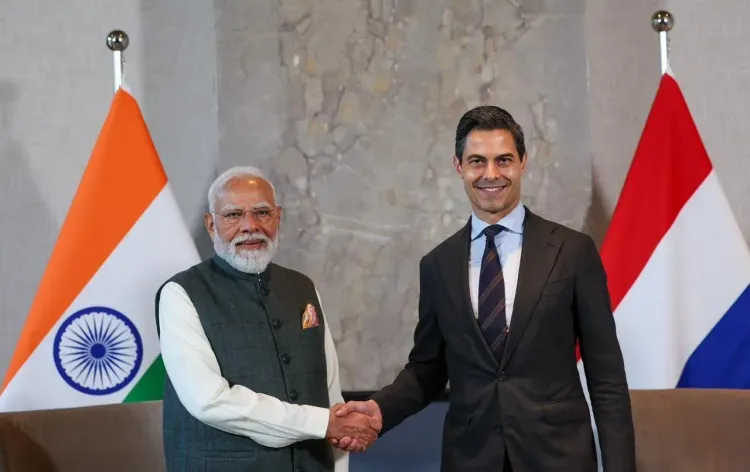
Modi, Dutch PM Jetten elevate ties to Strategic Partnership, discuss Hormuz closure
Synopsis
Modi's The Hague visit delivered more than diplomatic optics — it produced a full Strategic Partnership upgrade, 14 signed agreements, and a rare joint call to end the West Asia conflict. The ASML-Tata semiconductor MoU for Dholera is the headline deal: it plugs India directly into the world's most critical chip-supply chain at a moment when semiconductor sovereignty has never mattered more.
Key Takeaways
PM Modi and Dutch PM Rob Jetten elevated India-Netherlands ties to a 'Strategic Partnership' on 17 May 2025 in The Hague .
14 agreements and MoUs were signed across technology, green energy, trade, defence, education, and water management.
ASML and Tata Electronics signed an MoU to develop a semiconductor factory in Dholera, Gujarat .
Both leaders discussed the Strait of Hormuz closure and called for an end to the West Asia conflict , citing severe energy-price impact on both nations.
The India-EU Free Trade Agreement was acknowledged as transformative; both sides called for its early signing and implementation.
The Netherlands agreed to return 11th-century Chola plates to India; Nalanda University and Groningen University concluded an academic cooperation agreement.
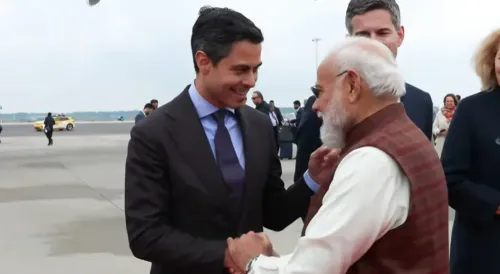
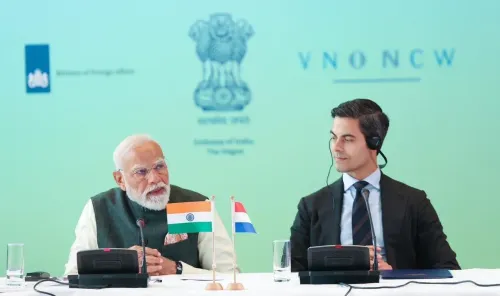
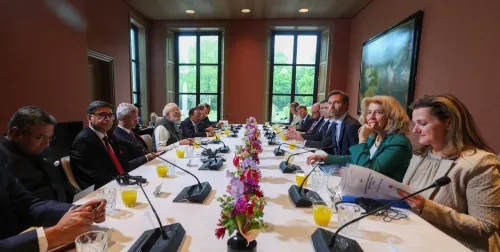
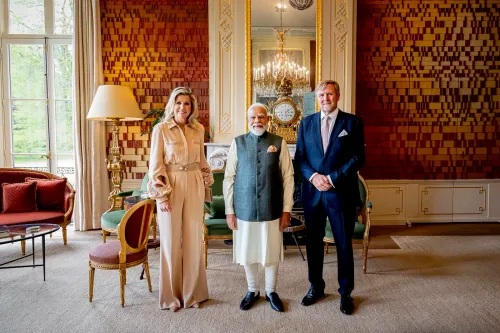
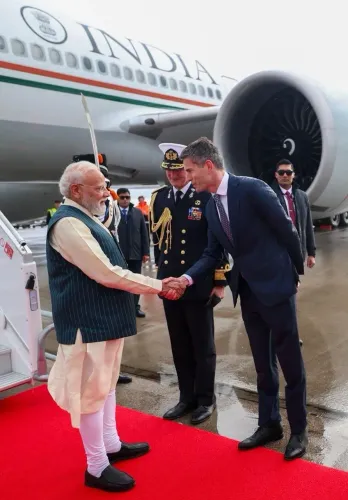
Prime Minister Narendra Modi and his Netherlands counterpart Rob Jetten on Saturday, 17 May agreed to elevate the India-Netherlands bilateral relationship to a 'Strategic Partnership', following official talks at Jetten's residence Catshuis in The Hague. The two leaders also addressed the closure of the Strait of Hormuz and called for an end to the ongoing West Asia conflict, which has driven up energy prices in both countries.
Strategic Partnership and the Roadmap
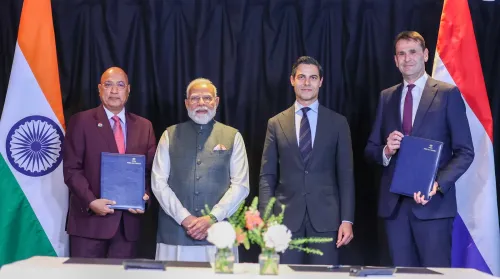
The leaders adopted an ambitious Roadmap for Strategic Partnership, committing to deepen cooperation across trade and investment, defence and security, emerging and critical technologies, the maritime sector, renewable energy, and education. Following the official talks, 14 agreements and Memoranda of Understanding were signed spanning technology, green energy, trade, mobility, water-agriculture-health (WAH), education, and culture. A Joint Statement was also adopted on the occasion.
'Both India and the Netherlands attach great importance to democracy, good governance and a world order based on rules and justice,' Prime Minister Jetten said in a post on social media platform X, noting that in times of international uncertainty it is vital that the Netherlands can rely on 'like-minded and valued allies such as India.'
Strait of Hormuz and West Asia Conflict
The Strait of Hormuz closure featured prominently in the bilateral discussions. Jetten noted that the resulting spike in energy prices had hit both the Netherlands and India hard. 'It's vital that this conflict be brought to an end and that a lasting solution be found,' he said in his X post. The two leaders also discussed the case involving the alleged abduction of Insiya to India by her father — a longstanding consular matter between the two nations.
ASML-Tata Semiconductor MoU and Economic Cooperation
A landmark moment of the visit was the signing of an MoU between Tata Electronics and ASML for the development of India's semiconductor ecosystem. ASML will support the establishment and scaling of Tata Electronics' future semiconductor factory in Dholera, Gujarat. Modi described the partnership as 'an important step toward closer collaboration in the field of semiconductors.'
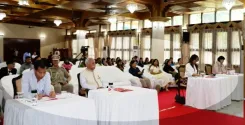
On the economic front, both leaders acknowledged the transformative potential of the India-EU Free Trade Agreement, calling for its early signing and implementation. Modi highlighted collaboration opportunities in fintech, critical minerals, green hydrogen, AI, and semiconductors. A CEO roundtable in The Hague saw Dutch business leaders discuss their investments across various sectors in India.
Defence, Space, and Maritime Cooperation
Modi said both sides discussed drawing up an action plan for the defence industry as quickly as possible, and identified collaboration potential in space travel, maritime systems, and maritime security. The leaders also committed to intensifying the Strategic Partnership on Water through collaboration on large-scale water projects, underscoring the WAH framework.
Cultural Ties and What Comes Next
On the cultural front, Modi thanked the Netherlands government for facilitating the return of 11th-century Chola plates to India. The two leaders also welcomed collaboration between Leiden University Library and the Archaeological Survey of India to advance knowledge of these historic artefacts. An agreement between Nalanda University and Groningen University was also noted.
Modi extended an invitation to Jetten to visit India, which the Dutch Prime Minister accepted. With the Strategic Partnership framework now in place and 14 agreements signed, the two countries are expected to move swiftly toward implementation — particularly in semiconductors, green energy, and defence.
Point of View
Not a photo-op. India's inclusion in ASML's supply-chain orbit, even at the factory-support level, signals that the Dholera semiconductor ambition has moved from aspiration to contract. The joint statement on the Strait of Hormuz is also notable: India rarely co-signs explicit geopolitical positions with Western partners, and doing so here — framing energy security as a shared vulnerability — marks a subtle but real shift in how New Delhi is calibrating its West Asia posture as the conflict drags on.
NationPress
16 Sept 2026
Frequently Asked Questions
What is the India-Netherlands Strategic Partnership announced on 17 May 2025?
It is an upgraded bilateral framework agreed upon by PM Modi and Dutch PM Rob Jetten in The Hague on 17 May 2025, covering trade and investment, defence and security, emerging technologies, maritime cooperation, renewable energy, and education. The partnership is backed by a formal Roadmap and 14 signed agreements and MoUs.
What did Modi and Jetten say about the Strait of Hormuz closure?
Both leaders discussed the closure of the Strait of Hormuz, which has pushed up energy prices significantly in both India and the Netherlands. Dutch PM Jetten said it is 'vital that this conflict be brought to an end and that a lasting solution be found,' and called for resolution of the broader West Asia conflict.
What is the ASML-Tata Electronics semiconductor MoU about?
ASML, the Dutch maker of advanced chip-manufacturing equipment, and Tata Electronics signed an MoU to support the establishment and scaling of Tata's future semiconductor factory in Dholera, Gujarat. PM Modi described it as an important step toward building India's semiconductor ecosystem.
How many agreements were signed during PM Modi's visit to the Netherlands?
A total of 14 agreements and Memoranda of Understanding were signed, spanning technology, green energy, trade, mobility, water-agriculture-health, education, and culture. A Joint Statement and the Roadmap on Strategic Partnership were also adopted.
What is the significance of the India-EU Free Trade Agreement in this context?
Both Modi and Jetten acknowledged the India-EU Free Trade Agreement — concluded earlier this year — as transformative for bilateral commerce, and called for its early signing and implementation. The Netherlands, as a major EU economy and trade hub, stands to be a significant beneficiary of expanded India-EU trade flows.