Tata-ASML semiconductor MoU signed for Dholera chip facility under Modi-Jetten watch
Synopsis
India's semiconductor ambitions got a high-profile endorsement on 16 May as Tata Electronics and ASML signed an MoU for the Dholera chip facility — with both the Indian and Dutch prime ministers present. ASML's involvement is not routine: the Dutch firm controls the world's most critical chip-making equipment, and its backing signals that Dholera is being taken seriously on the global semiconductor map.
Key Takeaways
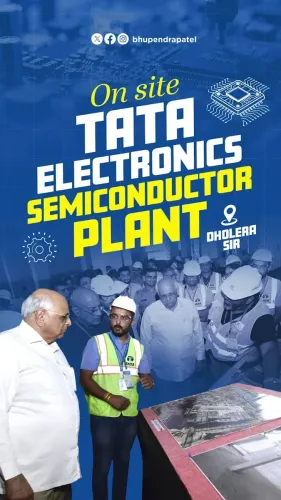
Tata Electronics and ASML signed an MoU on 16 May for India's semiconductor facility at Dholera, Gujarat .
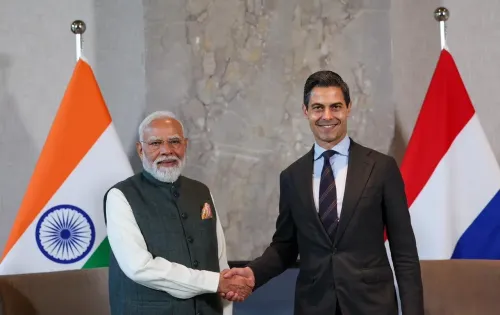
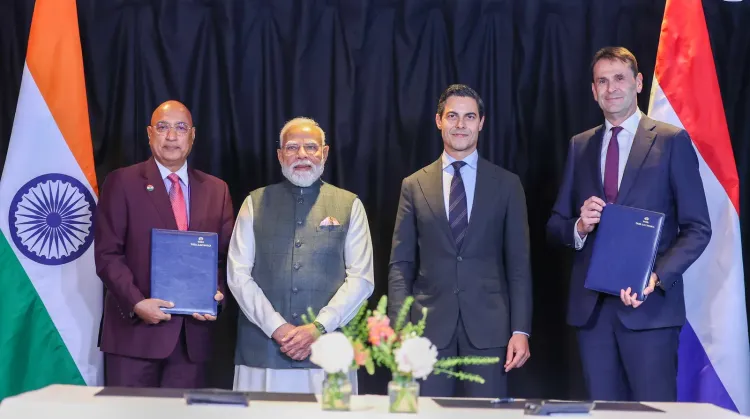
The deal was witnessed by PM Narendra Modi and Dutch PM Rob Jetten during bilateral technology engagements.
ASML will support the establishment and scaling of the Dholera chip plant, providing advanced technology expertise.
The project is a flagship initiative under India's push to reduce chip import dependence and strengthen its electronics supply chain.
PM Modi said the partnership opens 'immense opportunities' for India's youth and called semiconductors a sector India will keep strengthening.
Tata Electronics and Dutch lithography giant ASML have signed a memorandum of understanding to establish and scale a semiconductor manufacturing facility in Dholera, Gujarat, in a partnership witnessed by Prime Minister Narendra Modi and Dutch Prime Minister Rob Jetten on Saturday, 16 May. The agreement marks one of the most consequential bilateral technology deals in India's push to build a domestic chip ecosystem.
What the MoU Covers
Under the agreement, ASML — the Netherlands-based maker of advanced lithography machines that are indispensable to modern chip fabrication — will provide technology support and expertise to Tata Electronics' upcoming semiconductor plant at Dholera. The facility is a flagship project under India's broader semiconductor mission and is expected to play a significant role in reducing the country's dependence on chip imports.
The signing took place during high-level bilateral engagements between India and the Netherlands, centred on futuristic technologies and innovation-led cooperation, according to official accounts.
What PM Modi Said
Prime Minister Modi described the partnership as an important milestone in a post on social media platform X. 'Prime Minister Rob Jetten and I witnessed the signing of the MoU between Tata and ASML for advancing the semiconductor manufacturing ecosystem in India,' he wrote. 'ASML will support the setting up and scaling of Tata Electronics' upcoming semiconductor facility in Dholera, Gujarat,' Modi added, noting that India's semiconductor progress was opening up 'immense opportunities for the youth of our nation.' He further said: 'This is a sector in which we will keep adding vigour in the times to come.'
Why Dholera and Why Now
The Dholera Special Investment Region in Gujarat has been positioned as India's most ambitious greenfield industrial corridor. Choosing it as the site for the Tata chip facility aligns with the Centre's strategy of clustering semiconductor investment in purpose-built infrastructure zones. This comes amid a global race to diversify chip supply chains away from Taiwan and South Korea, with the United States, European Union, Japan, and India all offering substantial incentives to attract fabrication capacity.
Notably, ASML's involvement is strategically significant: the company's extreme ultraviolet (EUV) lithography machines are among the most tightly controlled exports in global technology trade, making any partnership with ASML a marker of diplomatic and industrial credibility.
Broader Impact and What Comes Next
Industry observers believe the Tata-ASML collaboration could accelerate technology transfer, semiconductor-grade skill development, and high-value manufacturing employment in India. The partnership also reinforces India's positioning as a trusted destination for global semiconductor investment, a reputation the Centre has been building through its India Semiconductor Mission and associated incentive frameworks.
With both governments having endorsed the deal at the highest level, attention now turns to execution timelines, equipment supply schedules, and the ramp-up plan for the Dholera facility — details that are yet to be publicly disclosed.
Point of View
But the hard questions remain unanswered: what lithography nodes will the Dholera facility target, and on what timeline? ASML's equipment is the global chokepoint in chip manufacturing, and any access to its advanced machines involves export-control negotiations that go well beyond a bilateral MoU. India has announced semiconductor partnerships before — the real differentiator will be whether Dholera moves from groundbreaking to volume production faster than earlier flagship projects did. The presence of two heads of government at the signing raises expectations; meeting them will require execution discipline that India's industrial policy has historically struggled to sustain.
NationPress
20 Oct 2026
Frequently Asked Questions
What is the Tata Electronics-ASML MoU about?
The MoU is an agreement under which ASML will support the establishment and scaling of Tata Electronics' upcoming semiconductor manufacturing facility in Dholera, Gujarat. It was signed on 16 May in the presence of Prime Minister Narendra Modi and Dutch Prime Minister Rob Jetten.
Where is the Tata semiconductor facility being built?
The facility is being developed at the Dholera Special Investment Region in Gujarat, one of India's most ambitious greenfield industrial corridors. It is a flagship project under India's national semiconductor mission.
Why is ASML's involvement significant?
ASML is the world's dominant maker of lithography machines — equipment without which modern semiconductors cannot be manufactured. Its involvement signals both technological credibility and diplomatic alignment, as ASML's advanced machines are among the most tightly export-controlled products in global technology trade.
What did PM Modi say about the partnership?
PM Modi posted on X that he and Dutch PM Rob Jetten witnessed the MoU signing, adding that ASML would support the setting up and scaling of the Dholera facility. He said India's semiconductor progress offers 'immense opportunities' for the country's youth and that India would 'keep adding vigour' to the sector.
How does this fit into India's broader semiconductor strategy?
The Dholera project is part of India's wider push — backed by the India Semiconductor Mission and substantial government incentives — to build domestic chip manufacturing capacity and reduce reliance on imports. The Tata-ASML partnership is intended to bring advanced technology expertise and accelerate skill development in high-value chip manufacturing.