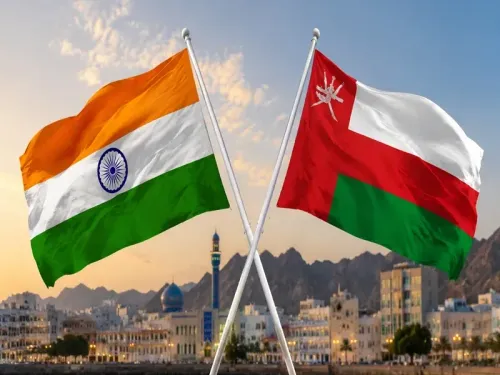
Does the India-Oman CEPA Ensure a Balanced Market Access and Safeguards?

Synopsis
The India-Oman CEPA is poised to transform bilateral trade with a comprehensive framework that promises improved market access and protective measures. This strategic agreement is expected to bolster economic ties, enhance job creation, and ensure a more competitive market environment between the two nations.
Key Takeaways
India-Oman CEPA promotes duty-free trade .
Expanded market access for Indian exporters .
Focus on protecting sensitive domestic sectors .
Enhancement of bilateral trade relations .
Support for micro and small enterprises .
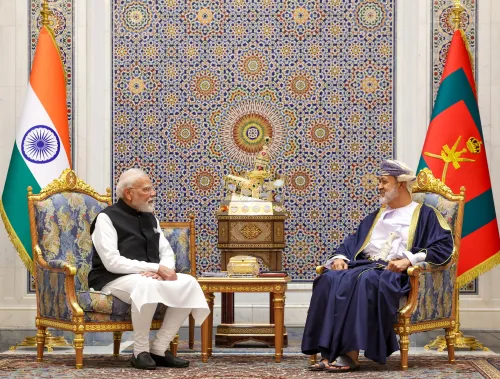
New Delhi, Jan 10 (NationPress) The India–Oman CEPA creates a robust framework that encompasses trade in goods and services, investment, professional mobility, and regulatory cooperation, while ensuring a balanced market access and safeguards. This initiative is anticipated to enhance bilateral trade, create jobs, fortify supply chains, and foster deeper, more sustained economic ties between India and Oman, as stated in an official announcement this Saturday.
Bilateral trade has been a crucial aspect of cooperation between India and Oman, with both nations recognizing the potential for greater growth and diversification in their trade relations.
In the fiscal year 2024–25, the trade volume between the countries reached $10.61 billion, a rise from $8.94 billion in FY 2023–24. Trade figures from April to October 2025 registered at $6.48 billion.
The CEPA grants India 100 percent duty-free access for its exports to Oman, covering 98.08 percent of Oman’s tariff lines and representing 99.38 percent of India’s trade value, based on average figures from 2022–23. All zero-duty concessions come into effect from the first day of the agreement, ensuring immediate clarity for exporters.
Currently, only 15.33 percent of India’s export value and 11.34 percent of tariff lines (2022–24 average) enjoy zero duty under the Most Favored Nation (MFN) regime in Oman. With CEPA, Indian exports to Oman, which previously faced duties up to 5 percent, valued at about $3.64 billion, are expected to experience significant gains in price competitiveness.
The agreement opens up export avenues in sectors such as engineering goods, pharmaceuticals, agriculture and processed food, marine products, textiles, chemicals, electronics, plastics, and gems and jewellery.
A carefully calibrated liberalization strategy, including an exclusion list, shields sensitive sectors while supporting micro, small, and medium enterprises (MSMEs), labor-intensive industries, and regional export growth, according to the official statement.
“With enhanced access to Oman’s import market of over $28 billion, combined with streamlined regulatory procedures, reduced compliance requirements, and quicker market entry, Indian exporters are well-positioned to expand their footprint across various product categories,” it added.
Simultaneously, India has included several tariff lines in the exclusion list, aiming to protect vital domestic sectors and sensitive value-chain industries while safeguarding manufacturing competitiveness and farmers' interests.
Point of View
I believe the India-Oman CEPA marks a significant step forward in enhancing economic cooperation. By balancing market access with essential safeguards, this agreement not only opens up new avenues for trade but also demonstrates a commitment to protecting domestic interests. It’s a prudent approach that reflects the evolving dynamics of global commerce and regional partnerships.
NationPress
26 Sept 2026
Frequently Asked Questions
What is the main objective of the India-Oman CEPA?
The primary goal of the India-Oman CEPA is to establish a comprehensive framework for facilitating trade in goods and services, investment, and regulatory cooperation, while ensuring balanced market access and protective measures.
How much did bilateral trade between India and Oman amount to in FY 2024-25?
Bilateral trade between India and Oman reached $10.61 billion in FY 2024–25, compared to $8.94 billion in FY 2023–24.
What benefits does CEPA provide for Indian exporters?
The CEPA offers Indian exporters 100 percent duty-free access to Oman, covering 98.08 percent of Oman’s tariff lines, enhancing price competitiveness and market opportunities.
Which sectors are expected to benefit from the CEPA?
The CEPA is expected to benefit sectors such as engineering goods, pharmaceuticals, agriculture, marine products, textiles, and chemicals among others.
What measures are in place to protect sensitive sectors?
The agreement includes a calibrated liberalization approach with an exclusion list to protect sensitive sectors while supporting MSMEs and labor-intensive industries.