India opens world's first nuclear-heat hydrogen plant at Kalpakkam
Synopsis
India has done what no country has before: produced hydrogen using heat from a nuclear reactor via the Cu–Cl thermochemical cycle. The Kalpakkam facility, jointly built by BARC and IGCAR, is a technology demonstrator — but if it scales, it could reshape how carbon-free hydrogen is produced globally, bypassing the intermittency constraints that limit green hydrogen from renewables.
Key Takeaways
India inaugurated the world's first hydrogen production facility using the Copper–Chlorine (Cu–Cl) Thermochemical Cycle powered by nuclear heat at Kalpakkam, Tamil Nadu .
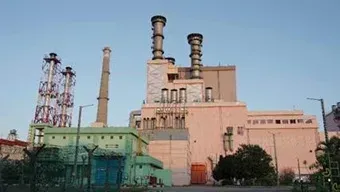
The facility uses heat from the Fast Breeder Test Reactor (FBTR) at IGCAR and was developed indigenously by BARC and IGCAR .
The inauguration was conducted by DAE Secretary Ajit Kumar Mohanty in the presence of IGCAR Director Sreekumar G Pillai .
The Cu–Cl cycle offers lower operating temperatures and higher thermodynamic efficiency than competing hydrogen production methods.
The plant is a technology demonstrator; future phases will focus on optimisation and scaling for commercial deployment .
IGCAR has operated the FBTR for more than four decades , and the expertise feeds into India's 500 MWe Prototype Fast Breeder Reactor (PFBR) .
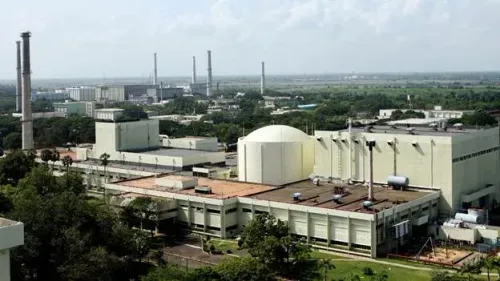
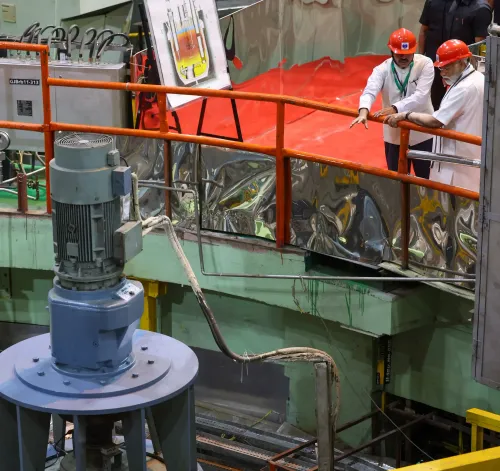
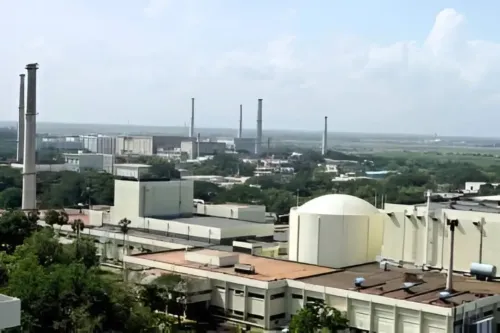
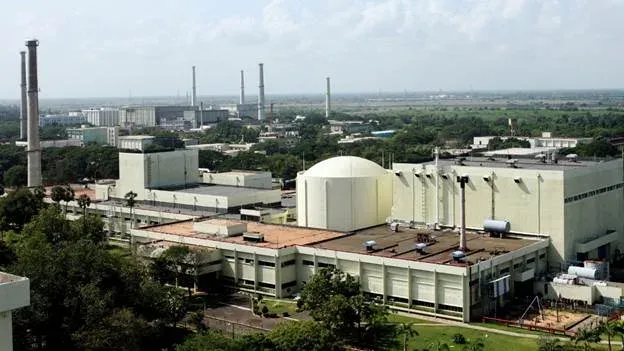
India has inaugurated the world's first hydrogen production facility based on the Copper–Chlorine (Cu–Cl) Thermochemical Cycle powered by nuclear process heat, at the Indira Gandhi Centre for Atomic Research (IGCAR) in Kalpakkam, Tamil Nadu, on 27 June 2025. The facility uses heat generated by the Fast Breeder Test Reactor (FBTR) and marks a globally unprecedented convergence of advanced nuclear technology and clean hydrogen production.
What Was Inaugurated
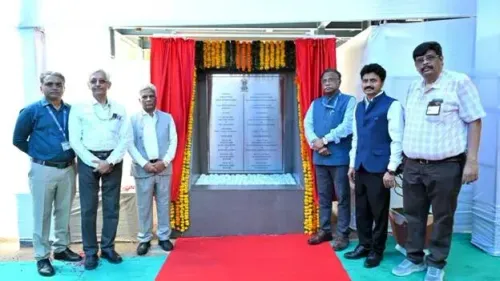
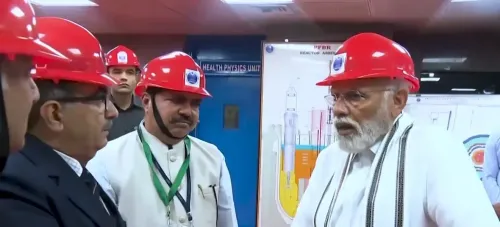
The Department of Atomic Energy (DAE) commissioned the plant as a technology demonstrator to validate hydrogen generation through the Cu–Cl thermochemical process, developed indigenously by the Bhabha Atomic Research Centre (BARC) in Mumbai. The inauguration was carried out by Ajit Kumar Mohanty, DAE Secretary and Chairman of the Atomic Energy Commission (AEC), in the presence of Sreekumar G Pillai, Director of IGCAR.
According to a DAE statement, the facility's successful integration of nuclear process heat with hydrogen generation 'marks a pioneering technological breakthrough and opens a promising pathway for large-scale, carbon-free hydrogen production using advanced nuclear reactors.'
Why the Cu–Cl Cycle Stands Out
Among the various hydrogen production technologies under development globally, the Cu–Cl thermochemical cycle is regarded as one of the most promising. Its advantages include relatively lower operating temperatures and higher thermodynamic efficiency compared with competing methods. By drawing on heat from fast reactors rather than fossil fuels, the process eliminates the greenhouse gas emissions associated with conventional hydrogen production — most of which currently relies on natural gas reforming.
Hydrogen is widely considered a critical energy carrier for the global transition to clean and sustainable energy systems, and the ability to produce it at scale without carbon emissions has long been a key research goal worldwide.
The Technology Behind It
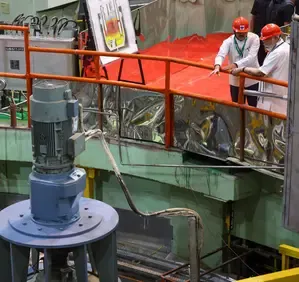
The plant is the product of a joint effort between BARC and IGCAR, encompassing years of research, process development, engineering design, equipment fabrication, and commissioning. The DAE statement noted that the facility 'will provide valuable operational experience, facilitate further optimisation of the Cu–Cl process and support future research aimed at scaling up nuclear-assisted hydrogen production technologies for commercial deployment.'
IGCAR has operated the FBTR for more than four decades, building expertise in reactor physics, thermal hydraulics, advanced materials, sodium technology, and high-temperature engineering. That accumulated knowledge underpins the 500 MWe Prototype Fast Breeder Reactor (PFBR) — the flagship of the second stage of India's three-stage nuclear power programme.
What Officials Said
Mohanty, in his address, described nuclear power as 'ideally suited to support large-scale hydrogen production' given its ability to provide both reliable carbon-free electricity and high-temperature process heat. He credited the scientists and engineers of BARC and IGCAR for having 'transformed an advanced scientific concept into an operational reality.'
Pillai called the achievement a demonstration of 'the versatility of advanced nuclear systems,' adding that it underscores IGCAR's commitment to technologies that contribute to India's clean energy transition and long-term energy security.
Strategic Significance for India
The DAE framed the inauguration as a step toward Atmanirbhar Bharat and Viksit Bharat, positioning the facility as evidence of India's growing self-reliance in advanced nuclear and clean energy technologies. This comes amid a broader global race to establish green and low-carbon hydrogen supply chains, in which India has set ambitious domestic targets. The Kalpakkam demonstration, if successfully scaled, could offer a pathway to large-volume, carbon-free hydrogen that does not depend on renewable electricity availability — a key limitation of electrolysis-based green hydrogen.
The next phase will focus on operational data gathering, process optimisation, and the design of scaled-up systems suitable for commercial deployment.
Point of View
This route does not depend on solar or wind availability, making it a potential baseload clean-hydrogen source. The harder question is timeline to commercial scale — India's nuclear programme has a long history of technology demonstrations that take decades to reach deployment, and the PFBR itself has been delayed repeatedly. Whether this demonstrator accelerates or follows that pattern will determine whether the breakthrough stays in the lab or reshapes India's energy mix.
NationPress
25 Sept 2026
Frequently Asked Questions
What is the world's first nuclear-heat hydrogen facility inaugurated in India?
It is a technology demonstrator at IGCAR, Kalpakkam, that produces hydrogen using the Copper–Chlorine (Cu–Cl) Thermochemical Cycle powered by heat from the Fast Breeder Test Reactor. Developed jointly by BARC and IGCAR, it is the first facility of its kind anywhere in the world.
Why is the Cu–Cl thermochemical cycle considered promising for hydrogen production?
The Cu–Cl cycle operates at relatively lower temperatures and achieves higher thermodynamic efficiency compared with competing hydrogen production methods. It uses nuclear process heat rather than fossil fuels, eliminating the greenhouse gas emissions associated with conventional hydrogen production.
Who inaugurated the Kalpakkam hydrogen facility?
DAE Secretary and Atomic Energy Commission Chairman Ajit Kumar Mohanty inaugurated the facility, in the presence of IGCAR Director Sreekumar G Pillai.
What is IGCAR and why is it significant to this project?
IGCAR, or the Indira Gandhi Centre for Atomic Research, is one of India's premier nuclear research institutions under the Department of Atomic Energy, established in 1971. It has operated the Fast Breeder Test Reactor for over four decades and leads India's fast reactor programme, including the 500 MWe Prototype Fast Breeder Reactor.
What happens next after this inauguration?
The facility will now gather operational data and support further optimisation of the Cu–Cl process. The stated goal is to use this experience to design scaled-up systems for commercial deployment of nuclear-assisted hydrogen production.