India reiterates dialogue over battlefield in Russia-Ukraine conflict
Synopsis
India is not just calling for peace in Ukraine — it is quietly working the back channels. From Black Sea shipping safety to grain export guarantees and non-attack arrangements, New Delhi's engagement goes well beyond rhetoric, with both Putin and Kyiv publicly acknowledging India's role. The question now is whether this diplomatic capital can be converted into a concrete ceasefire framework.
Key Takeaways
MEA spokesperson Randhir Jaiswal reaffirmed on 7 October 2026 that India views dialogue and diplomacy as the only path to resolving the Russia-Ukraine conflict .
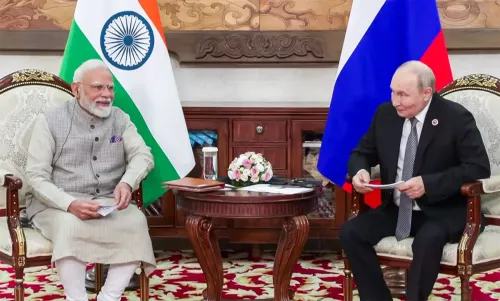
PM Modi has raised the issue of ending the conflict at every meeting with President Putin , including at the SCO Summit in Bishkek and the 18th BRICS Summit in New Delhi .
Russian President Putin publicly credited Modi with 'very good ideas' for a mutually acceptable solution, speaking at the Valdai Discussion Club in Moscow .
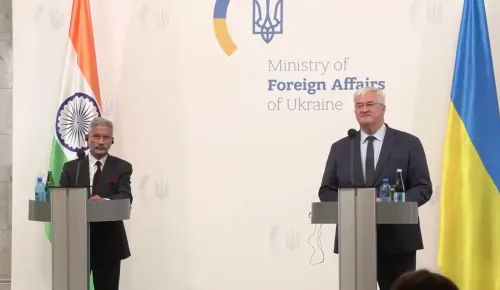
Ukrainian Foreign Minister Andrii Sybiha has also acknowledged India's peacebuilding approach, according to the MEA .
India is engaged on specific conflict-related issues including Black Sea shipping safety , grain and energy exports , and non-attack arrangements .
Jaishankar has separately elaborated on India's facilitation efforts at recent international events.
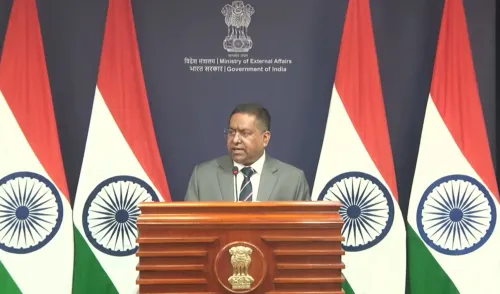
India on Wednesday, 7 October 2026 reaffirmed its position that dialogue and diplomacy remain the only viable path to resolving the Russia-Ukraine conflict, with Ministry of External Affairs (MEA) spokesperson Randhir Jaiswal stating that Prime Minister Narendra Modi has consistently held that no solution lies on the battlefield. The remarks were made during a biweekly media briefing in New Delhi.
India's Consistent Position
'Let me say that, on the issue of the Ukraine conflict, India has consistently maintained that dialogue and diplomacy are the way forward,' Jaiswal said. He recalled that PM Modi, during his meeting with Russian President Vladimir Putin in Bishkek on the sidelines of the Shanghai Cooperation Organisation (SCO) Summit, had underlined that 'the time has come for endless war to now give way to an end of war.'
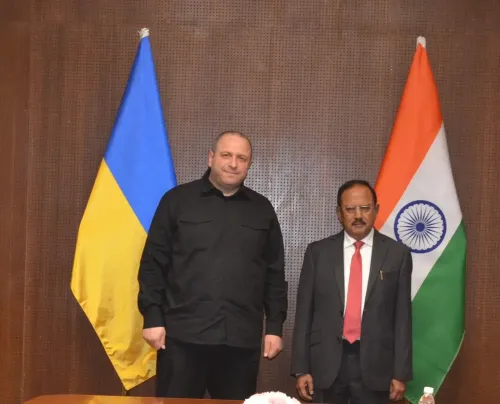
This comes amid a sustained diplomatic push by New Delhi to position itself as a credible interlocutor in one of the most protracted conflicts of the post-Cold War era. India has engaged both Moscow and Kyiv — a balancing act that has drawn attention from global capitals.
What Both Sides Have Said
Jaiswal noted that India's peacebuilding efforts have been acknowledged by both parties, citing recent public remarks from President Putin and Ukrainian Foreign Minister Andrii Sybiha. 'This has been appreciated by both Russia and Ukraine. You would have also seen the comments made by President Putin and Foreign Minister Sybiha of Ukraine in this regard,' he said.
Speaking at the Valdai Discussion Club in Moscow last week, President Putin praised PM Modi's persistent engagement on ending the conflict. 'He is one of those world leaders who, despite our very good, even friendly, relations, and very good personal ties, constantly raises questions about ending the conflict in Ukraine. He always raises these issues at every meeting with us. He is keenly interested, and he has very good ideas aimed at finding mutually acceptable solutions,' Putin said. He added: 'We are grateful to the Prime Minister for his ideas — I won't go into details now — for his commitment to ending this conflict, including peacefully and as quickly as possible.'
Key Areas of Engagement
Beyond broad calls for peace, India has been engaging both sides on concrete operational concerns. Jaiswal said External Affairs Minister (EAM) S. Jaishankar had elaborated on these specifics at a recent event, noting that New Delhi is working to address issues including the safety of shipping in the Black Sea, grain and energy exports, and the possibility of non-attack arrangements.
'We have ongoing conversations with both Russia and Ukraine on this particular matter,' Jaiswal confirmed. These are not merely symbolic overtures — disruptions to Black Sea shipping have had direct consequences for global food supply chains and the safety of Indian seafarers.
The Diplomatic Timeline
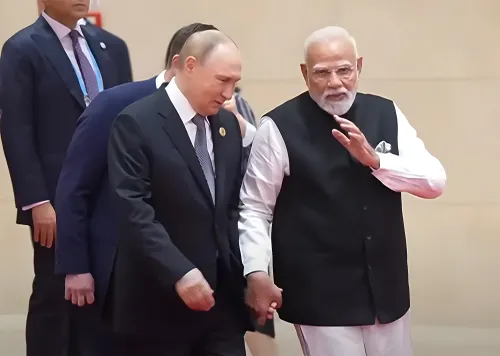
India's engagement on the Ukraine conflict has been consistent across multiple high-level summits. In August, on the sidelines of the SCO Summit in Bishkek, PM Modi reiterated support for all efforts towards peace. Most recently, during his meeting with President Putin at the 18th BRICS Summit in New Delhi last month, the Prime Minister again pressed for dialogue as the path forward. He stressed that moving 'from an endless war towards an end to the war' was essential for the well-being of humanity.
Notably, India has not endorsed either side's military objectives, maintaining a studied neutrality that has allowed it to retain access and credibility with both Moscow and Kyiv. Whether that credibility can be converted into a concrete ceasefire mechanism remains the open question as the conflict enters its fourth year.
What Comes Next
With India holding the presidency of key multilateral forums and EAM Jaishankar actively articulating the diplomatic framework, New Delhi's role as a back-channel facilitator is expected to deepen in the months ahead. The focus will be on whether the ongoing Black Sea and energy-related conversations can evolve into a broader peace architecture.
Point of View
Not routine. Yet the real test is whether India can move from appreciated interlocutor to effective broker: its Black Sea and non-attack engagement is operationally specific, but a ceasefire architecture requires political will in Moscow and Kyiv that no amount of Indian goodwill can substitute. Modi's consistent framing — 'this is not an era of war' — is a strong normative signal, but signals alone have not slowed the fighting for three years.
NationPress
7 Oct 2026
Frequently Asked Questions
What is India's position on the Russia-Ukraine conflict?
India maintains that dialogue and diplomacy are the only viable path to resolving the Russia-Ukraine conflict, and that no solution lies on the battlefield. PM Modi has consistently conveyed this at every high-level meeting with President Putin, including at the SCO Summit in Bishkek and the BRICS Summit in New Delhi.
What did President Putin say about PM Modi's Ukraine peace efforts?
Speaking at the Valdai Discussion Club in Moscow, President Putin said PM Modi 'constantly raises questions about ending the conflict in Ukraine' at every meeting, and praised him for having 'very good ideas aimed at finding mutually acceptable solutions.' Putin also said Russia is 'grateful to the Prime Minister for his commitment to ending this conflict.'
What specific issues is India engaging on related to the Ukraine conflict?
India is engaged with both Russia and Ukraine on the safety of shipping in the Black Sea, grain and energy exports, and the possibility of non-attack arrangements. EAM S. Jaishankar has elaborated on these specifics at recent international events, according to MEA spokesperson Randhir Jaiswal.
Has Ukraine acknowledged India's peace efforts?
Yes. MEA spokesperson Randhir Jaiswal confirmed that Ukrainian Foreign Minister Andrii Sybiha has publicly commented favourably on India's approach to the conflict, alongside similar remarks from Russian President Putin.
When did PM Modi most recently raise the Ukraine issue with Putin?
PM Modi raised the issue of dialogue and diplomacy during his meeting with President Putin on the sidelines of the 18th BRICS Summit in New Delhi last month. He had earlier done so at the SCO Summit in Bishkek in August, stressing the need to move from 'endless war' to 'an end to war.'