India-Russia ties: Railways, UAVs, SJ-100 planes and critical minerals on agenda
Synopsis
At a 60-delegate session in New Delhi, India and Russia signed a protocol covering railways, UAVs, the SJ-100 regional jet, lithium mining, rare earths, and urea production — one of the broadest bilateral industrial agendas between the two countries in recent years, and a pointed signal of New Delhi's intent to keep Moscow in its economic orbit despite Western pressure.
Key Takeaways
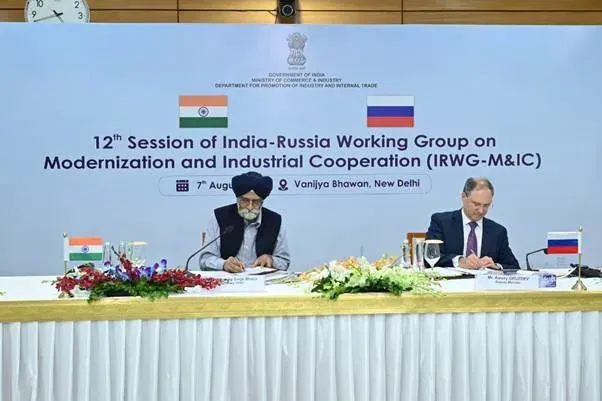
India and Russia held the 12th Session of the India-Russia Working Group on Modernisation and Industrial Cooperation at Vanijya Bhawan, New Delhi on 7 August .
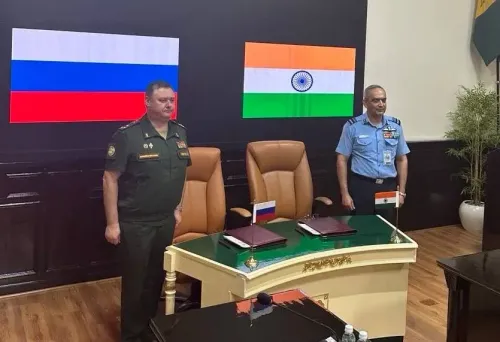
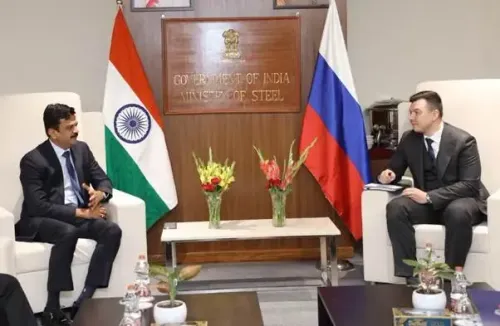
Amardeep Singh Bhatia (DPIIT) and Alexey Gruzdev (Russia's Deputy Minister of Industry and Trade) co-chaired the session.
New cooperation areas include the Vande Bharat train project , UAVs , SJ-100 regional aircraft (capacity: 103 passengers ), and 3-D printing .
Critical mineral discussions covered lithium mining , titanium technologies , rare earth elements , and the aluminium sector .
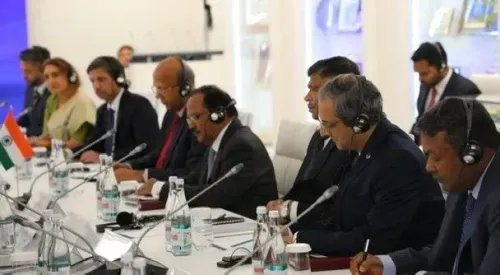
Around 60 delegates from both sides attended; a joint protocol was signed by both co-chairs.
A joint venture for urea production and DAP and NPK fertiliser supplies were also discussed.
India and Russia on Friday, 7 August agreed to deepen bilateral industrial cooperation across railway transport, unmanned aerial vehicles (UAVs), the SJ-100 regional aircraft, and critical minerals, following the conclusion of the 12th Session of the India-Russia Working Group on Modernisation and Industrial Cooperation in New Delhi. The session, held at Vanijya Bhawan, brought together around 60 delegates from both nations and resulted in a signed protocol reaffirming the strategic partnership.
Key Developments at the 12th Session
Amardeep Singh Bhatia, Secretary of the Department for Promotion of Industry and Internal Trade (DPIIT), co-chaired the meeting from India's side. Alexey Gruzdev, Deputy Minister of Industry and Trade of Russia, led the Russian delegation. Together, they reviewed progress made since the 11th session and charted new areas of cooperation across multiple sub-groups covering modernisation, mining, fertilisers, and railway transport.
Railway and Aerospace Cooperation
On the railways front, discussions covered infrastructure facilities, the Vande Bharat train project, and signalling equipment — signalling a push to bring Russian technical expertise into India's ongoing rail modernisation drive. In aerospace, both sides discussed cooperation on the SJ-100, a narrow-body Russian regional jet capable of carrying 103 passengers, along with aero-engines, 3-D printing, carbon-fibre technologies, and propulsion systems.
Critical Minerals and Industrial Sectors
The session placed notable emphasis on critical minerals, with discussions covering lithium mining, titanium technologies, rare earth elements, and enhanced collaboration in the aluminium sector and mining equipment. Cooperation on DAP and NPK fertiliser supplies, automation, renewable energy capacity building, power engineering, and a joint venture for urea production were also on the table — reflecting the breadth of the bilateral industrial agenda.
What the Protocol Signals
The Protocol of the 12th Session was signed by both co-chairs, according to an official statement issued after the meeting. The signing is intended to institutionalise commitments made during the session and deepen economic ties under the broader Intergovernmental Commission on Trade, Economic, Scientific, Technological and Cultural Cooperation. This comes amid sustained Western pressure on New Delhi over its continued engagement with Moscow following the Russia-Ukraine conflict — making the breadth of sectors covered in this session diplomatically notable.
What Comes Next
With sub-groups now active across modernisation, mining, fertilisers, and railways, the two sides are expected to advance specific project-level discussions in the months ahead. The inclusion of UAVs and aerospace cooperation in the agenda reflects India's interest in diversifying its defence and dual-use technology partnerships beyond traditional Western suppliers.
Point of View
Regional aircraft, lithium, rare earths, urea, and Vande Bharat — is far wider than a routine bilateral trade review. It reflects a deliberate Indian strategy to lock in Russian industrial partnerships across sectors where supply-chain diversification is a strategic priority, not just an economic one. The inclusion of dual-use domains like UAVs and aero-engines alongside civilian rail and fertilisers raises questions about how India will manage the optics with Western partners who have tied technology transfers to Russia-policy alignment. The critical minerals agenda is particularly telling: as the global scramble for lithium and rare earths intensifies, New Delhi is hedging across multiple supplier relationships — and Moscow, sanctions-hit but resource-rich, is a willing partner.
NationPress
22 Sept 2026
Frequently Asked Questions
What was agreed at the India-Russia working group session on 7 August?
India and Russia agreed to strengthen cooperation in railway transport, UAVs, the SJ-100 regional aircraft, critical minerals, fertilisers, and renewable energy, among other sectors. Both sides signed a protocol at the conclusion of the 12th Session of the India-Russia Working Group on Modernisation and Industrial Cooperation in New Delhi.
What is the SJ-100 aircraft discussed in the India-Russia talks?
The SJ-100 is a Russian narrow-body regional jet with a capacity of 103 passengers. India and Russia discussed cooperation in its production as part of the broader aerospace agenda at the 12th bilateral working group session.
How does the Vande Bharat project feature in India-Russia cooperation?
The Vande Bharat train project was raised as a new area of railway cooperation, alongside discussions on infrastructure facilities and signalling equipment. Russia's technical expertise in rail modernisation is being explored for potential integration into India's domestic rail expansion programme.
Which critical minerals were discussed between India and Russia?
Discussions covered lithium mining, titanium technologies, rare earth elements, and enhanced collaboration in the aluminium sector and mining equipment. These talks reflect India's broader push to secure critical mineral supply chains from multiple partners.
Who attended the 12th India-Russia working group session?
Around 60 delegates from both countries attended the session at Vanijya Bhawan, New Delhi. It was co-chaired by Amardeep Singh Bhatia from India's DPIIT and Alexey Gruzdev, Russia's Deputy Minister of Industry and Trade.