India's visa overhaul 2026: 9 categories, simpler forms, sharper security
Synopsis
India has quietly engineered one of its most significant border-access overhauls in decades — compressing 22 visa categories into 9, cutting application fields by 70%, and replacing three colonial-era laws with a single modern statute. The result: a foreign tourist can now attend a business meeting and see a doctor on the same visa, while airlines face ₹5 lakh fines for lax passenger checks.
Key Takeaways
India's Bureau of Immigration has reduced visa categories from 22 to 9 and sub-categories from 63 to 23 as of August 2026 .
Application form fields have been cut by approximately 70 per cent ; new visas under the system are expected by end of 2026 .
The Immigration and Foreigners Act, 2025 replaced three colonial-era laws and established the Bureau on a formal statutory footing for the first time.
The new Visitor Visa (V-1) covers business meetings, medical consultations, wellness retreats and short cultural courses — all on a single 30-day document.
The e-Visa now covers nationals of 172 countries , with 95% of applications processed within 72 hours .
Carriers bringing undocumented travellers face fines of up to ₹5 lakh ; the IVFRT network has been extended to 2031 with ₹1,800 crore in funding.
India's Bureau of Immigration (BoI) has completed the most sweeping overhaul of its visa framework in decades, cutting visa categories from 22 to 9, slashing application form fields by roughly 70 per cent, and granting security agencies expanded powers under a single consolidated law. The redesign — rolled out across 2025 and 2026 — aims to position India as a more accessible destination for tourism, business, education and medical travel, while tightening enforcement against misuse.
From Colonial Rules to a Single Modern Act
The Bureau of Immigration, established in 1971, spent over five decades operating under colonial-era statutes dating to 1920, 1939 and 1946. In September 2025, the Immigration and Foreigners Act, 2025 came into force, replacing those legacy laws and a 2000 carrier statute with a single consolidated Act. Crucially, the legislation gave the Bureau a formal statutory footing for the first time in its history.
The changes build on a decade of incremental reform — from e-visas for 43 countries in 2014 and online registration services from 2018, to automated e-gates at Delhi airport for Indian and Overseas Citizen of India (OCI) cardholders in 2024. Immigration check posts have grown from 83 in 2014 to 117 by March 2026, and average processing time at the counter has fallen from four to five minutes to one to two minutes.
Key Developments in the Restructured Framework
The rationalisation happened in two stages. In October 2025, categories were cut from 22 to 13. By August 2026, they were consolidated to 9: Business, Diplomatic, Work, Journalist, Medical, Official, Student, Visitor and Miscellaneous. Sub-categories have been reduced from 63 to 23. Visas under the new system are expected to be issued by the end of 2026.
The former Tourist Visa is now the Visitor Visa, with two tiers. The short-form V-1 is valid for 30 days with multiple entries and permits business meetings, medical consultations, short medical treatment, wellness retreats and short courses in Indian languages, music, art or craft — activities that previously required separate visa categories. The V-2, valid for one, five or ten years, covers all V-1 activities and additionally allows mountaineering.
The Medical Visa now specifically covers admitted or intensive treatment — including AYUSH systems such as Ayurveda and Unani — with a default validity of one year and multiple entries, reducing the burden of repeat applications during long treatment cycles. Attendants receive dedicated visas.
For students, one sub-category covers school and university enrolment; a second covers research, internships and exchanges. Those admitted through the Study in India portal qualify for an e-visa valid for up to five years or the duration of the course, whichever is shorter.
What Changes for Everyday Travellers
An online e-Arrival Card has replaced the paper landing card. The e-Visa is now available to nationals of 172 countries, with approximately 95 per cent of applications processed within 72 hours. Lost-passport holders can transfer a one-year or five-year e-Visa to a replacement document online. Overstayers can settle their status by paying a fixed fine rather than facing prosecution.
Families with one Indian parent are no longer required to register a child's birth with a registration officer if the child retains Indian nationality. OCI cardholders can now carry a digital e-OCI card on their phones, eliminating the need for a physical document at every entry.
Industry also benefits directly. Foreign engineers and technicians engaged by Indian companies can obtain a Production Investment Visa online. Sponsorship letters are now generated on the National Single Window System, removing the requirement for a line ministry recommendation.
Stronger Security Tools Under the New Law
The Immigration and Foreigners Act, 2025 codifies grounds for entry refusal — national security, sovereignty, territorial integrity, foreign relations and public health — and permits biometric data collection from all foreigners, not merely select visa holders. Airlines and shipping companies must transmit passenger and crew details before arrival. A carrier that brings a person without valid documents faces a fine of up to ₹5 lakh and bears the cost of removal.
Hotels, educational institutions and hospitals must report foreign guests, students and patients online within 24 hours. Visitors wishing to extend stays beyond 180 days must register before that threshold. Illegal migration and overstays are tracked through the District Police Module, now operational in over 700 districts.
Penalties have been significantly enhanced. Entering without valid documents can attract up to five years in prison; using forged documents carries two to seven years; overstaying or visa misuse can lead to up to three years. The Immigration, Visa, Foreigners Registration and Tracking (IVFRT) network, linking all 117 immigration posts with registration offices, has been extended to 2031 with an outlay of ₹1,800 crore.
Broader Implications and What Comes Next
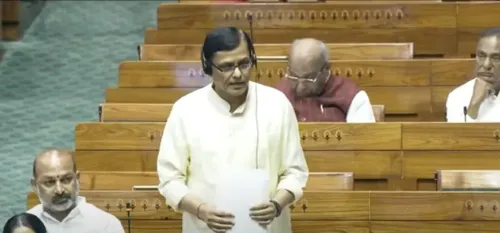
Speaking in Parliament in March 2025, Home Minister Amit Shah stated that the new law would stimulate tourism, employment and economic activity while barring those who pose a threat to national security. The Bureau's stated objective is to make India a destination of choice for tourism, business, education and medical value travel.
A group e-visa for cruise passengers has been announced. Popular heritage and desert sites in Rajasthan's border districts — including Sam dunes and Kuldhara — remain open to foreign tourists under the revised rules. Fast Track Immigration e-gates, currently operational at 13 airports for Indians and OCI cardholders, are set to expand to 21 major airports and eventually open to foreign nationals as well. The full implementation of new visa issuance under the restructured categories is expected before December 2026.
Point of View
Not categories. Collapsing 22 types into 9 removes bureaucratic friction on paper; whether frontline consular officers and airlines operationalise the new flexibilities consistently is a separate question. The expanded biometric collection and 24-hour hotel-reporting obligation also raise questions about data storage frameworks and privacy safeguards that have not been publicly detailed. And while the ₹1,800 crore IVFRT extension is substantial, India's immigration infrastructure still lags peer tourist economies significantly — 117 check posts for a country of this scale is a floor, not a ceiling.
NationPress
16 Nov 2026
Frequently Asked Questions
What are India's new visa categories after the 2026 overhaul?
India now has 9 visa categories: Business, Diplomatic, Work, Journalist, Medical, Official, Student, Visitor and Miscellaneous. This is down from 22 categories before the reform, with sub-categories reduced from 63 to 23. New visas under this system are expected to be issued by end of 2026.
What is India's new Visitor Visa and who can use it?
The Visitor Visa replaces the old Tourist Visa and comes in two forms. The V-1 is valid for 30 days with multiple entries and permits tourism, business meetings, medical consultations, wellness retreats and short cultural courses — all under a single document. The V-2 is valid for one, five or ten years and additionally covers mountaineering.
What is the Immigration and Foreigners Act, 2025?
The Immigration and Foreigners Act, 2025 is a single consolidated law that replaced three colonial-era statutes from 1920, 1939 and 1946, as well as a 2000 carrier law. It came into force in September 2025 and, for the first time, gives the Bureau of Immigration a formal legal basis.
How has India's e-Visa programme changed?
The e-Visa is now available to nationals of 172 countries, with about 95 per cent of applications processed within 72 hours. Travellers who lose their passport can transfer a one-year or five-year e-Visa to a replacement document online.
What new penalties apply for visa violations under the 2025 law?
Entering India without valid documents can now attract up to five years in prison. Using forged documents carries a sentence of two to seven years. Overstaying or misusing a visa can lead to up to three years in jail. Airlines or ships that bring undocumented passengers face fines of up to ₹5 lakh and must remove the individual at their own cost.