46th Indian Antarctica Expedition: First batch of 16 departs for Maitri Station
Synopsis
India's 46th Antarctic expedition has begun, with 16 scientists departing for the Maitri Research Station under the theme 'Climate Change and its signatures in Antarctica'. Among them is a Kochi-based researcher hunting for novel antibiotics in polar soil — an under-reported frontier of Indian science with real-world implications for drug discovery.
Key Takeaways
The first batch of 16 members of the 46th Indian Scientific Expedition to Antarctica (46-ISEA) departed on 4 November 2026 .
The expedition is organised by NCPOR under the Ministry of Earth Sciences ; its theme is 'Climate Change and its signatures in Antarctica' .
Athira A.S. from ICAR-CIFT, Kochi will research actinomycete diversity in Antarctic soil, targeting novel bioactive compounds and antibiotics.
Meteorologists Partik Kumar and Dheeraj Chaudhary from IMD Shillong will collect data to track global climate variability.
India operates two year-round Antarctic stations — Maitri and Bharati — accessible only between November and March .
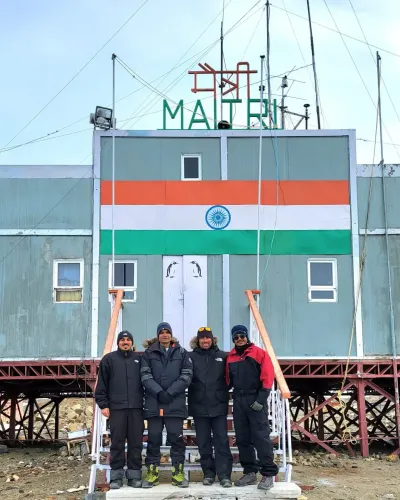
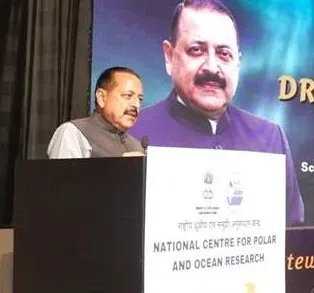
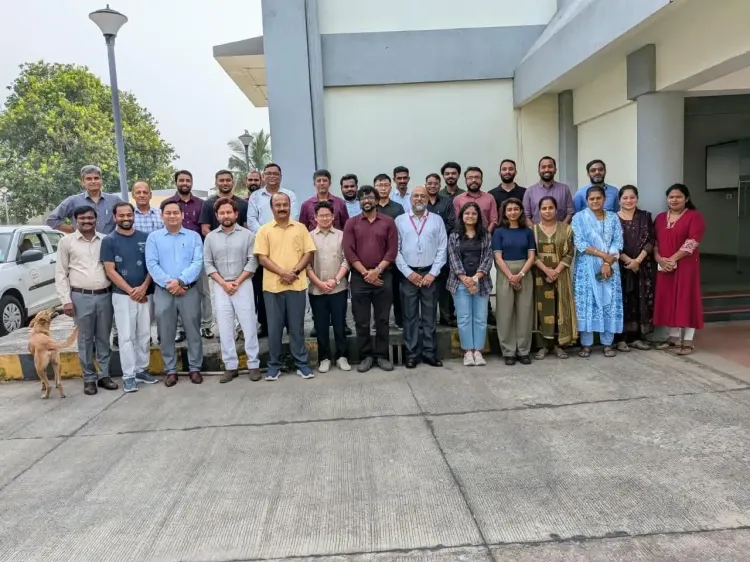
The first batch of 16 members from the 46th Indian Scientific Expedition to Antarctica (46-ISEA) has set off on its journey to the Maitri Research Station, the National Centre for Polar and Ocean Research (NCPOR) confirmed on Wednesday, 4 November 2026. NCPOR, a laboratory under the Ministry of Earth Sciences, said the team comprises scientists and researchers drawn from institutions across India.
Key Members and Research Mandate
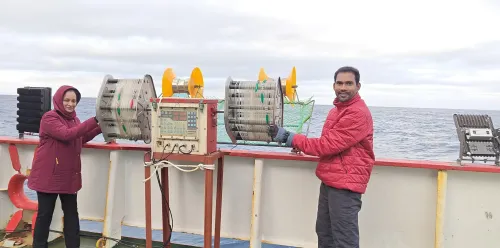
Among the 16 is Athira A.S., a research scholar at ICAR–Central Institute of Fisheries Technology (ICAR-CIFT) in Kochi. She will be stationed at Maitri to study microbial diversity in the Antarctic terrestrial ecosystem as part of a project titled 'Contaminant Load Evaluation in Antarctic Natural Systems (CLEAN-ANT)', designated ISEA-63 and coordinated by NCPOR.
Her specific focus will be on 'Actinomycete Diversity in Antarctic Soil' — isolating and characterising actinomycetes from Antarctic soil samples to assess their diversity and distribution under extreme environmental conditions. According to ICAR-CIFT, the work represents a milestone for the institute in expanding its research into polar microbial biodiversity and bioprospecting.
What Are Actinomycetes and Why Do They Matter
Actinomycetes are prokaryotic organisms classified as bacteria, recognised for their filamentous structures and capacity to decompose complex organic materials in soil and marine environments. They are significant components of the microbial community, particularly under conditions of high pH, elevated temperature, or water stress.
Crucially, a key objective of Athira's work is to explore the potential of these microorganisms to produce bioactive compounds, including novel antimicrobial substances and antibiotics. The Antarctic environment — relatively unexplored — could yield insights into microbial adaptation and uncover organisms with previously unknown bioactive properties, the institute noted.
Meteorologists from Meghalaya Join the Mission
Two meteorologists from the India Meteorological Department (IMD)'s Meteorological Centre in Shillong, Meghalaya — Partik Kumar and Dheeraj Chaudhary — are also part of the expedition. Data gathered from Antarctica will contribute to tracking climate variability and weather patterns on a global scale.
Expedition Focus and Station Access
The overarching theme of 46-ISEA is 'Climate Change and its signatures in Antarctica'. NCPOR operates two year-round stations on the continent — Maitri and Bharati — but access is restricted to the window between November and March each year due to Antarctica's geographic and seasonal constraints.
As the expedition moves forward, findings from extreme-environment microorganisms and atmospheric data are expected to deepen India's contribution to global polar and climate science.
Point of View
Yet the 46-ISEA's dual mandate — climate change signatures and polar bioprospecting — sits at the intersection of two of the most consequential scientific challenges of the decade. The search for novel antibiotics in Antarctic actinomycetes is not an exotic sideshow; antibiotic resistance is a global health emergency, and extreme-environment organisms represent an underexplored source of new compounds. What is notable here is ICAR-CIFT's move into polar research — a signal that Indian agri-research institutions are beginning to reach beyond their traditional mandates. Whether these findings translate into peer-reviewed outputs and real biomedical pipelines will be the measure of success, not the departure ceremony.
NationPress
5 Nov 2026
Frequently Asked Questions
What is the 46th Indian Scientific Expedition to Antarctica?
It is India's 46th organised scientific mission to Antarctica, led by the National Centre for Polar and Ocean Research (NCPOR) under the Ministry of Earth Sciences. The expedition's central theme is 'Climate Change and its signatures in Antarctica', with researchers studying everything from polar microbial diversity to atmospheric weather patterns.
Who are the members of the first batch of 46-ISEA?
The first batch comprises 16 scientists and researchers from institutions across India, including Athira A.S. from ICAR-CIFT in Kochi and two meteorologists — Partik Kumar and Dheeraj Chaudhary — from the IMD's Meteorological Centre in Shillong.
What research will be conducted at Maitri Research Station?
Among the key projects is a study on actinomycete diversity in Antarctic soil, led by researcher Athira A.S., aimed at isolating microorganisms with potential antibiotic and bioactive compound production. This falls under the CLEAN-ANT (ISEA-63) project coordinated by NCPOR in collaboration with ICAR-CIFT.
Why is the Antarctic window limited to November to March?
Antarctica's geographic position means its austral summer — when conditions are least severe — runs from November to March. Outside this period, extreme cold, polar night, and inaccessible sea ice make travel and sustained research impractical, so all expeditions are scheduled within this window.
What are actinomycetes and why are they significant in this research?
Actinomycetes are filamentous bacteria found in soil and marine environments, known for producing biologically active natural compounds including antibiotics. Studying them in the relatively unexplored Antarctic ecosystem could reveal novel antimicrobial substances and offer insights into how microorganisms adapt to extreme environmental conditions.