India's growth trajectory: Global boards, 7% GDP forecast, and structural fault lines
Synopsis
Moody's has lifted India's GDP forecast to 7%, global boards are converging on New Delhi, the Jio listing has redefined IPO scale, and two Indian telcos now sit in the global top ten. But beneath the headline optimism, a youth unemployment crisis, urban infrastructure stress, and private sector capex hesitancy threaten to widen the gap between India's potential and its lived reality.
Key Takeaways
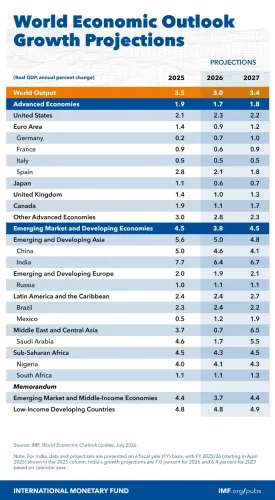
Moody's Ratings upgraded India's GDP growth forecast to 7% for the current fiscal year, up from 6.5% .
The TIC Council held its first global board meeting in New Delhi , with Director General Florian Anderhuber calling it a 'direct endorsement of India's economic trajectory.' Economist Jeffrey Sachs predicted India could become the world's largest economy in coming decades, subject to sustained investment in education and climate resilience.
The World Bank's October country report estimated 500 million Indians have been lifted out of poverty.
Essar Group announced a $15 billion steel plant in Iowa ; JSW is relaunching Volkswagen in India via a majority-owned joint venture.
Structural risks — youth unemployment, weak private capex, and urban infrastructure gaps — remain significant counterweights to the macro optimism.
In late October 2026, New Delhi hosted the first global board meeting of the TIC Council — an internationally recognised standards body — alongside the TIC Council India Summit, signalling a broader message from world leadership that India's economic ascent is no longer a projection but an operating reality. The gathering was among several high-profile events that have made New Delhi a recurring dateline for global strategic conversations.
Global Endorsements Stack Up
Florian Anderhuber, Director General of the TIC Council, described the choice of venue as 'a direct endorsement of India's economic trajectory.' That sentiment was reinforced when New Delhi also hosted the inaugural Bloomberg New Economy Forum, drawing 500 global leaders alongside Michael Bloomberg to map the future of global growth. Prime Minister Narendra Modi reportedly hailed the forum as evidence of India's expanding role in world affairs.
Noted global economist Jeffrey Sachs has predicted that India could become the world's largest economy in coming decades, provided it sustains momentum through investments in education, employment, and climate resilience. In doing so, Sachs acknowledged, according to reports, the role of domestic infrastructure conglomerates — including the Adani Group — in driving the physical transformation that such expansion demands.
Hard Numbers Back the Optimism
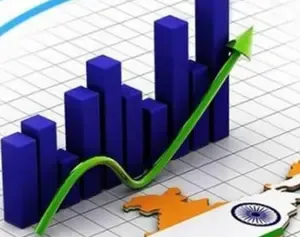
Moody's Ratings has upgraded India's GDP growth forecast to 7 per cent for the current fiscal year, up from an earlier projection of 6.5 per cent, citing strong domestic consumption, broad-based economic momentum, and resilience to global headwinds. The upgrade adds institutional weight to what has until recently been characterised primarily as qualitative confidence.
The World Bank's October country report estimated that 500 million citizens have been lifted out of poverty, underscoring the developmental arc behind the macroeconomic narrative.
India Inc Makes Global Moves
Episodes of Indian corporate ambition are playing out across geographies. US Secretary of State Marco Rubio recently spotlighted Reliance's Jamnagar facility to international audiences as a showcase of refining capability. Meanwhile, US President Donald Trump hosted the Essar Group to mark a $15 billion steel plant investment in Iowa.
On the automotive front, the Tata Group has announced a significant foray into the European market, while JSW is set to relaunch the Volkswagen brand in India through a majority-owned joint venture to manufacture passenger vehicles for both domestic and global markets.
Domestically, the listing of Reliance-owned Jio last quarter anchored a notable bull run on Indian exchanges, demonstrating, according to market observers, a 'staggering appetite' for large-scale fund raises. Together with Bharti Airtel, India now has two companies ranked among the top ten telecom operators globally. With 2027 approximately 45 days away, market sentiment is described as overwhelmingly bullish, with states competing actively to attract big-ticket foreign investment.
The Fault Lines Beneath the Headline Numbers
Critics and analysts argue that any growth story of this scale carries structural socio-economic tensions. India's large wealth inequities have taken on political dimensions, with a young demographic pressing for a reformed education system and faster job creation. India's demographic dividend — long cited as a strategic advantage — risks becoming a liability, analysts warn, if ecosystem-aligning reforms are not expedited.
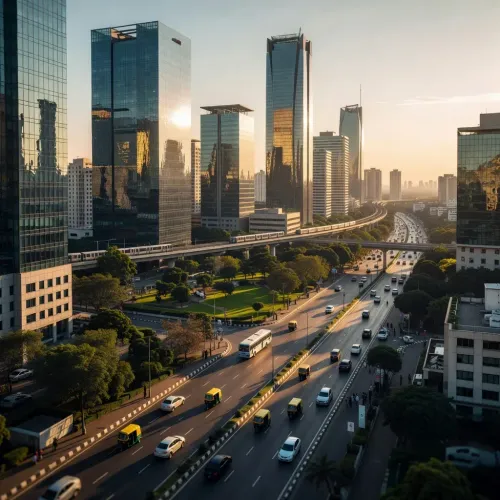
The private sector has notably held back from large capital expenditure commitments, a restraint that observers say must reverse if growth targets are to be met. Urban infrastructure, particularly in mega-metros, is reportedly struggling to keep pace with growth ambitions, and ease-of-doing-business bottlenecks persist at the ground level even as top-line optimism remains high. In response, sections of India Inc have been quietly lobbying for long-pending land and labour reforms.
Venture capitalist Hemant Mohapatra captured the duality succinctly: 'India's rise will be messy. But inevitable.'
What the Trajectory Looks Like From Here
India's near-term economic story is underpinned by political stability, policy continuity, and a consumption market of 1.4 billion people that global corporations — across sectors from automobiles and fast-moving consumer goods to global capability centres and fintech — increasingly treat as indispensable to their own profitability. The challenge ahead is translating that macro confidence into ground-level execution: credible job creation, equitable growth, and infrastructure that can absorb the ambition being placed upon it.
Point of View
Global board meetings in New Delhi, and the Jio listing creates a compelling top-line narrative — but India has a long history of headline numbers that did not translate into distributed prosperity. The more telling signal is private sector capex restraint: when domestic industry is hesitant to bet big on the country's own growth story, it raises questions that foreign endorsements alone cannot answer. The demographic dividend window is closing faster than the reform pipeline is moving, and the gap between macro optimism and ground-level execution is not a rounding error — it is the central risk of this decade.
NationPress
12 Nov 2026
Frequently Asked Questions
What did Moody's say about India's GDP growth in 2026?
Moody's Ratings upgraded India's GDP growth forecast to 7% for the current fiscal year, up from an earlier projection of 6.5%, citing strong domestic consumption, broad-based economic momentum, and resilience to global shocks.
Why is New Delhi attracting so many global leadership gatherings?
New Delhi has hosted the TIC Council's first global board meeting and the inaugural Bloomberg New Economy Forum in recent months, reflecting what global leaders describe as India's combination of political stability, policy continuity, and a large and growing consumer market. Prime Minister Narendra Modi has cited these events as evidence of India's expanding role in global affairs.
What did Jeffrey Sachs say about India's economic future?
Economist Jeffrey Sachs predicted that India could become the world's largest economy in the coming decades, provided it sustains growth momentum through investments in education, jobs, and climate resilience. He also acknowledged the role of domestic infrastructure conglomerates in enabling that physical transformation.
What are the key risks to India's growth story?
Analysts point to large wealth inequalities, a restless youth demographic demanding more jobs and better education, creaking urban infrastructure, and an unexpected reluctance by the private sector to commit to major capital expenditure. Land and labour reform bottlenecks are also cited as barriers between high-level optimism and ground-level execution.
What is the significance of the Jio listing for India's capital markets?
The listing of Reliance-owned Jio last quarter anchored a domestic bull run and demonstrated, according to market observers, a large appetite for major fund raises. It has reinforced India's growing reputation as a leading IPO destination, with Jio and Bharti Airtel now both ranked among the top ten telecom operators globally.