India launches 9th tranche of critical mineral block e-auctions, 20 blocks on offer

Synopsis
India's Ministry of Mines has put 20 new critical mineral blocks — containing graphite, vanadium, gallium, titanium, tungsten, and scandium — up for auction in its ninth tranche, alongside a fresh round of exploration licences. With 64 of 100 earlier blocks already sold, the Centre is accelerating its mineral security push and has quietly lowered bidding thresholds to prevent unsold blocks.
Key Takeaways
The Union Ministry of Mines launched the 9th tranche of critical mineral block e-auctions on 5 November 2026 , offering 20 new blocks across 8 states .
Minerals on offer include graphite , vanadium , gallium , titanium , tungsten , and scandium — vital for EVs, defence, and clean energy.
Across the previous 8 tranches , 64 of 100 offered blocks were successfully auctioned.
The Mineral (Auction) Third Amendment Rules, 2026 (notified 16 October 2026 ) cut the minimum qualified bidder threshold from 3 to 2 for Part D minerals.
The third tranche of Exploration Licence blocks was also launched simultaneously; 11 EL blocks have been sold in prior tranches.
Bid submission deadline is 7 January 2027 ; tender documents available until 1 January 2027 .
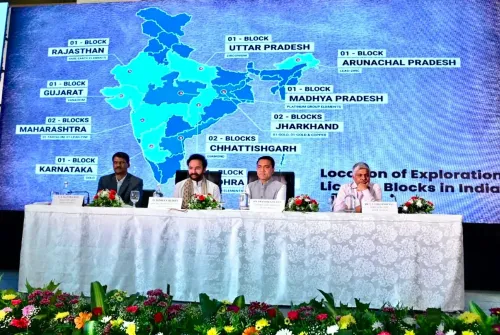
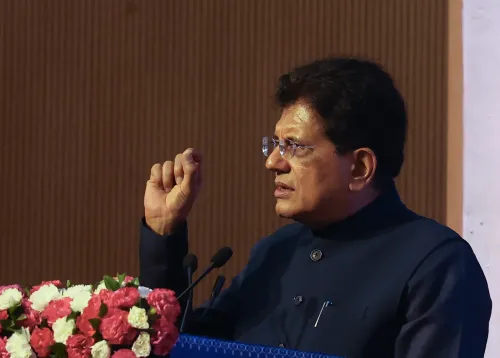
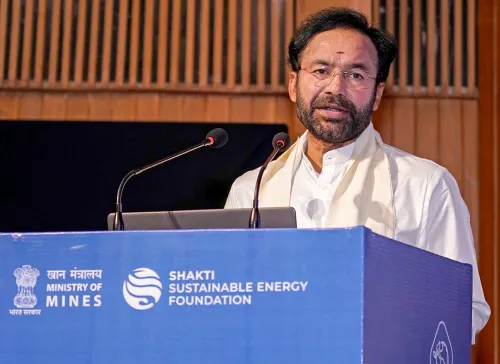
The Union Ministry of Mines on Thursday, 5 November 2026, launched the ninth tranche of e-auctions for critical and strategic mineral blocks, putting up 20 new blocks for bidding alongside the third tranche of the Grant of Exploration Licence (EL) auction. Union Coal and Mines Minister G. Kishan Reddy officiated the launch, with Goa Chief Minister Pramod Sawant attending as chief guest.
What Is on the Block
The 20 critical and strategic mineral blocks span eight states. Chhattisgarh accounts for the highest share with five blocks, while Rajasthan, Telangana, and West Bengal contribute three blocks each. Madhya Pradesh and Maharashtra have two blocks each, and Bihar and Andhra Pradesh hold one block each.
The blocks contain minerals including graphite, vanadium, gallium, titanium, tungsten, and scandium — raw materials that underpin clean energy technologies, electric mobility, advanced manufacturing, fertilisers, defence, aerospace, and electronics, according to an official statement.
Progress So Far
Across the previous eight tranches, the government had offered 100 unique critical and strategic mineral blocks, of which 64 have been successfully auctioned. The ninth tranche therefore represents the first expansion of the pipeline beyond that initial century of blocks, underscoring the Centre's intent to accelerate India's mineral security agenda.
On the exploration front, 11 EL blocks have been successfully auctioned across two earlier tranches. Exploration Licences, introduced through Section 10BA of the Mines and Minerals (Development and Regulation) Act, allow private investors to fund exploration of 29 critical and deep-seated minerals listed in the Seventh Schedule — enabling private capital to enter the cycle before mining commences.
Key Rule Changes to Ease Participation
The government notified the Mineral (Auction) Third Amendment Rules, 2026 on 16 October 2026, cutting the minimum number of Technically Qualified Bidders required for the second round from three to two for Part D minerals. Officials say this directly addresses one of the primary reasons blocks have gone unsold in past rounds. Additionally, Letters of Intent will now be issued automatically through the Unified Mining Portal, streamlining post-auction processes.
These changes build on earlier reforms, including the Mineral (Auction) Second Amendment Rules, 2025 and the introduction of Insurance Surety Bonds, both aimed at improving ease of doing business and investor confidence in the sector.
Auction Timelines and Process
Sale of tender documents commenced on Thursday, 5 November 2026. The last date for purchase of tender documents is 1 January 2027 by 5 pm IST, and bids — both Technical Bid and Initial Price Offer — must be submitted by 7 January 2027.
Critical mineral composite licence and mining lease blocks will be auctioned via a two-stage ascending forward auction, with the highest revenue-share bidder winning. Exploration Licence blocks follow a two-stage descending reverse auction, where the bidder quoting the lowest percentage share of a future lessee's revenue prevails. All auctions are conducted through the MSTC e-auction platform.
With the global race to secure critical mineral supply chains intensifying, India's expanding auction pipeline positions the country to reduce import dependence and anchor domestic clean-energy and defence manufacturing over the coming decade.
Point of View
If uneven, progress — 64 of 100 blocks sold across eight tranches is a respectable hit rate, but it also means 36 blocks found no takers, which is precisely why the Centre has quietly lowered the qualified-bidder threshold. The real test is whether reducing that threshold draws in genuine exploration capital or simply lowers the competitive bar without improving quality of outcomes. With China controlling the processing of most of these minerals globally, India's upstream auctions are necessary but not sufficient — without parallel investment in beneficiation and refining capacity, winning bids will still depend on Chinese processing infrastructure. The addition of Exploration Licences is a structurally sound reform, but 11 EL blocks sold in two tranches suggests private appetite for pre-mining risk remains limited.
NationPress
5 Nov 2026
Frequently Asked Questions
What is the 9th tranche of critical mineral block e-auction in India?
It is the latest round of government-conducted online auctions for critical and strategic mineral deposits, launched on 5 November 2026 by the Union Ministry of Mines. A total of 20 blocks containing minerals such as graphite, vanadium, gallium, titanium, tungsten, and scandium are on offer across eight states.
Which states have mineral blocks in the 9th tranche auction?
Chhattisgarh has the most blocks with five, followed by Rajasthan, Telangana, and West Bengal with three each. Madhya Pradesh and Maharashtra have two blocks each, while Bihar and Andhra Pradesh have one block each.
What is an Exploration Licence (EL) under the MMDR Act?
An Exploration Licence, introduced via Section 10BA of the Mines and Minerals (Development and Regulation) Act, allows private investors to fund and conduct exploration of 29 critical and deep-seated minerals before any mining begins. The third tranche of EL block auctions was launched alongside the ninth tranche of mineral block auctions.
What rule changes have been made to improve the auction process?
The Mineral (Auction) Third Amendment Rules, 2026, notified on 16 October 2026, reduced the minimum Technically Qualified Bidders required for the second round from three to two for Part D minerals. Letters of Intent will now also be issued automatically through the Unified Mining Portal, reducing administrative delays.
What are the key deadlines for the 9th tranche mineral auction?
Tender documents can be purchased until 1 January 2027 by 5 pm IST. The deadline for submission of both the Technical Bid and Initial Price Offer is 7 January 2027. All auctions are conducted through the MSTC e-auction platform.