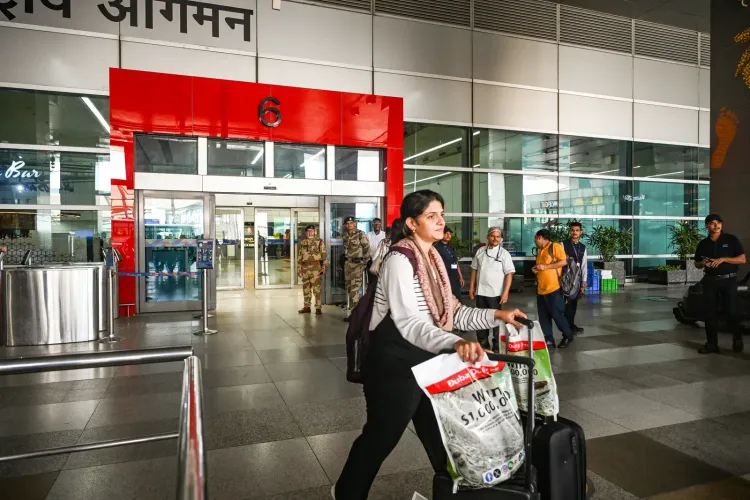
India aviation international traffic rebounds 24% in May as West Asia tensions ease
Synopsis
India's international aviation traffic surged 24% month-on-month in May as West Asia tensions eased, pushing the passenger load factor to 76.6% — a sign demand is outrunning added capacity. But with the rupee at ₹94.7 to the dollar, airlines are caught between cheaper fuel and stubbornly expensive dollar-linked costs, making margin recovery uneven at best.
Key Takeaways
International passenger traffic carried by Indian airlines rose 24 per cent month-on-month to approximately 2.3 million in May 2025 .
International RPKs reached around 8 billion , up 12 per cent sequentially ; passenger load factor improved to 76.6 per cent .
Brent crude averaged $72.9 per barrel , down 21 per cent month-on-month , easing fuel cost pressure.
The Indian rupee held at approximately ₹94.7 per dollar , 10 per cent weaker year-on-year , keeping dollar-linked costs elevated.
Domestic passenger traffic grew 10 per cent year-on-year to around 15.4 million ; domestic ASKs rose to approximately 17.8 billion .
India's aviation sector posted a significant recovery in international passenger traffic in May 2025, with volumes rising 24 per cent month-on-month to approximately 2.3 million passengers, according to a report by Equirus Securities. The uptick was driven primarily by easing geopolitical tensions in West Asia, which had disrupted flight operations in preceding months, alongside sustained strength in domestic travel demand.
International Traffic: Key Numbers
Revenue passenger kilometres (RPKs) on international routes climbed to around 8 billion, up 12 per cent sequentially. Flight departures improved to approximately 14,200, a 22 per cent month-on-month rise, while available seat kilometres (ASKs) grew 10 per cent to around 10.5 billion.
Notably, passenger demand outpaced capacity recovery, pushing the passenger load factor to 76.6 per cent — a signal that normalisation of international operations is gaining momentum rather than being driven purely by added seats.
Fuel Relief, But Rupee Remains a Drag
Global aviation fuel prices provided meaningful relief on a sequential basis. Brent crude averaged around $72.9 per barrel in May, declining 21 per cent month-on-month, even as it remained 8 per cent higher year-on-year. The lower fuel bill offers a partial cushion for airline margins.
However, the Indian rupee continued to weigh on balance sheets, holding at approximately ₹94.7 against the US dollar — 10 per cent weaker year-on-year. Dollar-denominated costs including aircraft leases, maintenance, and spare parts remain elevated, limiting the full benefit of cheaper fuel.
Domestic Aviation Holds Firm
On the home front, domestic passenger traffic reached around 15.4 million in May, growing 10 per cent year-on-year and 11 per cent month-on-month. Domestic RPKs mirrored that pace, rising 11 per cent on both an annual and sequential basis to approximately 15.3 billion.
Capacity additions kept pace with demand: domestic ASKs rose to around 17.8 billion, up 8 per cent year-on-year and 6 per cent month-on-month, while flight departures touched approximately 103,500, increasing 5 per cent annually and 6 per cent sequentially, according to the Equirus Securities report.
Outlook: Recovery Path and Remaining Risks
The sequential improvement across load factors, RPKs, and flight departures suggests Indian carriers are rebuilding international network density after a period of geopolitical disruption. This comes amid broader global aviation recovery, with Asia-Pacific routes among the last to fully normalise post the West Asia tensions flare-up.
The key variables to watch remain the trajectory of the rupee and any renewed instability in West Asian airspace, either of which could reverse the cost and capacity gains seen in May. Industry observers will look to June data to confirm whether the recovery is sustained or seasonal.
Point of View
But the structural tension for Indian carriers has not gone away: fuel relief is real, yet the rupee at ₹94.7 to the dollar erodes it on every lease payment and maintenance invoice. Load factors at 76.6% are a recovery-phase number, not a profitability number — airlines typically need sustained loads above 80–82% to translate seat fill into margin. The deeper question is whether the West Asia normalisation holds; a single escalation could unwind two months of sequential gains overnight. Domestic demand, meanwhile, continues to do the heavy lifting, and that is where Indian carriers' near-term earnings story will be written.
NationPress
4 Jul 2026
Frequently Asked Questions
How much did India's international aviation traffic grow in May 2025?
International passenger traffic carried by Indian airlines rose approximately 24 per cent month-on-month to around 2.3 million passengers in May 2025, according to an Equirus Securities report. Revenue passenger kilometres also climbed 12 per cent sequentially to around 8 billion.
Why did international aviation traffic recover in May 2025?
The primary driver was the easing of geopolitical tensions in West Asia, which had previously disrupted international flight operations. Lower global aviation fuel costs also supported airlines, though a weak rupee continued to pressure dollar-denominated expenses.
What is the current passenger load factor for Indian international airlines?
The passenger load factor for Indian carriers on international routes improved to 76.6 per cent in May 2025. Demand growth outpaced capacity additions during the month, which drove the load factor higher sequentially.
How is the weak rupee affecting Indian airlines?
The Indian rupee was at approximately ₹94.7 against the US dollar in May 2025, about 10 per cent weaker year-on-year. This keeps aircraft lease costs, maintenance expenses, and other dollar-denominated operating costs elevated, partially offsetting the benefit of lower fuel prices.
How is India's domestic aviation sector performing?
Domestic passenger traffic reached around 15.4 million in May 2025, up 10 per cent year-on-year and 11 per cent month-on-month. Domestic ASKs rose to approximately 17.8 billion, with flight departures touching around 103,500, reflecting healthy and sustained demand.