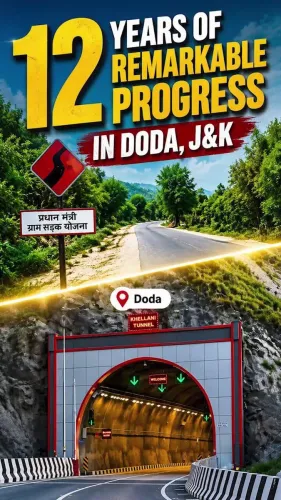
Dr. Jitendra Singh Highlights 12 Years of GI-Tagged Products from UKD
Synopsis
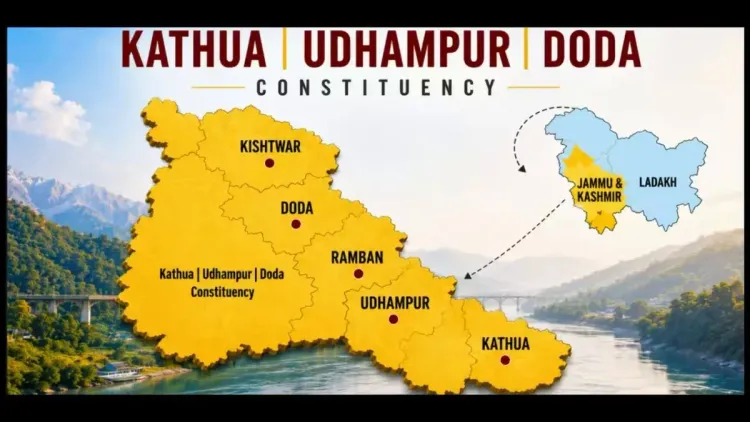
Union Minister Dr. Jitendra Singh on 4 July 2026 spotlighted six GI-tagged products from his Udhampur-Kathua-Doda constituency — including Bhaderwah Lavender, Kishtwar Saffron, and Basohli Pashmina — calling them proof of twelve years of transformation under PM Modi's Vocal for Local vision.
Key Takeaways
Jitendra Singh listed six GI-tagged products from the Udhampur-Kathua-Doda Lok Sabha constituency on 4 July 2026 .
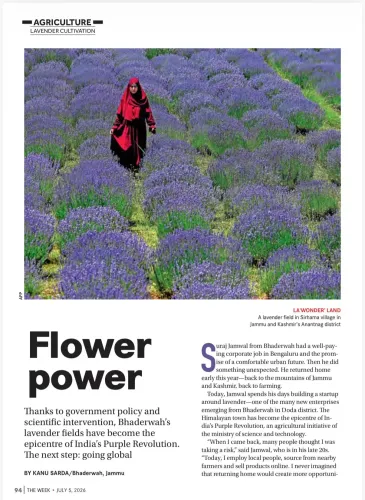
Bhaderwah Lavender was highlighted as the flagship of the Purple Revolution , a CSIR-IIIM-backed programme launched in 2016 .
Products include Basohli Painting , Basohli Pashmina , Udhampur Kaladi , Doda Rajma , Kishtwar Saffron , and Ramban Honey .
GI protection under the Geographical Indications of Goods Act shields these products from counterfeiting and supports premium market access.
The minister linked the GI push to PM Modi 's Atmanirbhar Bharat and 'Vocal for Local' framework announced in May 2020 .
J&K 's GI registrations accelerated after the 2019 reorganisation of the former state into a Union Territory.
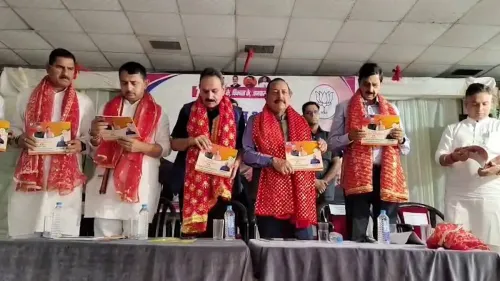
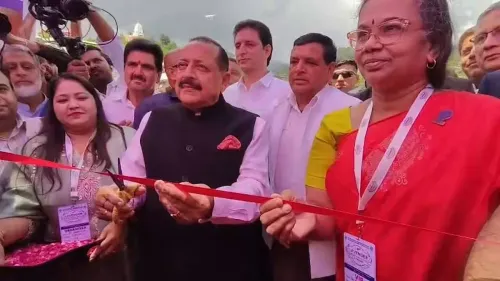
Union Science and Technology Minister Dr. Jitendra Singh, who represents the Udhampur-Kathua-Doda Lok Sabha constituency, on Saturday, 4 July 2026, showcased a range of Geographical Indication (GI)-tagged products from his constituency, framing them as evidence of twelve years of transformation under Prime Minister Narendra Modi's 'Vocal for Local' vision.
Context
In his post, Dr. Singh listed several GI-tagged products from the region: Basohli Painting and Basohli Pashmina from Kathua district, Udhampur Kaladi, Doda Rajma, Kishtwar Saffron, Ramban Honey, and Bhaderwah Lavender. He described the lavender as the 'torchbearer of the Purple Revolution,' a government programme that has promoted lavender cultivation in the Bhaderwah valley as a high-value alternative crop. The minister presented these products as 'an assorted bouquet representing 12 years of transformation.'
The Geographical Indications of Goods Act provides legal protection to region-specific crafts and agricultural products, preventing misuse of the name and helping producers access premium markets. Jammu and Kashmir has seen an acceleration in GI registrations since 2014, with the pace intensifying after the reorganisation of the former state into a Union Territory in 2019.
Policy Backdrop
'Vocal for Local' was articulated by Prime Minister Modi as a central pillar of the Atmanirbhar Bharat package announced in May 2020, calling on citizens and institutions to prioritise domestically produced goods. For Jammu and Kashmir, this translated into a concerted push to brand and market traditional knowledge-based products — from handicrafts such as Pashmina weaving to agricultural specialities like saffron and rajma — through the GI framework.
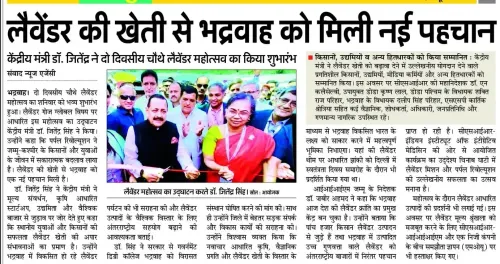
The Purple Revolution for lavender farming was initiated in 2016 with support from the Council of Scientific and Industrial Research – Indian Institute of Integrative Medicine (CSIR-IIIM). The programme introduced lavender cultivation to farmers in Doda and adjoining districts as a means of diversifying income away from subsistence crops. The initiative has since been cited by the government as a model for science-led agricultural transformation in hilly terrains.
Stakeholders and Impact
The primary beneficiaries of GI protection and the Purple Revolution are J&K's artisan communities, weavers, and small farmers. Basohli Painting artists and Pashmina weavers gain protection against counterfeit products in domestic and export markets, while lavender and saffron growers benefit from premium pricing linked to certified geographic origin. Kishtwar Saffron, grown at high altitude, competes in a market where provenance commands significant price premiums.
Ramban Honey and Doda Rajma similarly draw their commercial value from unique agro-climatic conditions that GI certification helps authenticate. For the broader constituency, the cluster of protected products represents a diversified rural economy anchored in traditional knowledge and supported by central policy frameworks.
What's Next
The government is expected to consider further GI applications from J&K districts as more products are identified for protection. Separately, the National Mission on Lavender is being watched for budgetary and area-expansion updates that could scale the Purple Revolution beyond its current footprint in Bhaderwah and neighbouring valleys. Dr. Singh's post, framing these achievements in the context of a twelve-year arc, signals that GI-linked branding will remain a prominent plank of the constituency's development narrative ahead of future electoral cycles.
Point of View
Reinforcing the BJP's strategy of making central schemes visible at the grassroots level in J&K. The Purple Revolution reference is particularly significant: it positions science-led agricultural intervention as a symbol of post-reorganisation dividends for the Union Territory. As J&K's full statehood question remains politically live, such messaging serves to anchor the development argument firmly in the government's favour.
NationPress
4 Jul 2026
Frequently Asked Questions
What is the Purple Revolution in Jammu and Kashmir?
The Purple Revolution is a government programme that promotes lavender cultivation in the Bhaderwah valley of Doda district as a high-value alternative crop, launched in 2016 with support from CSIR-IIIM.
Which products from Udhampur-Kathua-Doda have GI tags?
Products with GI tags from the constituency include Basohli Painting, Basohli Pashmina, Udhampur Kaladi, Doda Rajma, Kishtwar Saffron, Ramban Honey, and Bhaderwah Lavender.
What does a GI tag mean for a product?
A Geographical Indication tag under the Geographical Indications of Goods Act provides legal protection to region-specific products, prevents counterfeiting, and helps producers access premium domestic and export markets.
What is Vocal for Local and how does it relate to J&K products?
Vocal for Local is PM Modi's call, articulated as part of the Atmanirbhar Bharat package in May 2020, for citizens to prefer domestically made goods. For J&K, it translated into branding and marketing GI-tagged traditional products to boost rural incomes.
Who is Dr. Jitendra Singh and which constituency does he represent?
Dr. Jitendra Singh is the Union Minister of State (Independent Charge) for Science and Technology and Earth Sciences, and the Member of Parliament from the Udhampur-Kathua-Doda Lok Sabha constituency in Jammu and Kashmir.