India's Crude and Petroleum Reserves: A 7-8 Week Buffer Against Global Energy Crises
Synopsis
Discover how India is well-prepared for potential global energy disruptions with over 250 million barrels of crude oil and petroleum products, offering a robust buffer of 7-8 weeks across its supply chain.
Key Takeaways
India possesses over 250 million barrels of crude and petroleum products.
There is a 7-8 week buffer across the supply chain.
India's strategic reserves are diversified across multiple locations.
Only 40% of crude imports come from the Strait of Hormuz.
India is a net exporter of refined petroleum products.
New Delhi, March 7 (NationPress) — Senior government officials reassured the public on Saturday that the ongoing global energy scenario does not pose a crisis for India. The nation currently possesses over 250 million barrels (approximately 4,000 crore litres) of crude oil and petroleum products, which translates to a buffer of about 7-8 weeks throughout the supply chain.
These reserves are strategically distributed across various locations and formats, including above-ground storage tanks, underground strategic caverns, pipeline systems, terminal tankage, offshore storage vessels in transit, and three dedicated strategic petroleum reserve facilities located at Mangalore, Padur, and Visakhapatnam.
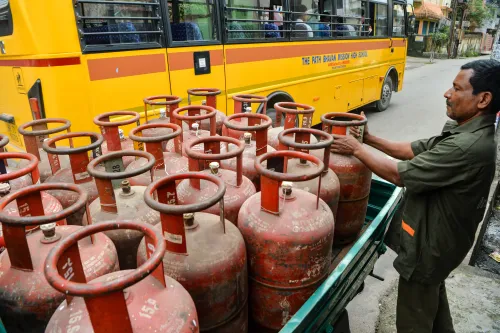
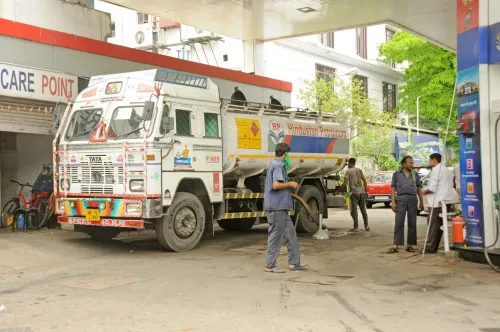
As per official reports, India is adequately stocked with crude oil, petrol, diesel, ATF, LPG, and LNG, maintaining sufficient inventories to manage short-term disruptions while continuing to procure energy from diverse global suppliers.
“The rumors suggesting a halt in global oil supplies or that India only has reserves for 25 days are inaccurate and do not represent the true supply and stock situation,” the officials clarified.
They emphasized that India is strategically positioned, having built a robust framework over the past 12 years through consistent energy policies.
The buffer is substantial, supply routes are diversified, and the delivery record remains uninterrupted, they noted.
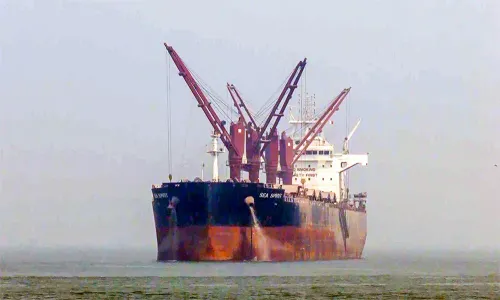
This buffer should be viewed as a safety net, not a countdown. It supplements, rather than replaces, the daily imports that continue to arrive via multiple pathways. Even if the Hormuz Strait were to be entirely disrupted, India's diverse sourcing strategy would mean the impact would be partial, not total, as a significant volume of India's crude does not pass through Hormuz, as stated by government sources.
Over the last ten years, India's strategic oil diplomacy has expanded its supplier network from 27 to 40 countries across six continents.
The era when India's energy security was dependent on a single maritime chokepoint is now behind us. Supplies from Russia, West Africa, the Americas, Central Asia, and non-Gulf Middle Eastern routes ensure that disruptions in any single corridor lead to managed sourcing adjustments rather than emergencies.
Only about 40% of India’s crude imports transit through the Strait of Hormuz, while approximately 60% utilize alternate routes that remain unaffected, guaranteeing that energy availability for Indian consumers continues, even amid global crises or the pandemic, according to sources.
Countries such as Australia and Canada have also extended offers for additional gas supplies, while India actively explores alternative sources to bolster its energy security. Recently, India has entered into new energy supply agreements with partners like the United States and the United Arab Emirates to secure stable long-term supplies.
India's refining capacity stands at 258 MMTPA, making it the fourth largest globally and exceeding domestic consumption levels of 210 to 230 MMTPA. This infrastructure is adept at processing a diverse array of crude grades, ensuring that Indian refiners are not reliant on a fixed supply from any single origin.
This flexibility is a security advantage that has been intentionally cultivated over the last decade, according to officials.
Additionally, India ranks as the fifth-largest exporter of refined petroleum products worldwide.
When Europe faced fuel shortages following sanctions on Russian crude, it was India's refineries that helped fill the gap. India has never needed approval from any nation to purchase Russian oil.
India continues to import Russian oil as of February 2026, with Russia remaining India's largest crude oil supplier. Throughout the three years of the Russia-Ukraine conflict, India maintained its purchases of Russian oil despite opposition from the US and EU. Imports surged significantly after 2022 due to discounted prices and refinery demands.
Therefore, the suggestion that a short-term waiver “enables” these purchases overlooks the fact that this trade has persistently continued.
India is a net exporter of refined products globally—a position that strengthens, rather than weakens, its energy security, according to sources.
Point of View
It is crucial to recognize its strategic reserves and diversified sourcing strategies as vital components of national energy security. This informed approach reflects a commitment to resilience in an unpredictable world.
NationPress
7 Oct 2026
Frequently Asked Questions
How much crude oil does India currently hold?
India currently holds over 250 million barrels of crude oil and petroleum products.
What is the buffer period for India's energy supply?
India has a buffer period of approximately 7-8 weeks across its supply chain.
How has India's energy sourcing evolved?
India has expanded its supplier base from 27 to 40 countries across six continents in the past decade.
What percentage of India's crude imports pass through Hormuz?
Only about 40% of India's crude imports transit through the Strait of Hormuz.
Is India still importing Russian oil?
Yes, India continues to import Russian oil and remains one of its largest crude oil suppliers.