Giriraj Singh: India's First Indigenous Bullet Train Being Built at BEML Bengaluru
Synopsis
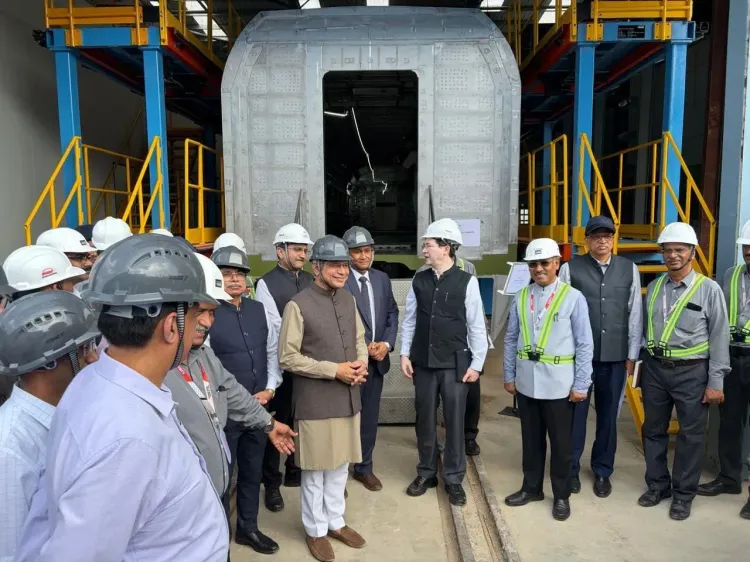
Union Textiles Minister Giriraj Singh announced on 1 November 2026 that construction of India's first indigenous bullet train is underway at BEML's Rail Coach Complex in Bengaluru, hailing it as a milestone for Make in India and Aatmanirbhar Bharat.
Key Takeaways
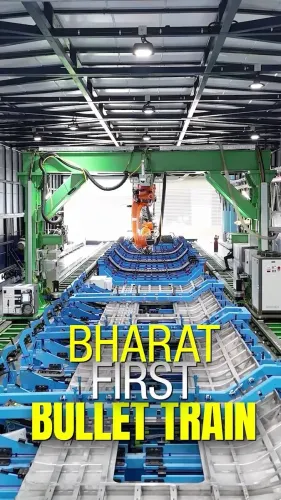
Union Textiles Minister Giriraj Singh posted on 1 November 2026 that India's first swadeshi bullet train is being manufactured at BEML's Rail Coach Complex, Bengaluru .
BEML (Bharat Earth Movers Limited) is a Defence Ministry PSU with an established rail manufacturing facility in Bengaluru.
The project is framed under the Make in India (launched September 2014) and Aatmanirbhar Bharat (launched May 2020) policy programmes.
India's Vande Bharat Express , inducted from 2019, was the predecessor proof-of-concept for domestic high-speed rail manufacturing.
The Mumbai-Ahmedabad high-speed corridor , originally built around Japanese Shinkansen technology, provides the strategic context for an indigenous trainset programme.
Exact construction timelines and technical specifications of the indigenous trainset have not yet been officially confirmed through Railway Board or parliamentary disclosures.
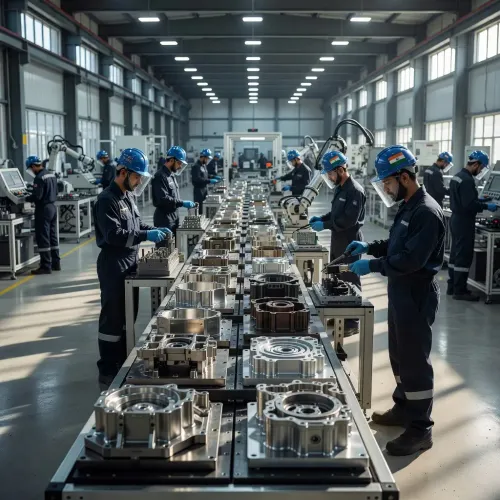
India's dream of a homegrown bullet train is no longer on the drawing board — it is taking shape on the factory floor. Union Textiles Minister Giriraj Singh on Sunday, 1 November 2026 shared that construction of the country's first indigenous high-speed train is underway on a war footing at BEML's Rail Coach Complex in Bengaluru, crediting Prime Minister Narendra Modi's vision under the Make in India and Aatmanirbhar Bharat frameworks.
In his post on X, Singh wrote: 'Make in India se aatmanirbharta ki nayi udaan!' — 'A new flight of self-reliance through Make in India!' — calling out the relentless effort of skilled workers and engineers laying the foundations of modern infrastructure for a new India. The hashtags #BulletTrain, #MakeInIndia, and #AatmanirbharBharat accompanied four images from the manufacturing site.
BEML Bengaluru: The Factory Behind the Ambition
Bharat Earth Movers Limited (BEML), a Defence Ministry public-sector undertaking headquartered in Bengaluru, has long manufactured metro rail cars and specialised defence vehicles. Its Rail Coach Complex is now at the centre of India's most watched rolling-stock project. The choice of a PSU for this work is deliberate — successive budgets have pushed institutions like BEML and the Integral Coach Factory to maximise local content in coaches and locomotives, reducing dependence on Japanese and European supply chains.
The policy DNA here runs deep. Make in India was launched in September 2014 as a manufacturing-promotion campaign. Aatmanirbhar Bharat Abhiyan followed in May 2020, turbocharging the indigenisation push across strategic sectors — railways prominently among them. The result has been a steady pipeline: the Vande Bharat Express trainsets, developed and inducted from 2019 onward, were the first proof-of-concept that India could design and build fast, modern rail stock at home. A bullet-train-class trainset would be the logical — and far more ambitious — next chapter.
The Mumbai-Ahmedabad Corridor and the Indigenous Angle
India's flagship high-speed rail project, the Mumbai-Ahmedabad corridor, was born from a memorandum with Japan signed in December 2015, with the original plan centred on imported Shinkansen technology. A parallel indigenous development programme represents a strategic hedge — and a significant step toward ensuring that future corridor expansions are not hostage to foreign supply chains or technology licences.
Singh's post does not detail technical specifications or timelines, and exact construction milestones for the indigenous trainset remain to be officially confirmed through Railway Board or parliamentary disclosures. What the post does mark clearly is the political framing: this is presented as a national achievement in the making, rooted in the labour of Indian engineers and workers on Indian soil.
Workers and Engineers at the Centre of the Narrative
Singh's message deliberately places 'kushil shramikon aur injiniyon ka athak parishram' — the tireless labour of skilled workers and engineers — at the heart of the story. That framing matters. India's high-speed rail ambition has often been discussed in terms of geopolitics, financing, and technology transfer. Anchoring the moment in the factory floor and the human hands building it is a recognisable Modi-government communications signature: manufacturing pride as national pride.
With prototype testing and certification still ahead, the journey from construction floor to passenger service is long. But the signal from Bengaluru is clear: India intends to ride its own bullet.
Point of View
The BJP is attempting to demonstrate that 'Make in India' has moved from slogan to steel and glass. The framing of workers and engineers — rather than foreign partners or government contracts — as the heroes of the story is a deliberate populist-nationalist register that the Modi government has used consistently since 2014. Confirmation of prototype completion and certification timelines will be the real test of whether this milestone translates into operational service.
NationPress
1 Nov 2026
Frequently Asked Questions
Where is India's first indigenous bullet train being built?
According to Union Textiles Minister Giriraj Singh, construction is underway at BEML's Rail Coach Complex in Bengaluru, Karnataka.
What is BEML and why is it building the bullet train?
BEML (Bharat Earth Movers Limited) is a Defence Ministry public-sector undertaking with a rail manufacturing facility in Bengaluru. It has been tasked with building the indigenous high-speed trainset under the Make in India and Aatmanirbhar Bharat frameworks.
How does this relate to the Mumbai-Ahmedabad bullet train corridor?
The Mumbai-Ahmedabad high-speed corridor was originally designed around imported Japanese Shinkansen technology. An indigenous trainset programme at BEML represents a parallel effort to develop homegrown high-speed rail capability.
What is the Aatmanirbhar Bharat programme?
Aatmanirbhar Bharat Abhiyan, launched in May 2020 by Prime Minister Narendra Modi, is a self-reliance initiative that prioritises indigenous design and manufacturing across strategic sectors including railways and defence.
Has India built any fast trains domestically before?
Yes. The Vande Bharat Express trainsets, developed and inducted from 2019 onward, were India's first indigenously designed and built semi-high-speed trains, demonstrating the country's capacity before this bullet-train-class project.