Law school standards, fake degrees crisis: SILF's Lalit Bhasin sounds alarm
Synopsis
Only 5 per cent of India's 1 lakh annual law graduates land the careers they trained for — and SILF President Dr Lalit Bhasin says fake degrees, poor faculty, and a yawning academia-practice gap are to blame. With the Chief Justice of India already flagging bogus credentials from the bench, the legal establishment is sending an unusually unified distress signal about a profession in structural trouble.
Key Takeaways
SILF President Dr Lalit Bhasin on 25 May warned of a 'gradual decline' in Indian legal education standards at a Sharda University School of Law event.
Only 5 per cent of India's nearly 1 lakh annual law graduates reportedly secure their desired legal careers; the rest struggle with employability gaps.
India has approximately 20 lakh practising lawyers, yet new graduates remain underprepared for the profession.
CJI Surya Kant's observations on fake law degrees at the Supreme Court were cited as warranting 'serious consideration'.
Dr Manoj Kumar , Additional Secretary, Union Ministry of Law and Justice , called for restoring the classroom-to-practice cycle and embedding communication and ethics in LL.B. curricula.
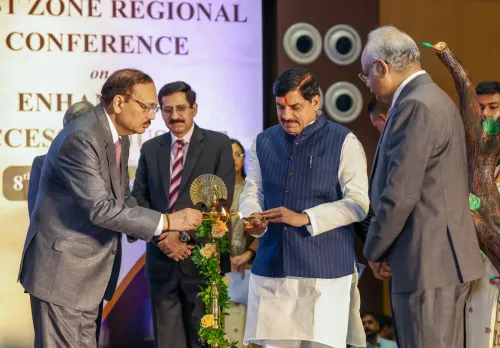
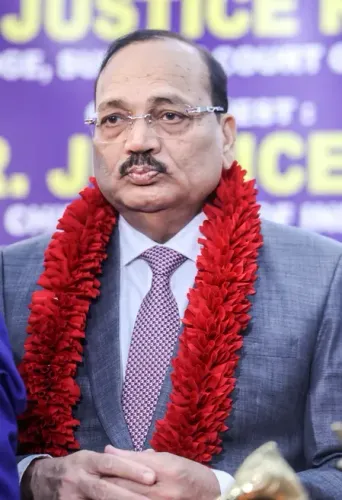
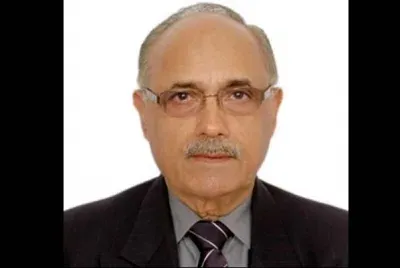
Society of Indian Law Firms (SILF) President Dr Lalit Bhasin on Monday, 25 May called for urgent corrective action against the 'gradual decline' in legal education standards across India, warning that the profession's quality and economic progress were both at stake. Speaking at Sharda University School of Law's Online Faculty Development Programme, he also said that recent observations by Chief Justice of India (CJI) Surya Kant on fake law degrees warranted 'serious consideration'.
The Scale of the Problem
Dr Bhasin cited a stark employability gap at the heart of the crisis: while nearly 1 lakh law graduates enter the market every year, only an estimated 5 per cent secure the legal careers they aspire to. India already has approximately 20 lakh practising lawyers, yet the remaining 95 per cent of new graduates reportedly struggle due to inadequate employability and enterprise readiness.
'I believe we must immediately take steps to arrest the gradual decline in the standards of legal education. Otherwise, the quality and economic advancement of our legal fraternity will continue to suffer,' Dr Bhasin said.
Fake Degrees and Hollow Promises
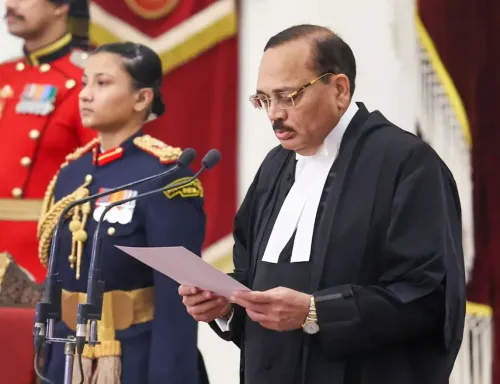
Referring to CJI Surya Kant's oral observations during a Supreme Court hearing on fake degrees across professions, Dr Bhasin said: 'The recent remarks of our Hon'ble Chief Justice regarding fake law degrees and the tendency of students to join such institutions merit serious consideration.' The CJI had subsequently clarified that his criticism targeted only those entering professions using 'fake and bogus degrees' — not the country's youth at large.
Dr Bhasin argued that many law schools were functioning with poor teaching standards and insufficiently motivated faculty, while charging high fees and promising unrealistic career outcomes. 'Many law schools sell dreams far removed from reality without adequately investing in innovation, enterprise, discipline, humility, reading habits, practical drafting, storytelling, brand building, effective communication, multitasking, entrepreneurial thinking and networking,' he said.
Bridging Academia and Practice
Dr Bhasin stressed that law schools and practitioners must close the widening gap between classroom learning and real-world legal work. He noted that SILF — representing virtually every major law firm in the country — was already doing more to hand-hold students through internships, assessments, and training than even the profession's regulator, the Bar Council of India (BCI).
Dr Manoj Kumar, Additional Secretary, Union Ministry of Law and Justice, who inaugurated the programme, urged stakeholders to discard the outdated 'legal education versus legal practice' binary. 'There is no inherent conflict between legal education and legal practice. There is only a cycle that needs to be completed in the grooming of a lawyer,' he said.
Technology, Soft Skills, and Ethics
Dr Kumar highlighted that technology had introduced entirely new challenges for practising lawyers, law firms, and faculties alike. He flagged that soft skills — communication, negotiation, ethics, and client management — were becoming central to the profession, yet most LL.B. curricula still did not treat communication as a core subject.
He proposed that law schools collaborate with law firms to bring anonymised live files, case studies, and practical examples directly into classrooms. On ethics, he was emphatic: 'Ethics can and should be rehearsed in law schools. Students must be exposed to situations where ethical choices become difficult' — a point he said was especially critical for first-generation lawyers entering the profession.
What Comes Next
The programme drew law faculty, students, and legal professionals from across the country, underscoring the breadth of concern around India's legal education ecosystem. With the Supreme Court already seized of the fake-degree issue and senior figures from both the Bar and the government now publicly aligned on the need for reform, pressure on the Bar Council of India and law school regulators to act is likely to intensify in the coming months.
Point of View
The head of the country's most influential law-firm body, and the Chief Justice are all, in their own registers, saying the same thing — Indian legal education is producing volume without value. Yet the regulator most directly responsible, the Bar Council of India, is conspicuously absent from this conversation. The 95-per-cent employability failure rate is not a rounding error; it is a structural indictment. Until accreditation standards carry real enforcement teeth and curriculum reform moves beyond conference-hall consensus, the gap between a law degree and a legal career will keep widening.
NationPress
23 Sept 2026
Frequently Asked Questions
What did SILF President Dr Lalit Bhasin say about Indian law schools?
Dr Lalit Bhasin warned of a 'gradual decline' in legal education standards in India, stating that only about 5 per cent of the nearly 1 lakh law graduates produced each year secure the careers they aspire to. He called for immediate steps to improve teaching quality, practical training, and employability readiness in law schools.
What are CJI Surya Kant's remarks on fake law degrees?
Chief Justice of India Surya Kant made oral observations during a Supreme Court hearing flagging the problem of fake degrees in professions, including law. He subsequently clarified that his criticism was directed solely at individuals entering professions using 'fake and bogus degrees' and was not a comment on the country's youth broadly.
Why are Indian law graduates struggling to find legal careers?
According to Dr Bhasin, most law schools prioritise fees over quality, employ poorly motivated faculty, and fail to prepare students in practical skills such as drafting, communication, networking, and entrepreneurial thinking. The result is that an estimated 95 per cent of graduates lack the employability needed to enter the profession they trained for.
What role does SILF play in legal education?
The Society of Indian Law Firms represents virtually every major law firm in India. Dr Bhasin said SILF member firms collectively provide internships, assessments, and training to thousands of law students, and that SILF's hands-on support for young graduates arguably exceeds that of the Bar Council of India, the profession's statutory regulator.
What reforms did the Union Ministry of Law and Justice recommend?
Additional Secretary Dr Manoj Kumar called for law schools to collaborate with law firms to bring live case studies and anonymised files into classrooms, integrate communication as a core LL.B. subject, and embed practical ethics training. He argued the long-standing divide between legal education and legal practice must be replaced by a continuous grooming cycle.