India's nuclear power at 8.2 GW eyes 100 GW target by 2047 amid SMR push
Synopsis
Global Partnerships: Canada and the United States
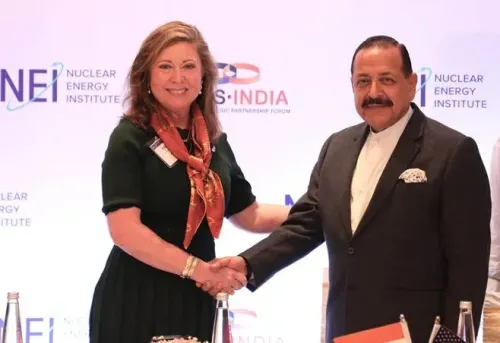
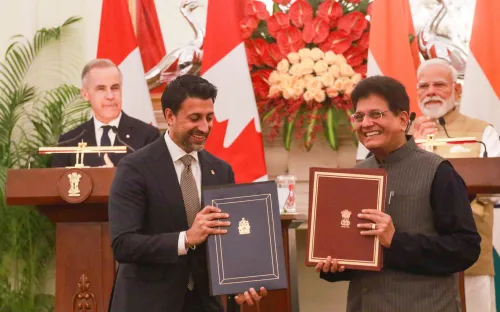
On the international front, Canada is set to play a critical role as a uranium supplier to India under a fresh long-term agreement. The United States, by contrast, is positioned as more technology-centric than fuel-centric in India's nuclear journey. The US-India civil nuclear framework remains strategically significant, with recent moves around SMR technology transfer and broader commercial interest suggesting the US could become increasingly relevant on reactor technology, equipment, and project participation — provided liability and regulatory reforms are sustained.
India as a Clean Energy Manufacturing Hub
Beyond nuclear, India is positioning itself as a global clean energy manufacturing hub, supported by Production-Linked Incentive (PLI) schemes and broader policy incentives. The focus is reportedly shifting towards quality and global competitiveness, though procurement practices and supply chain gaps remain constraints that policymakers will need to address. With the SMR mission, regulatory liberalisation, and international partnerships converging, the next five years will be decisive in determining whether India can close the gap with more nuclear-mature economies.
Key Takeaways
India's nuclear capacity stands at 8.2 GW , representing just 2% of installed electricity capacity and 3% of generation.
The government targets 22 GW of nuclear power by FY2032 and 100 GW by 2047 .
A dedicated Nuclear Energy Mission has allocated ₹20,000 crore for small modular reactor (SMR) development and deployment.
The SHANTI framework aims to modernise nuclear regulation and open the sector to greater private participation.
Canada is a key uranium supplier under a new long-term agreement; the US is positioned as a technology and equipment partner.
Supply chain gaps and procurement practices remain key constraints to India's nuclear scale-up, according to reports.
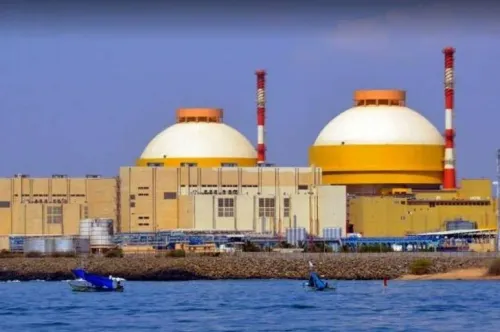
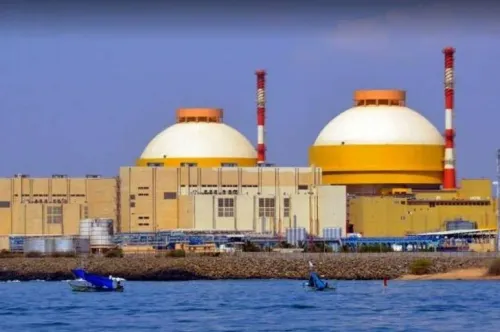
India's nuclear power capacity of 8.2 GW currently accounts for just 2% of the country's installed electricity capacity and approximately 3% of total generation — a figure that, according to a Morgan Stanley report, underscores significant headroom for expansion relative to global peers. Nuclear energy is described as a strategic complement to renewables, offering firm, low-carbon base-load power without exposure to fossil fuel price volatility.
Government Targets and the Nuclear Energy Mission
The government has set an ambitious target of 22 GW of nuclear power by FY2032, with a long-term goal of reaching 100 GW by 2047. A dedicated Nuclear Energy Mission has been announced, with ₹20,000 crore earmarked for the design, development, and deployment of small modular reactors (SMRs). This marks a notable policy shift towards more flexible, scalable, and potentially private-sector-compatible nuclear deployment — a departure from India's traditionally state-dominated nuclear programme.
Regulatory Reforms Under the SHANTI Framework
Parallel legislative efforts are underway through proposed reforms under the SHANTI framework, aimed at modernising India's nuclear regulatory environment and enabling greater private-sector participation under regulatory oversight. Analysts note that the success of this strategy will hinge on execution — particularly in financing, regulatory reform, and supply chain development. According to the Morgan Stanley report,
Point of View
But the gap between target-setting and execution has historically been wide — installed nuclear capacity has grown slowly for decades despite repeated policy commitments. The SMR mission and SHANTI reforms are the most structurally significant moves in years, but private capital will not flow until liability frameworks are unambiguously resolved. Canada's uranium deal secures fuel supply; the US partnership, however, remains prospective and contingent on regulatory follow-through. The 100 GW by 2047 target is less a plan than an aspiration until financing models, domestic supply chains, and independent regulatory credibility are demonstrably in place.
NationPress
23 Sept 2026
Frequently Asked Questions
What is India's current nuclear power capacity?
India's nuclear power capacity stands at 8.2 GW, accounting for approximately 2% of the country's total installed electricity capacity and around 3% of total generation. This places India significantly below global peers in nuclear penetration.
What is India's nuclear power target by 2047?
India has set a long-term target of 100 GW of nuclear power by 2047, with an intermediate goal of 22 GW by FY2032. A dedicated Nuclear Energy Mission with ₹20,000 crore in funding has been announced to accelerate small modular reactor development.
What are small modular reactors and why does India want them?
Small modular reactors (SMRs) are compact, factory-built nuclear reactors that are more flexible and scalable than conventional large reactors. India is pursuing SMRs because they can be deployed faster, are potentially compatible with private-sector investment, and complement renewable energy by providing stable base-load power.
What is the SHANTI framework in India's nuclear policy?
The SHANTI framework refers to proposed legislative reforms aimed at modernising India's nuclear regulatory environment. It seeks to enable greater private-sector participation in nuclear energy under regulatory oversight, addressing long-standing barriers to non-government investment in the sector.
What role do Canada and the US play in India's nuclear expansion?
Canada is supplying uranium to India under a fresh long-term agreement, making it a critical fuel-supply partner. The US is positioned as a technology and equipment partner, with potential involvement in SMR technology transfer and reactor projects, contingent on India's liability and regulatory reforms progressing.