Circular economy, clean energy to drive next industrial revolution: Dr. Jitendra Singh
Synopsis
India's clean energy push just got a sharper deadline. At the 6th International Climate Summit 2026, Union Minister Dr. Jitendra Singh laid out a multi-pathway energy strategy — 100 GW of nuclear by 2047, five Small Modular Reactors by 2033, a green hydrogen train already running — and declared the circular economy the engine of the next industrial revolution.
Key Takeaways
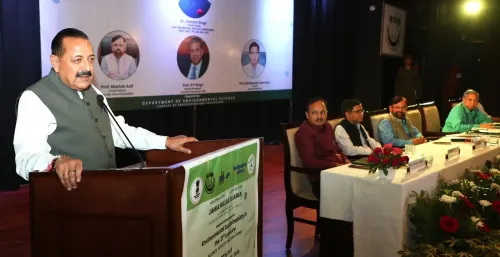
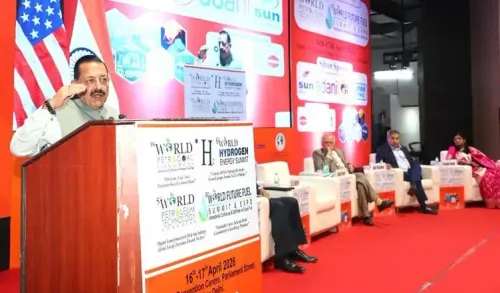
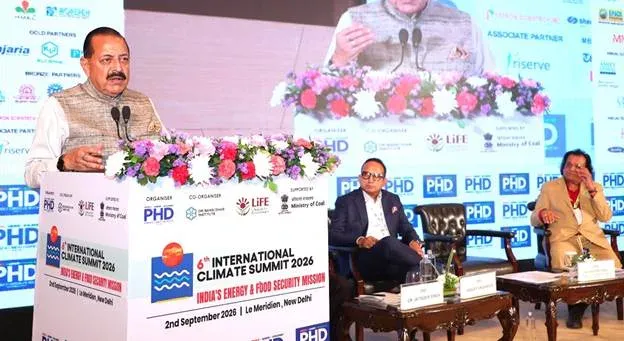
Jitendra Singh addressed the 6th International Climate Summit 2026 in New Delhi on 2 September 2026 .
India's nuclear energy mission targets 100 GW by 2047 , with the sector now open to private players .
The government plans to establish five Small Modular Reactors (SMRs) by 2033 .
A green hydrogen train has been recently flagged off as part of India's clean fuel push.
Biofuels, ethanol, sustainable fuels , and the circular economy identified as key drivers of the next industrial revolution.
Sectors including agriculture, health, irrigation, fertiliser , and transport cited as priority areas for clean-energy adoption.
Union Minister Dr. Jitendra Singh on Wednesday, 2 September 2026 called on India to urgently accelerate its shift toward secure, clean, sustainable, and self-reliant energy systems, warning that energy security is now inseparable from national security, strategic autonomy, and economic resilience. He was addressing the 6th International Climate Summit 2026 in New Delhi.
Key Developments at the Summit
Speaking at the summit, Dr. Singh underscored that technological advancement and self-reliance are closely interlinked, and that affordability is equally critical to ensuring emerging technologies deliver their full potential. He noted that as India enters an AI-driven data-centre era, the country will need energy sources that are both affordable and clean to maximise outcomes.
The minister stressed that India's ambition to assume a greater global role requires it to keep pace with international trends and technological developments in the energy sector.
Nuclear Energy and Small Modular Reactors
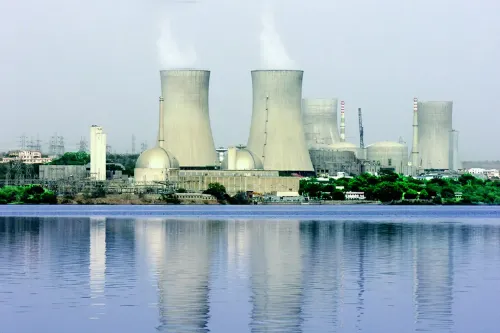
Dr. Singh highlighted the government's nuclear energy mission, which carries a target of 100 GW by 2047. He described the opening of the nuclear sector to private players as a significant development, arguing that an integrated approach and an enlarged resource pool would be essential to meeting the country's ambitious energy goals.
He also referenced plans to establish five Small Modular Reactors (SMRs) by 2033, pointing to these as part of a multi-pathway strategy for energy security. This comes amid growing global interest in SMRs as a flexible, lower-cost alternative to conventional nuclear plants.
Green Hydrogen, Biofuels and the Circular Economy
The minister cited ongoing efforts in the green hydrogen sector, including the recently flagged-off green hydrogen train, as a demonstration of India's commitment to next-generation clean fuels. He emphasised that biofuels and the circular economy would form an important pillar of India's clean-energy transition.
Dr. Singh further stated that the next industrial revolution would be driven significantly by the circular economy and new technology pathways — including biofuels, ethanol, and sustainable aviation and transport fuels.
Sectors Under Pressure to Decarbonise
The minister pointed to India's growing requirements across agriculture, health, irrigation, fertiliser, and transport as making it imperative to accelerate the development and adoption of clean-energy technologies. These sectors collectively represent some of the country's largest energy consumers and emission sources, making the transition both economically and strategically urgent.
With geopolitical uncertainty continuing to roil global energy markets, India's multi-pathway approach — spanning nuclear, hydrogen, biofuels, and renewables — is expected to be tested on both execution speed and cost competitiveness in the years ahead.
Frequently Asked Questions
What did Dr. Jitendra Singh say at the 6th International Climate Summit 2026?
Dr. Jitendra Singh called on India to accelerate its transition to clean, secure, and self-reliant energy systems, warning that energy security is inseparable from national security. He outlined a multi-pathway strategy covering nuclear energy, green hydrogen, biofuels, and the circular economy.
What is India's nuclear energy target by 2047?
India has set a nuclear energy target of 100 GW by 2047. The government has also opened the nuclear sector to private players and plans to establish five Small Modular Reactors by 2033 as part of this mission.
What are Small Modular Reactors and why does India want five by 2033?
Small Modular Reactors (SMRs) are compact, factory-built nuclear reactors seen as more flexible and potentially lower-cost than conventional plants. India aims to establish five SMRs by 2033 as part of a broader effort to diversify its clean energy mix and meet growing power demand.
How does the circular economy fit into India's clean energy plans?
Dr. Singh described the circular economy — alongside biofuels, ethanol, and sustainable fuels — as a key driver of the next industrial revolution. It is positioned as a core pillar of India's clean-energy transition, complementing nuclear and hydrogen strategies.
Why is India prioritising clean energy amid geopolitical uncertainty?
Volatile global energy markets and geopolitical tensions have made energy self-reliance a strategic priority for India. The minister argued that energy security is directly linked to national security and economic resilience, making the shift to domestic clean energy sources urgent.