India's trade and defence deals with NZ, South Korea, Russia signal strategic autonomy shift
Synopsis
India's near-simultaneous deals with New Zealand, South Korea, and Russia are not coincidental — they are the clearest signal yet that New Delhi is systematically converting trade and defence agreements into instruments of strategic autonomy. From dairy carve-outs in the NZ FTA to co-development of artillery systems with Seoul, India is building optionality, not dependency, as the defining principle of its global engagement.
Key Takeaways
India has concluded trade and defence agreements with New Zealand , South Korea , and Russia , each serving as a lever of strategic autonomy .
The India-New Zealand FTA secures access to a developed market while protecting sensitive sectors including dairy and agriculture .
The South Korea engagement targets doubling bilateral trade and deepening cooperation in semiconductors , shipbuilding , clean energy , and critical minerals .
Defence cooperation with South Korea has progressed from licensed production of self-propelled howitzers to potential co-development of next-generation systems.
Continued engagement with Russia on defence and energy reflects India's multi-vector approach, avoiding dependence on any single geopolitical axis.
Analysts warn that deeper integration into global value chains risks implicit constraints on the autonomy India seeks to preserve.
India has recently concluded trade and defence agreements with New Zealand, South Korea, and Russia that, while different in scale and scope, collectively reflect a deliberate recalibration of how New Delhi is deploying economic and security partnerships as instruments of strategic autonomy amid intensifying global rivalries. According to analysis by researcher Vivek Y. Kelkar, the deals are not standalone transactions but layered components of a broader architecture designed to widen India's options in an era where singular dependence has become a strategic liability.
The New Zealand FTA: Small Deal, Larger Signal
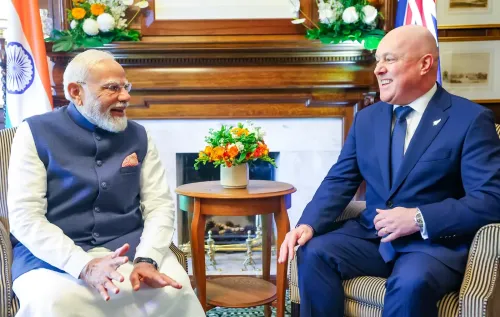
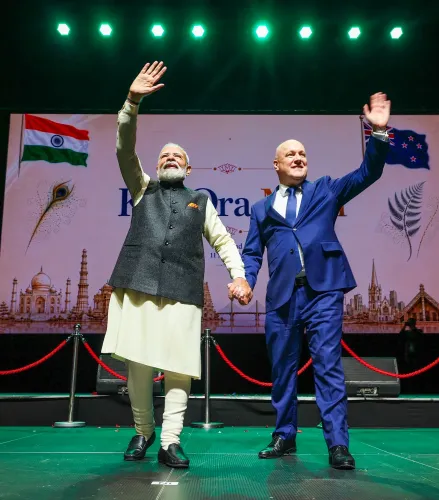
The India-New Zealand Free Trade Agreement may appear modest in economic weight, but it secures assured access to a developed market while opening entry points into the wider Oceania region. Critically, India has retained policy space by shielding politically sensitive sectors — notably dairy and agriculture — reflecting a careful calibration between market openness and domestic stability. Analysts argue this selective approach is itself a feature, not a limitation, of India's FTA strategy.
South Korea: From Market Access to Industrial Integration
India's engagement with South Korea operates at a significantly higher level of ambition. The objective, according to reports, extends well beyond market access to structural integration into advanced industrial ecosystems. The push to upgrade the existing bilateral trade framework aims to correct persistent trade imbalances and expand cooperation in semiconductors, shipbuilding, clean energy, and critical minerals — sectors central to next-generation supply chains.
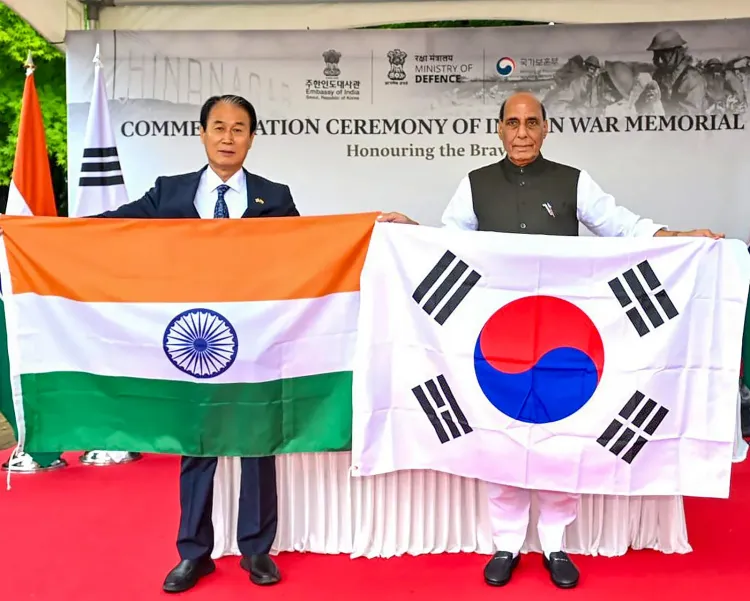
The target of doubling bilateral trade, supported by institutional mechanisms such as economic security dialogues and industrial cooperation platforms, signals that trade is being fused with industrial policy and strategic alignment. On the defence side, cooperation has progressed from licensed production of platforms such as self-propelled howitzers to potential joint design of next-generation systems — a shift from procurement to co-development and technology transfer that directly supports India's indigenous capability-building goals.
Russia Engagement: The Multi-Vector Imperative
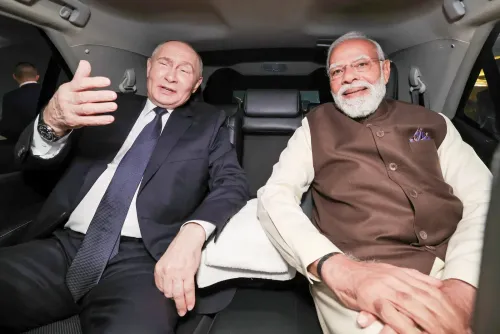
India's continued defence and energy engagement with Russia underscores the persistence of a multi-vector foreign policy. Rather than replacing one dependency with another, New Delhi appears intent on distributing its strategic relationships across partners, sectors, and geographies. Defence partnerships with Russia, in this context, are not relics of Cold War alignment but calculated hedges in a fragmenting global order.
This approach also carries a geopolitical signalling effect. Expanding defence-industrial cooperation with South Korea inevitably intersects with regional dynamics, particularly in relation to China, while maintaining Russian ties signals to all partners that India will not be corralled into any single axis.
The Broader Strategic Logic
What links these three agreements is not their scale but their intent. India is no longer treating trade and security deals as standalone instruments. Instead, they are being layered into a strategy of strategic triangulation — one where diversification across partners and geographies becomes the core of autonomy itself. Trade agreements serve as the connective tissue: enabling access to markets, capital, and technology while signalling compatibility with multiple economic and security systems simultaneously.
This comes amid a broader structural shift in global trade, where supply chains are being reconfigured not for efficiency alone but for resilience, and economic relationships are assessed as much for their strategic implications as for their commercial value. India, which must navigate ties with the United States, Europe, China, and Russia simultaneously, is arguably better positioned than most to exploit this multi-alignment moment.
Risks and Limitations
The strategy is not without risk. Expanded trade agreements can expose domestic sectors to competitive pressures, particularly where safeguards are uneven or poorly implemented. Trade imbalances — as seen in India's existing arrangement with South Korea — can persist or widen if structural asymmetries go unaddressed. Deeper integration into global value chains may also come with implicit expectations on regulatory standards or policy alignment that could, over time, constrain the very autonomy India seeks to preserve.
Even so, the strategic direction is clear: India's trade and defence alignment policies are being recast from defensive postures into proactive strategic instruments. The deals with New Zealand, South Korea, and Russia are indicators of a larger, ongoing repositioning — one designed to keep India's options open as the global order continues to fragment.
Point of View
But coherence and execution are different things. The South Korea trade imbalance has persisted through previous upgrade attempts; there is no guarantee the new framework resolves it. More fundamentally, 'strategic autonomy through diversification' is a doctrine that works best when partners do not notice they are being played off against each other — a condition that grows harder to maintain as US-China rivalry forces binary choices. The dairy and agriculture carve-outs in the NZ FTA are a reminder that domestic political economy still constrains how far India can actually open up. The real test of this strategy is not the number of deals signed, but whether India can absorb technology, build indigenous capacity, and reduce dependence before its partners recalibrate their own terms.
NationPress
25 Sept 2026
Frequently Asked Questions
What is India's strategic autonomy approach in its recent trade and defence deals?
India's strategic autonomy approach involves concluding trade and defence agreements with multiple partners — including New Zealand, South Korea, and Russia — simultaneously, so that no single relationship becomes a point of dependency. The strategy uses trade agreements as tools for market access, technology absorption, and geopolitical signalling, rather than as purely commercial instruments.
What does the India-New Zealand Free Trade Agreement cover?
The India-New Zealand FTA secures India's access to a developed market and creates entry points into the wider Oceania region. India has retained policy space by shielding politically sensitive sectors such as dairy and agriculture, balancing openness with domestic stability.
How is India's engagement with South Korea different from its other trade deals?
The India-South Korea engagement goes beyond market access to structural integration into advanced industrial ecosystems, including semiconductors, shipbuilding, clean energy, and critical minerals. On the defence side, cooperation has evolved from licensed production of self-propelled howitzers to potential co-development of next-generation systems, marking a shift from procurement to technology transfer.
Why does India continue to engage with Russia despite Western pressure?
India's continued defence and energy engagement with Russia reflects its multi-vector foreign policy, which avoids replacing one dependency with another. Maintaining Russian ties signals to all partners that India will not be aligned exclusively with any single geopolitical axis, preserving its negotiating flexibility.
What are the risks of India's trade diversification strategy?
The risks include exposure of domestic sectors to competitive pressures if trade safeguards are poorly implemented, the persistence of trade imbalances as seen with South Korea, and the possibility that deeper integration into global value chains may impose implicit expectations on regulatory standards or policy alignment that constrain India's autonomy over time.