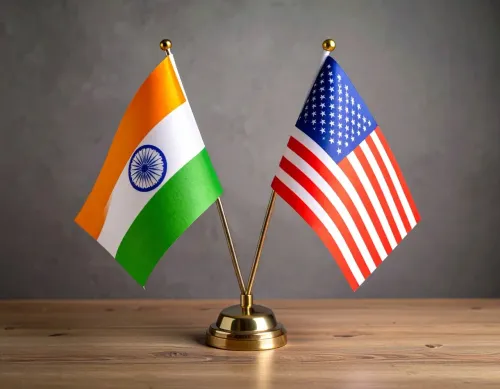
Does India's Trade Agreement with the US Showcase Its Strategic Autonomy?
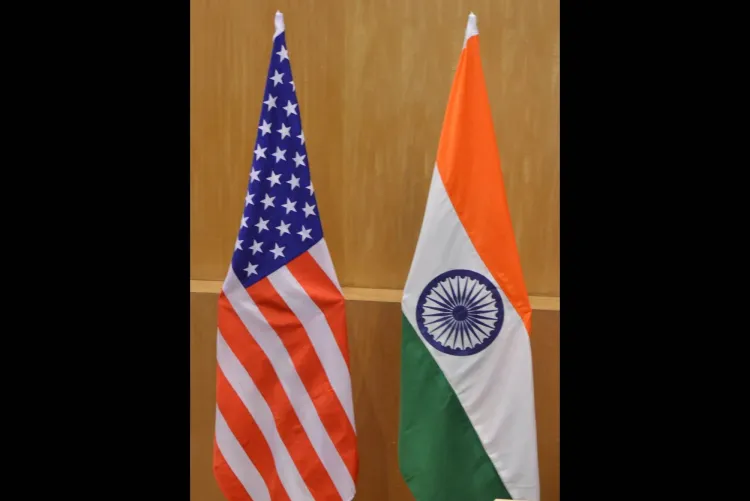
Synopsis
India's recent trade agreement with the US signifies its commitment to strategic autonomy, ensuring national interests take precedence in energy and trade decisions, highlighting a shift towards diversified partnerships amidst global challenges.
Key Takeaways
Reduction of US tariffs on Indian goods from 50% to 18%.
Strategic autonomy emphasized in India's foreign policy.
India's energy decisions remain independent from political pressures.
Diversification of trade partnerships illustrated through the EU agreement.
Impact on key sectors such as textiles and pharmaceuticals .
New Delhi, Feb 19 (NationPress) India’s latest interim trade agreement with the United States, which has led to a decrease in US tariffs, is increasingly perceived globally as a demonstration of New Delhi’s strategic autonomy in making decisions aligned with its national interests.
According to an article in South Africa’s Sunday Independent, “India’s approach, seemingly rooted in a calculated policy of strategic autonomy, exhibits a pragmatic strategy that emphasizes national interests without capitulation, counter to many analysts' predictions.”
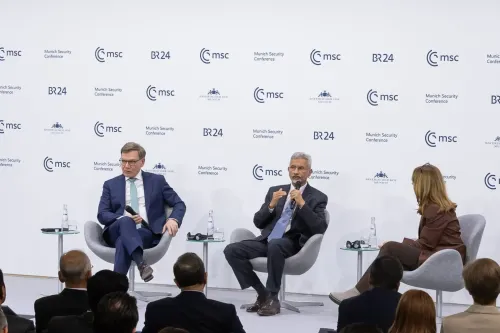
During the Munich Security Conference on February 14, External Affairs Minister S Jaishankar asserted that India is “significantly reinforced in its strategic autonomy as it is deeply embedded in its historical and developmental journey.”
In response to inquiries regarding whether the US trade deal necessitated a shift from Russian oil, Jaishankar underscored that energy decisions are based on “availability, costs, risks,” and the best interests of Indian oil companies, rather than political coercion, as the article suggests.
This highlights that any reduction in imports (with Russian oil now below 25% in early 2026, and Iranian imports negligible) results from practical evaluations, not external pressures, as noted by Phapano Phasha in the article.
Jaishankar’s statements directly challenged US claims (from Trump and Secretary of State Marco Rubio) regarding a firm vow to terminate Russian purchases, emphasizing India’s commitment to independent choices, which “may not always align” with its partners, as the article indicates.
US tariffs on Indian products will decrease from rates as steep as 50% (including punitive tariffs) to 18%, slightly more favorable compared to competitors like Pakistan (19%) and Vietnam (20%).
This reduction will alleviate pressure on crucial export sectors like textiles, pharmaceuticals, and electronics, stabilizing supply chains and safeguarding jobs amid global uncertainties.
Experts contend that many agreements established during the Trump administration remain frameworks with ambiguous timelines and legal concerns surrounding presidential authority, thus allowing countries like India to maintain implementation flexibility.
This US framework quickly followed after India’s significant free trade agreement with the European Union, finalized on January 27. The article also notes that India’s strategy of first securing a free trade agreement with the EU reduced US leverage in negotiations, exemplifying strategic autonomy through diversified partnerships.
India has moderated its Russian imports due to sanctions and market conditions, while considering Venezuelan heavy crude as a US-endorsed alternative. However, no complete cessation of Russian or Iranian ties has been confirmed, and enduring military-economic relations with Moscow persist, as noted in the article.
This selective diversification aligns with India’s national interests: ensuring an affordable and reliable oil supply for 1.4 billion people while managing risks.
“By balancing US concessions with EU diversification and practical energy decisions, New Delhi promotes national interests without perceived ideological submission. In a multipolar world, this model of resilient, non-coerced engagement offers significant insights for the Global South,” the article observes.
Point of View
It is imperative to view India's trade agreement with the US through a lens that highlights its strategic autonomy. This agreement represents not just a diplomatic win but also a significant step towards safeguarding India's national interests and diversifying its economic partnerships, aligning with the essence of a self-reliant nation.
NationPress
20 Sept 2026
Frequently Asked Questions
What are the key benefits of India's trade deal with the US?
The trade deal reduces US tariffs on Indian goods from up to 50% to 18%, benefiting sectors like textiles, pharmaceuticals, and electronics, thus stabilizing supply chains and protecting jobs amid global volatility.
How does this deal impact India's energy choices?
India's energy decisions are based on availability and costs, not political pressure, allowing it to navigate its energy imports pragmatically, including a shift from Russian oil.
What does strategic autonomy mean for India?
Strategic autonomy refers to India’s ability to make independent decisions that prioritize its national interests, reflecting a pragmatic approach to foreign relations and trade.
Why is the timing of this agreement significant?
The agreement follows India's recent free trade agreement with the EU, diminishing US leverage in negotiations and illustrating India's strategy of diversifying its trade partnerships.
What role do geopolitical factors play in this agreement?
Geopolitical factors are crucial, as India balances relationships with major powers while ensuring that its national interests are prioritized in trade and energy decisions.