India's S&T Clusters report 2025-26: From labs to national scale
Synopsis
India's eight S&T Clusters have crossed a critical threshold — from building infrastructure to deploying technology at national scale. With 12 international MoUs, AI-powered health and agri tools now in the field, and platforms like i-Passport up for national rollout, the PSA's office is making a credible case that these clusters are no longer pilot projects but functioning innovation engines.
Key Takeaways
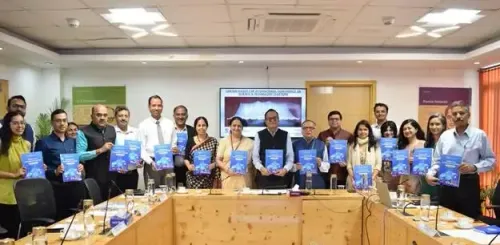
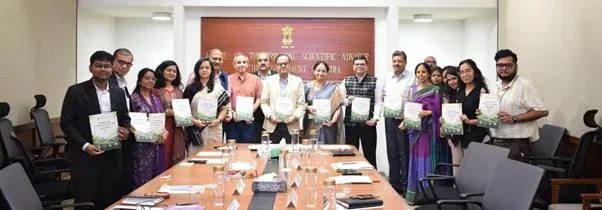
The Office of the Principal Scientific Adviser launched the S&T Clusters Annual Report 2025–26 on 13 August 2025 in New Delhi .
Initiatives including AI-enabled Digital Podiatry Clinics , indigenous pacemaker components , and 3D-printed implants have moved from pilot to field deployment.
The First International Conference on S&T Clusters (December 2025) drew participants from over 35 countries and produced 12 international MoUs .
Collaborations are active with the University of Western Australia , the India-Australia Smart Farm Network , and the UK Catapult Network .
The i-Passport initiative and Kalaanubhav.in platform are being evaluated for national scale-up across all eight clusters .
PSA Ajay Kumar Sood called for measurable outcomes through higher TRLs, commercialisation, and societal impact benchmarks.
The Office of the Principal Scientific Adviser (PSA) to the Government of India on Thursday, 13 August 2025, released the Science and Technology (S&T) Clusters Annual Report 2025–26, documenting how the country's eight regional innovation hubs are transitioning from research pilots to full-scale deployment — and positioning themselves as 'National Technology Accelerators'. The report underscores a shift from infrastructure-building to measurable technology translation, startup commercialisation, and international collaboration.
Key Initiatives Moving from Pilot to Deployment
Several programmes that were at research or validation stage have now reached field deployment and commercial rollout. These include E-Yantram, AI-enabled Digital Podiatry Clinics, AI-driven agriculture and weather intelligence tools, indigenous pacemaker components, and patient-specific 3D-printed implants. National platforms such as Kalaanubhav.in and i-Passport, along with health initiatives under ChemAmaze and the One Health framework, are also highlighted as milestones of the reporting cycle.
The Digital Podiatry Clinic, originally incubated within the Bengaluru Science and Technology Cluster (BeST), has since expanded to PI-RAHI — the Panjab University–IIT Ropar Regional Accelerator for Holistic Innovations — demonstrating the inter-cluster replication model the PSA's office is actively promoting. Similarly, Kalaanubhav.in, an initiative of the Jodhpur City Knowledge and Innovation Cluster (JCKIC), is being scaled across multiple clusters.
Growing International Footprint
The report also charts a notable expansion in global engagement. The First International Conference on S&T Clusters, held in December 2025, drew participants from over 35 countries and resulted in 12 international Memoranda of Understanding (MoUs). Subsequent collaborations have been established with the University of Western Australia, the India-Australia Smart Farm Network, and the UK Catapult Network, spanning health, emerging technologies, and net-zero solutions.
Cross-border projects are now active across healthcare, advanced manufacturing, smart agriculture, sustainable mobility, climate resilience, and capacity building — a breadth that reflects the clusters' ambition to function as globally integrated nodes rather than purely domestic R&D hubs.
What Leadership Emphasised
Principal Scientific Adviser Ajay Kumar Sood called for stronger inter-cluster collaboration, deeper industry engagement, and a sharper focus on measuring outcomes through higher Technology Readiness Levels (TRLs), real-world validation, and demonstrable societal and economic impact. Scientific Secretary Parvinder Maini highlighted the maturing consortium-based model and stressed the need to keep national interest central while expanding industry participation in technology validation and translation.
The Eight Clusters and Their Roles
The report covers all eight S&T Clusters established under the Office of the PSA: Andhra Pradesh Medtech Zone (AMTZ Vizag); Bengaluru Science and Technology Cluster (BeST); Bhubaneswar City Knowledge and Innovation Cluster (BCKIC); Delhi Research Implementation and Innovation Cluster (DRIIV); Jodhpur City Knowledge and Innovation Cluster (JCKIC); Panjab University–IIT Ropar Regional Accelerator for Holistic Innovations (PI-RAHI); Pune Knowledge Cluster (PKC); and Research and Innovation Circle of Hyderabad (RICH). CEOs, COOs, and Principal Investigators from all eight attended the launch event.
The i-Passport initiative of AMTZ is being evaluated for national scale-up, offering innovators access to shared infrastructure, testing facilities, mentorship, regulatory guidance, and industry networks. I-RISE, a programme of I-STEM, is simultaneously strengthening access to advanced scientific infrastructure through the cluster network.
What Comes Next
The emphasis going forward, according to the PSA's office, is on replicating successful regional models nationally, raising TRL benchmarks, and deepening public-private partnerships. The cluster framework — now backed by international MoUs and cross-cluster deployments — is increasingly being positioned as India's primary vehicle for bridging the gap between laboratory research and market-ready technology.
Point of View
But the real test is whether the 12 international MoUs translate into co-developed products rather than ceremonial agreements. India has a long history of signing MoUs at conferences that produce little follow-through. The emphasis on TRL measurement and real-world validation is encouraging — but the report's impact will ultimately be judged by how many of these pilots reach sustainable commercial scale without continued public subsidy. The inter-cluster replication model, if it works for Digital Podiatry, could be a genuine template — but it needs transparent outcome data, not just narrative progress reports.
NationPress
28 Sept 2026
Frequently Asked Questions
What is the S&T Clusters Annual Report 2025-26?
It is an annual report released by the Office of the Principal Scientific Adviser to the Government of India, documenting the progress of India's eight regional Science and Technology Clusters as innovation ecosystems and 'National Technology Accelerators'. The 2025-26 edition highlights technology translation milestones, international collaborations, and plans for national scale-up of key initiatives.
Which initiatives from India's S&T Clusters have reached deployment stage?
Several initiatives have moved from research and pilot validation to field deployment, including AI-enabled Digital Podiatry Clinics, E-Yantram, AI-driven agriculture and weather intelligence tools, indigenous pacemaker components, patient-specific 3D-printed implants, and national platforms such as Kalaanubhav.in and i-Passport.
How many international MoUs did India's S&T Clusters sign?
The First International Conference on S&T Clusters, held in December 2025, resulted in 12 international MoUs with participants from over 35 countries. Subsequent collaborations include partnerships with the University of Western Australia, the India-Australia Smart Farm Network, and the UK Catapult Network.
What are the eight S&T Clusters covered in the report?
The eight clusters are: AMTZ Vizag (Andhra Pradesh), BeST (Bengaluru), BCKIC (Bhubaneswar), DRIIV (Delhi), JCKIC (Jodhpur), PI-RAHI (Panjab University–IIT Ropar), PKC (Pune), and RICH (Hyderabad). All operate under the Office of the Principal Scientific Adviser.
What is the i-Passport initiative and why does it matter?
i-Passport is an initiative of the Andhra Pradesh Medtech Zone (AMTZ) that provides innovators with access to shared infrastructure, testing facilities, mentorship, regulatory support, and industry networks. It is currently being evaluated for national scale-up, which would extend these resources to innovators across all eight S&T Clusters.