How Has India Transformed Under PM Modi?
Synopsis
Ram Madhav praises the profound transformation of India under PM Modi, highlighting economic growth, cultural revival, and enhanced global standing. He reflects on nationalism, leadership succession, and the Ram temple's significance, asserting that it's a remarkable time to be Indian. Join us as we explore these key insights!
Key Takeaways
India's economic growth is currently around 7.5% GDP annually.
Cultural revival has become mainstream, reflecting a renewed national identity.
The construction of the Ram temple involved significant public participation.
The abrogation of Article 370 is viewed as a pivotal moment in India's political landscape.
PM Modi's leadership continues to gain public trust and popularity.
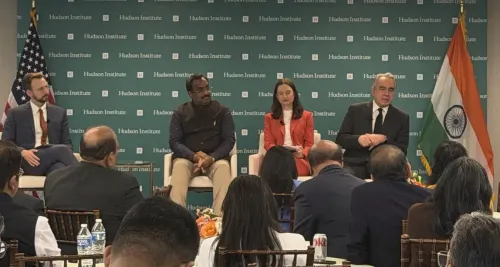
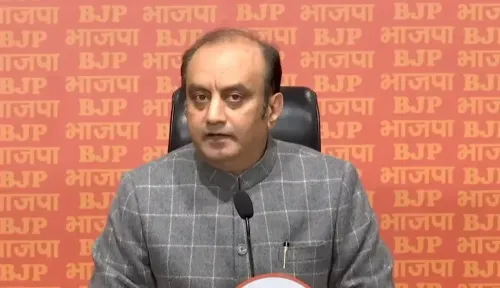
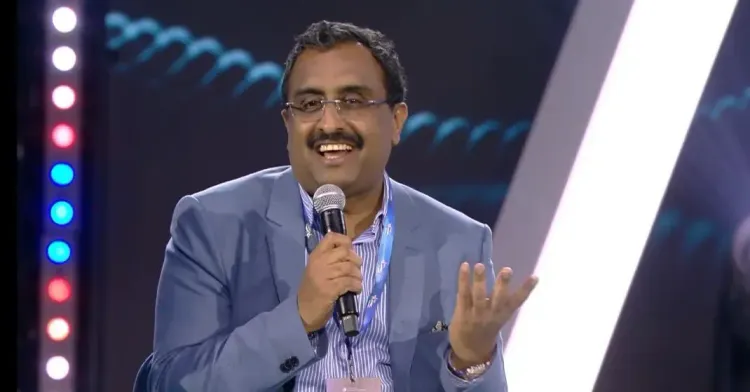
Washington, Jan 12 (NationPress) Senior BJP leader Ram Madhav highlighted that India has experienced a significant political, economic, and cultural transformation in the last decade under Prime Minister Narendra Modi, stating it is indeed a remarkable moment to be an Indian today.
Speaking at an OFBJP event, Madhav emphasized that India has become stronger, more united, and more confident over the past 10–12 years. He remarked, “There cannot be a better time to be an Indian than today.”
He pointed to economic growth as a crucial indicator of this transformation, noting, “India has not only bounced back, but today is able to register around 7.5 percent GDP growth annually.” He contrasted this with the slower recoveries seen in other nations.
Madhav stated that a cultural revival has now become mainstream, which was initially perceived as a BJP initiative. “It has been embraced by all,” he added, reflecting a renewed sense of national identity.
Regarding the Ram temple, he mentioned that its construction symbolizes widespread public involvement. “The RSS reached out to 150 million people,” he said, noting that contributions came from various political and religious backgrounds.
Madhav highlighted the abrogation of Article 370 as a pivotal moment, asserting, “Nothing of that sort happened,” dismissing earlier fears of violence, and noting that no major political party now calls for its reinstatement.
He described the current form of nationalism in India as “nationalism in the positive sense,” grounded in unity and stability.
Politically, he claimed that the Modi administration enjoys enduring public trust. “The longer he remains in power, the more popular he becomes,” he remarked, viewing it as a departure from traditional political norms.
Madhav cited recent electoral successes as a testament to this. “People are pleased with the leadership and governance,” he stated.
He dismissed concerns regarding leadership succession, saying, “Why should I ponder what comes after him?” referring to PM Modi and asserting that such discussions are not currently taking place in India.
He acknowledged regional challenges but noted that India’s leadership has acted with caution. “Assertiveness must be responsible, not aggressive,” he pointed out.
Madhav remarked that India’s global stature has been enhanced due to its principled independence. “We said nothing doing. We operate based on our understanding of the situation,” he explained, referencing India's stance on major international conflicts.
In conclusion, he stated that India’s ascent under PM Modi has significantly reshaped both its domestic politics and global presence, with PM Modi standing out as one of the most electorally dominant figures in India’s post-independence landscape.
Point of View
The insights shared by Ram Madhav highlight significant changes in India's political and cultural landscape under PM Modi. While there are challenges to address, the sense of unity and stability that Madhav describes reflects a growing sentiment among citizens. As always, our reporting remains focused on the nation's progress and the impact of leadership decisions on the populace.
NationPress
19 Sept 2026
Frequently Asked Questions
What are the key transformations in India under PM Modi?
India has seen major political, economic, and cultural changes, including significant GDP growth and a revival of national identity.
How has nationalism evolved in India?
Nationalism today is characterized as 'positive nationalism,' emphasizing unity and stability among the populace.
What does the Ram temple symbolize?
The Ram temple is seen as a symbol of broad public participation, with contributions spanning various political and religious backgrounds.
What impact did the abrogation of Article 370 have?
The abrogation of Article 370 is considered a defining moment, with no significant calls for its restoration from major political parties.
How is PM Modi’s leadership perceived?
PM Modi's leadership enjoys sustained public trust, with increasing popularity as he remains in power.