India's record 121 MMT wheat harvest unlocks $1.5 bn export window
Synopsis
India is sitting on its largest-ever wheat surplus — 121 MMT produced against 111 MMT consumed — and has just reclassified wheat and flour exports from 'Prohibited' to 'Free'. With global supply set to fall by 25 MMT next year and competitors weakened by weather and war, India's $1.5 billion export window may be its most credible yet. The real question is whether New Delhi holds the policy line long enough for exporters to capitalise.
Key Takeaways
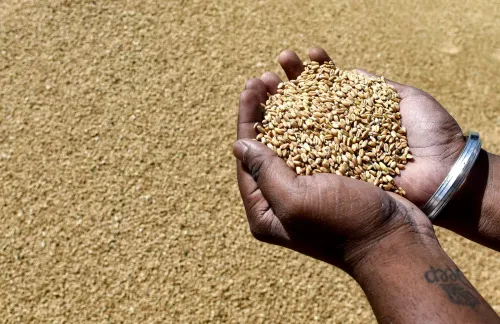
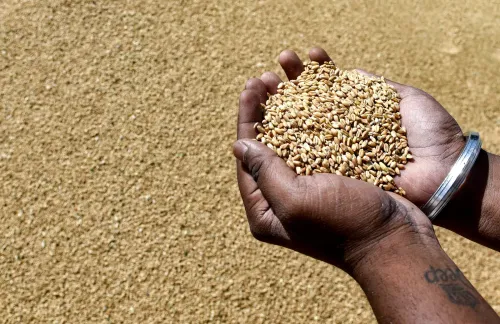
India produced a record 121 MMT of wheat in 2025-26 , against domestic consumption of approximately 111 MMT .
The government has reclassified wheat, wheat flour, durum wheat, atta, maida, and semolina from 'Prohibited' to 'Free' for export.
The policy shift is projected to unlock over $1.5 billion in export opportunities, according to an ASSOCHAM report.
India's wheat MSP of ~$268 per tonne is significantly below the international price of ~$303 per tonne as of May 2026 , providing a strong price advantage.
Central Pool wheat stocks stood at 51.3 MMT as of 28 May 2026 — nearly double the buffer norm of 27.5 MMT .
The USDA projects global wheat output will fall from 844 MMT to 819 MMT in 2026-27 , widening India's export opportunity.
India's record wheat output of 121 million metric tonnes (MMT) in 2025-26, combined with a recent liberalisation of export regulations, is projected to open over $1.5 billion in export opportunities, according to a report released on Wednesday, 2 September by industry chamber ASSOCHAM. The policy shift — moving specified wheat varieties, wheat flour, and related products from the 'Prohibited' to the 'Free' export category — marks a significant pivot in India's agricultural trade stance.
The Policy Shift and What It Covers
The ASSOCHAM report details that the liberalisation now extends to a range of wheat-based products, including durum wheat, atta, maida, semolirava, and related items. By reclassifying these commodities, the government has effectively removed the export ceiling that had kept Indian producers and processors out of competitive global markets. The move is expected to expand market access and strengthen India's standing in international wheat trade.
India's domestic consumption stands at approximately 111 MMT, leaving a comfortable surplus. The wheat stock held in the Central Pool stood at 51.3 MMT as of 28 May 2026 — nearly double the prescribed buffer norm of 27.5 MMT set for 1 July. This surplus provides the supply-side confidence needed to sustain export commitments without risking domestic food security.
Key Export Markets and India's Competitive Edge
According to the report, India has strong demand prospects in Egypt, Indonesia, Bangladesh, Algeria, and the Philippines. These markets are drawn by India's competitive pricing, geographic proximity, and a comfortable supply position. India's wheat Minimum Support Price (MSP) is approximately $268 per tonne, compared with an international benchmark price of around $303 per tonne in May 2026 — a price advantage of roughly $35 per tonne.
India's geographical location further reduces shipping distances and freight costs to major importing nations across South Asia, Southeast Asia, and the Middle East. This logistical advantage compounds the pricing edge, making Indian wheat more competitive against supplies from distant exporting nations.
Global Supply Disruptions Creating an Opening
The global wheat market is under considerable strain. The ongoing Russia-Ukraine conflict has disrupted traditional supply routes, while extreme weather events are introducing uncertainty for major producers. The United States Department of Agriculture (USDA) has projected that global wheat production will decline from a record 844 MMT in 2025-26 to approximately 819 MMT in 2026-27, even as demand remains robust.
The USDA attributes this projected decline primarily to reduced output from major exporting nations — the United States, the European Union, Argentina, and Australia. This contraction in supply from traditional exporters is pushing large wheat-importing countries to seek more diversified and reliable sources, a gap India is now positioned to fill. Notably, this is not the first time India has attempted to leverage a global supply crunch — a similar window emerged briefly in 2022 before export restrictions were reimposed.
Impact on Indian Producers and the Broader Economy
The export liberalisation is expected to directly benefit Indian wheat farmers and flour processors by providing access to premium international prices. The ASSOCHAM report argues that sustained export earnings could support farm incomes, incentivise investment in post-harvest processing, and reduce the fiscal burden of managing large government stockpiles.
The shift also signals a broader recalibration in India's agricultural export policy, which has historically oscillated between open trade and protective restrictions depending on domestic inflation pressures. With buffer stocks well above norms and a record harvest in hand, the current conditions are arguably the most favourable India has seen for a sustained wheat export push.
What to Watch Next
The durability of this export window will depend on how quickly Indian exporters can secure long-term contracts with key buyers, particularly in Egypt and Indonesia — both of which are among the world's largest wheat importers. Trade observers will also monitor whether the government maintains the 'Free' export classification through the next domestic crop cycle, or reverts to restrictions if retail prices rise. The first major test will come in the months ahead as the 2026-27 global supply picture becomes clearer.
Point of View
A similar global supply crunch opened an export window — only for New Delhi to slam it shut weeks later as domestic prices rose, leaving buyers scrambling and India's reliability as a supplier in question. The current surplus is larger and the policy signal clearer, but the structural tension between farmer income support, consumer price management, and export ambition has not been resolved. A $1.5 billion opportunity is meaningful, but it will only be realised if the 'Free' export classification survives the next inflation scare. India's credibility as a long-term wheat exporter — rather than an opportunistic one — is ultimately the bigger prize at stake.
NationPress
18 Oct 2026
Frequently Asked Questions
Why is India's wheat export window significant in 2026?
India produced a record 121 MMT of wheat in 2025-26, far exceeding domestic consumption of around 111 MMT, and has reclassified wheat and related products from 'Prohibited' to 'Free' for export. This combination of record surplus and policy liberalisation is projected to unlock over $1.5 billion in export opportunities, according to an ASSOCHAM report.
Which countries are India's top target markets for wheat exports?
According to the ASSOCHAM report, India has strong demand prospects in Egypt, Indonesia, Bangladesh, Algeria, and the Philippines. These markets are attracted by India's competitive pricing, geographic proximity, and reliable supply position.
How does India's wheat price compare with global rates?
India's wheat Minimum Support Price was approximately $268 per tonne in May 2026, compared with an international wheat price of around $303 per tonne — a price advantage of roughly $35 per tonne. This makes Indian wheat cost-competitive against most other major exporters.
What is the global wheat supply outlook and how does it affect India?
The USDA projects global wheat production will decline from a record 844 MMT in 2025-26 to around 819 MMT in 2026-27, driven by lower output in the US, EU, Argentina, and Australia. This supply contraction, compounded by disruptions from the Russia-Ukraine conflict, is pushing importing nations to seek alternative suppliers — a gap India is now positioned to fill.
What products have been moved to the 'Free' export category?
The government has reclassified specified wheat varieties, wheat flour, durum wheat, atta, maida, semolina/rava, and related products from the 'Prohibited' to the 'Free' export category. The change expands market access for Indian producers and processors across these wheat-based commodities.