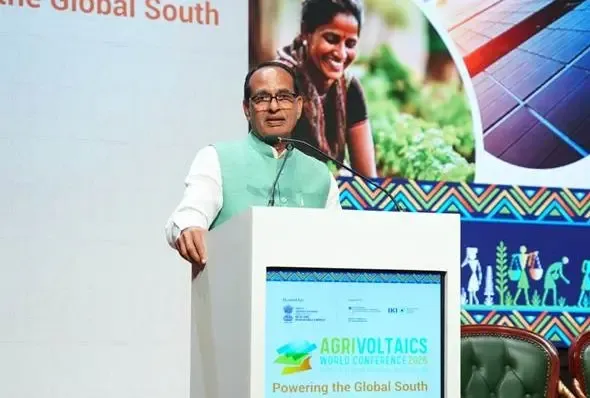
AgriVoltaics can boost farmer incomes, says Shivraj Singh Chouhan at World Conference
Synopsis
At the AgriVoltaics World Conference in New Delhi, Agriculture Minister Shivraj Singh Chouhan made the case for a solar-farming dual-use model tailored to India's 85% small and marginal farmers — and the government is reportedly set to launch the world's most ambitious AgriVoltaics programme under the next PM-KUSUM phase, with potential to meet all of India's electricity needs up to 2050 if scaled to just 10% of suitable land.
Key Takeaways
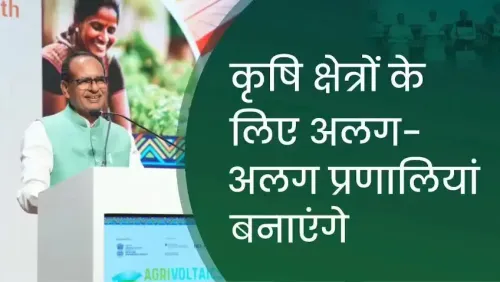
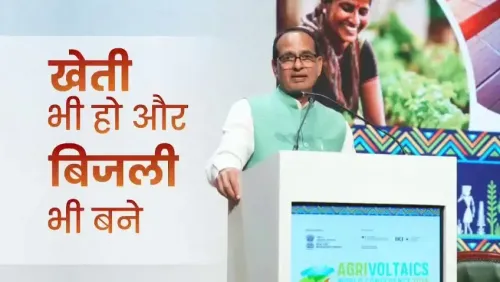
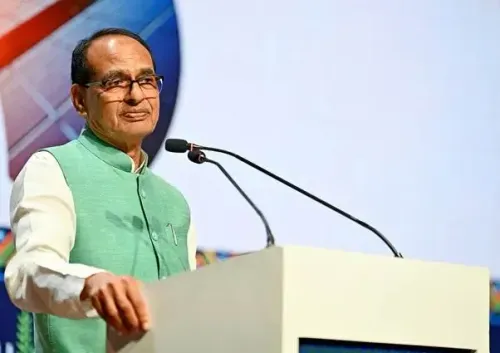
Shivraj Singh Chouhan addressed the inaugural session of the AgriVoltaics World Conference in New Delhi on 21 October 2026 .
AgriVoltaics policy must serve India's 85 per cent small and marginal farmers , who hold an average of just 0.96 hectares of land.
The sector has the potential to generate approximately 3.32 lakh full-time local jobs , reducing rural-to-urban migration.
30 lakh agricultural pumps have already been solarised under the PM-KUSUM scheme; a new, more ambitious AgriVoltaics phase is forthcoming.
India's non-fossil energy capacity has crossed 308 GW , with electricity costs falling from ₹11 per unit in 2012–13 to ₹2.60 per unit today.
AgriVoltaics on just 10 per cent of suitable land could meet India's entire projected electricity demand up to 2050 .
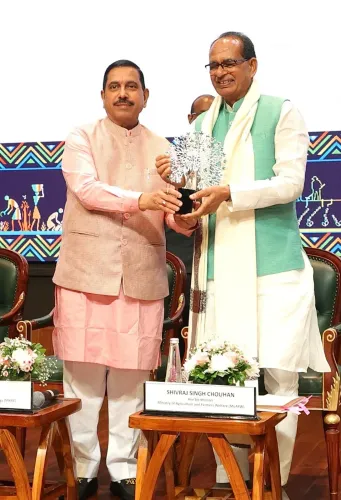
Union Agriculture Minister Shivraj Singh Chouhan on Wednesday, 21 October 2026, declared that integrating solar energy with farming was opening a new pathway to economic prosperity for India's agricultural communities, speaking at the inaugural session of the AgriVoltaics World Conference in New Delhi. The three-day conference brings together global stakeholders to advance the dual-use land model that places solar panels above growing crops.
Why Small Farmers Are Central to the Policy
Chouhan stressed that any AgriVoltaics policy must be designed specifically around India's 85 per cent small and marginal farmers, ensuring the technology's benefits reach those who need them most. He pointed out that India's average landholding stands at just 0.96 hectares, making it impractical for most cultivators to abandon farming entirely in favour of standalone solar installations.
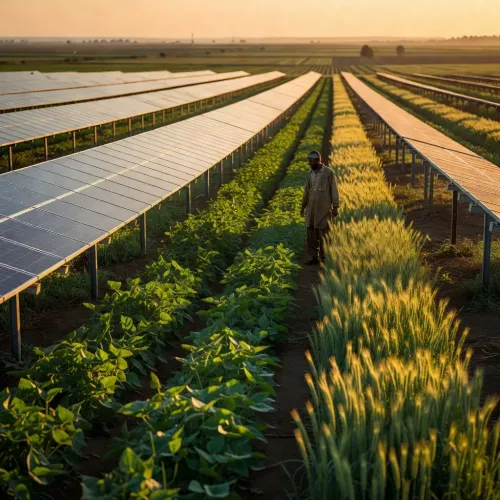
'Such farmers did not have enough land to abandon cultivation and install solar power plants exclusively on their holdings,' Chouhan said. The AgriVoltaics model, he explained, resolves this constraint by enabling solar panels to generate electricity above ground while crops continue to flourish beneath them — a dual-yield approach that protects both food security and energy revenue.
FPOs, Rural Youth and Women in the Frame
The minister urged that Farmer Producer Organisations (FPOs) be actively incorporated into the initiative. He also called for structured training programmes for local rural youth and women in operating, repairing, and maintaining AgriVoltaics equipment — a move that, according to studies cited at the conference, could generate around 3.32 lakh full-time local jobs. These employment opportunities, Chouhan noted, would reduce rural-to-urban migration by enabling youth to find livelihoods within their own communities.
India's Agricultural and Renewable Energy Milestones
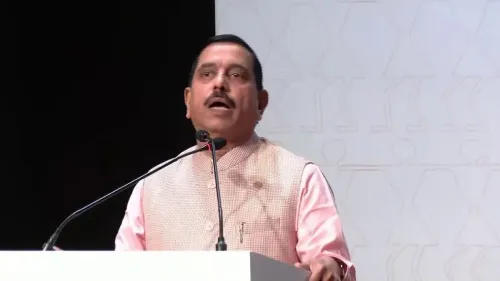
Chouhan highlighted that Indian agriculture is sustaining a robust growth rate of 4.5 per cent, and that agricultural exports have reached a record $52.55 billion. Sowing for the 2026–27 rabi season has commenced, with particular emphasis on pulses and oilseeds. Union Minister for New and Renewable Energy Pralhad Joshi added that India's installed non-fossil energy capacity has crossed 308 GW, with 100 GW added in just the past two-and-a-half years. The cost of non-fossil electricity has also fallen sharply, from ₹11 per unit in 2012–13 to just ₹2.60 per unit today, driven by large-scale production.
PM-KUSUM and the Upcoming AgriVoltaics Programme
Joshi announced that the Union government will soon launch what it describes as the world's most ambitious AgriVoltaics programme under the next phase of the Pradhan Mantri Kisan Urja Suraksha evam Utthan Mahabhiyan (PM-KUSUM) scheme. So far, 30 lakh agricultural pumps have been connected to solar energy under PM-KUSUM. Chouhan underscored the scale of the opportunity: if AgriVoltaics installations were established on just 10 per cent of suitable area, India could potentially meet its entire projected electricity demand up to 2050 through this approach alone.
What Comes Next
With the conference running for three days and global delegations in attendance, the coming sessions are expected to shape international standards and best-practice frameworks for AgriVoltaics deployment. The government's next PM-KUSUM phase details — including timelines and outlay — are awaited, and industry observers will closely track whether the rural employment targets translate into verifiable job creation on the ground.
Point of View
While striking, needs disaggregated data on which land is genuinely dual-use ready without disrupting food output. The 3.32 lakh jobs projection also arrives without a baseline methodology, a pattern that has repeatedly plagued India's green-jobs targets. The real accountability test will come with the next PM-KUSUM phase: whether its AgriVoltaics component is designed with verifiable employment and yield benchmarks, or remains another headline number in a long line of ambitious rural energy announcements.
NationPress
21 Oct 2026
Frequently Asked Questions
What is AgriVoltaics and how does it help Indian farmers?
AgriVoltaics is a dual-use land model where solar panels are installed above ground while crops continue to grow underneath, allowing farmers to earn both from agriculture and electricity generation. For India's small and marginal farmers — who hold an average of just 0.96 hectares — it offers an income supplement without requiring them to give up cultivable land.
What is the PM-KUSUM scheme and what is planned next?
PM-KUSUM (Pradhan Mantri Kisan Urja Suraksha evam Utthan Mahabhiyan) is a Union government scheme that has so far connected 30 lakh agricultural pumps to solar energy. The government has announced it will soon launch what it calls the world's most ambitious AgriVoltaics programme under the scheme's next phase, though specific timelines and financial outlay are yet to be disclosed.
How many jobs could India's AgriVoltaics sector create?
According to studies cited at the AgriVoltaics World Conference, the sector has the potential to generate around 3.32 lakh full-time local jobs. These roles — in operating, repairing, and maintaining equipment — are expected to be based in rural communities, reducing pressure on youth to migrate to cities.
What is India's current renewable energy capacity?
India's installed non-fossil energy capacity has crossed 308 GW, with 100 GW added in the past two-and-a-half years alone, according to Union Minister Pralhad Joshi. The cost of non-fossil electricity has also dropped from ₹11 per unit in 2012–13 to ₹2.60 per unit today.
Why are Farmer Producer Organisations (FPOs) important for AgriVoltaics?
Agriculture Minister Chouhan called for FPOs to be actively involved because they aggregate small and marginal farmers — the segment that owns 85% of India's farmland — giving them collective bargaining power and the scale needed to make AgriVoltaics infrastructure economically viable. FPO involvement would also help channel training for rural youth and women in equipment operation and maintenance.