How Can Integrative Space-Based Oceanography Unlock the Blue Economy?
Synopsis
Former ISRO chief Dr. S. Somanath urges the incorporation of space-based oceanography in India's marine research framework. His vision aims to unlock the blue economy's potential and elevate the livelihoods of coastal communities. Discover how cutting-edge technology can transform ocean governance and resource management.
Key Takeaways
Integration of space-based oceanography is vital for advancing India’s marine research.
The use of AI and machine learning can improve predictive modeling.
Real-time data coverage is crucial for effective ocean governance.
Collaboration among research institutions and startups is essential for success.
Maritime cooperation is a strategic priority for India's economic security.
Kochi, Nov 4 (NationPress) Former ISRO Chairman Dr S. Somanath has emphasized the need to integrate space-based oceanography into India’s marine research strategy to fully harness the potential of the blue economy and improve the quality of life for coastal communities.
He stated that India must "conquer the oceans using technology, innovation, and collaborative research," similar to its achievements in space exploration.
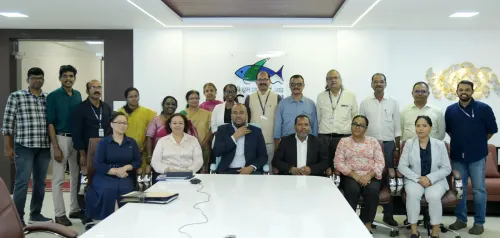
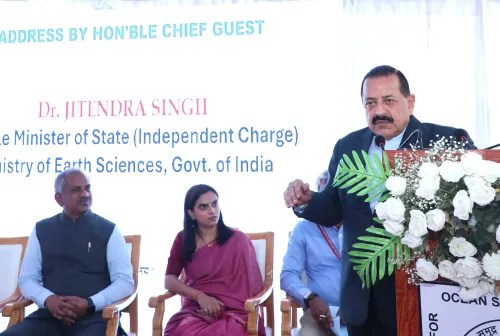
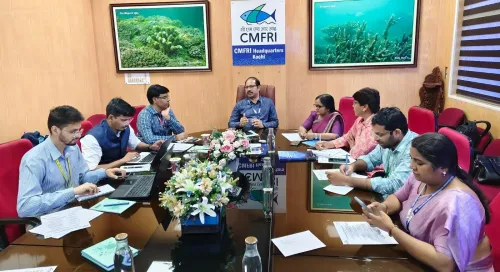
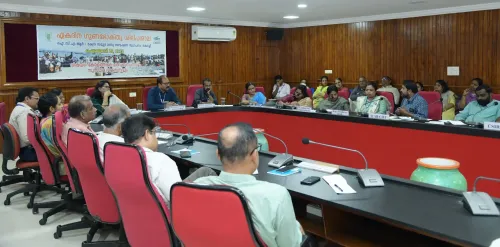
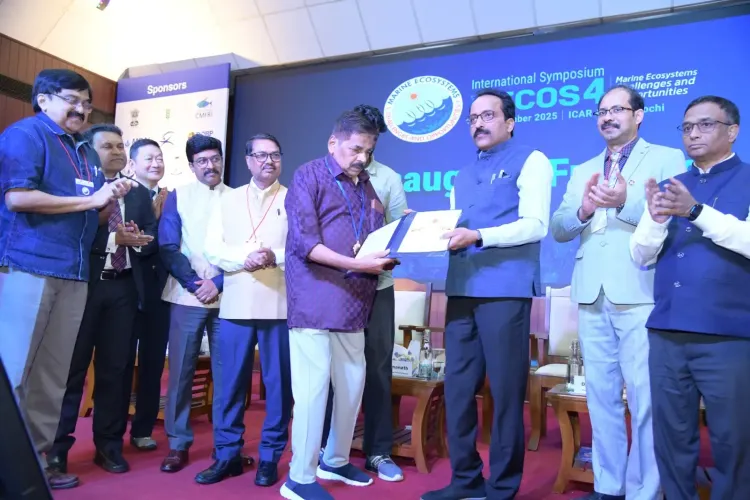
While inaugurating the fourth edition of the International Symposium on Marine Ecosystems (MECOS-4) at the ICAR–Central Marine Fisheries Research Institute (CMFRI) on Tuesday, Dr Somanath asserted that the moment is ideal for India to initiate an integrated ocean observation program incorporating advanced satellites, sensors, and artificial intelligence.
He indicated that a series of ocean observation satellites is under review, which could lead to a new chapter in marine ecosystem monitoring.
The former ISRO chief pointed out that the lack of hyperspectral sensors hampers India’s capability to effectively monitor ocean health and resource distribution.
“We require additional deep-sea sensors, buoys, and unmanned aerial vehicles to enhance real-time data coverage,” he noted, stressing that advanced data integration and analytics are vital for sustainable ocean governance.
Dr Somanath highlighted that the integration of ocean science with digital tools like AI and machine learning would enhance predictive models, facilitating improved management of marine resources.
He advocated for a national framework that connects research institutions, startups, and technology companies under a cohesive ocean mission.
Leading the event, ICAR Deputy Director-General Dr J. K. Jena remarked that ocean research is crucial for India’s long-term food and economic security.
C. S. R. Ram, Joint Secretary of the Ministry of External Affairs, stated that maritime cooperation ranks high among India’s strategic priorities to ensure trade, connectivity, and security across the Indo-Pacific.
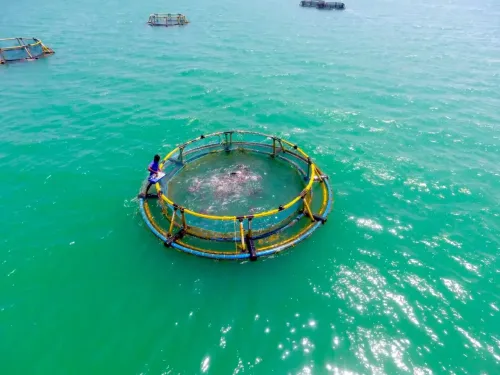
In related news, the Marine Biological Association of India awarded the Dr S. Jones Memorial Award to esteemed marine scientist Dr G. Gopakumar for his groundbreaking work in mariculture, including advancements in cobia and silver pompano breeding that have popularized cage fish farming and improved coastal livelihoods.
Point of View
Integrating space-based oceanography into marine research is not just a technological upgrade; it represents a strategic move towards sustainable development. By leveraging advanced technologies, India can enhance its maritime capabilities and ensure the welfare of its coastal populations, ultimately contributing to national security and economic growth.
NationPress
12 Oct 2026
Frequently Asked Questions
What is space-based oceanography?
Space-based oceanography involves using satellites and sensors to monitor and analyze ocean conditions, health, and resources from space.
How can it benefit the blue economy?
It can enhance resource management, improve monitoring of marine ecosystems, and support sustainable practices that boost the blue economy.
What technologies are involved?
Technologies include advanced satellites, hyperspectral sensors, AI, and unmanned aerial vehicles for real-time data collection.
Why is this important for coastal communities?
It helps improve livelihoods by ensuring sustainable fishery practices and promoting economic opportunities in marine-related sectors.
What role does AI play in oceanography?
AI can enhance predictive models and analytics, allowing for better management of marine resources and informed decision-making.