The Unyielding Nature of Ideology: Insights from K.P. Fabian on US-Iran Relations
Synopsis
Foreign affairs expert K.P. Fabian discusses the complexities of US-Iran relations amid rising tensions. He emphasizes the resilience of Iranian ideology against US threats and analyzes the geopolitical implications surrounding the Strait of Hormuz.
Key Takeaways
Iran's Ideological Resilience: The nation's identity as a civilization state makes it resistant to external threats.
Strategic Communication: Clear protocols regarding the Strait of Hormuz are essential for international relations.
US Decision-Making Critique: The reliance on intimidation may lead to a precarious situation for the US.
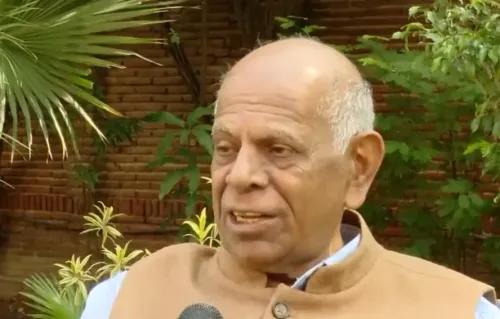
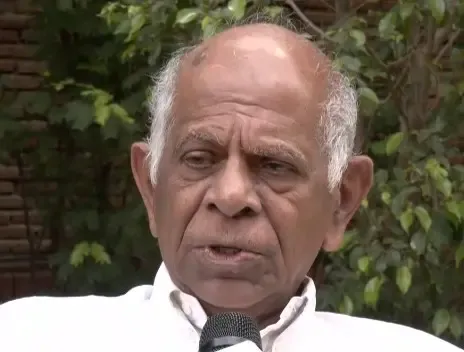
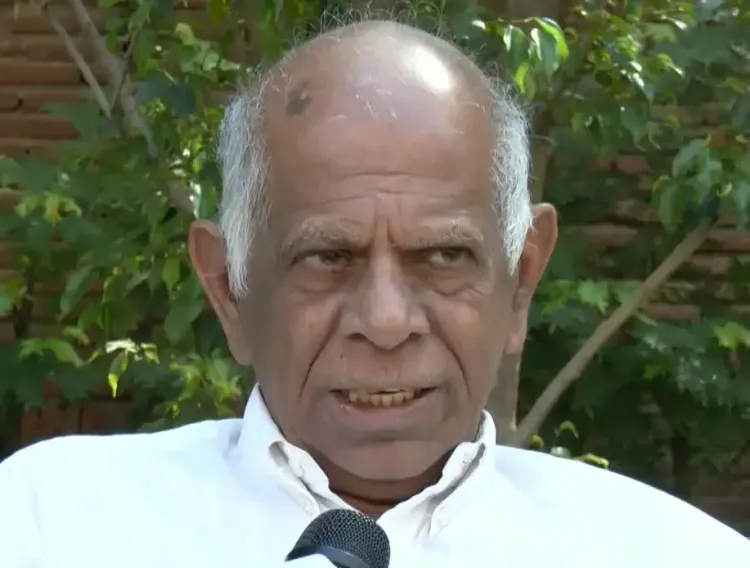
New Delhi, April 6 (NationPress) Amid rising tensions between the United States and Iran, foreign relations specialist K.P. Fabian has shared insights on the strategic consequences of recent US actions, notably the set deadlines and threats regarding the Strait of Hormuz.
Fabian pointed out that the US strategy showcases a trend of public signaling, stating, “The goal is quite evident. President Trump thinks that he can intimidate the global community, whether it’s about Greenland or tariffs. However, with Greenland, he learned, albeit belatedly, that threats are not always effective. Similarly, regarding tariffs, he is slowly grasping the same lesson, as evidenced by the Supreme Court's ruling that he exceeded his authority.
“Nonetheless, there are still various legal avenues he can explore to impose tariffs. Currently, he has opted to target sectors like agriculture, where there is ample leeway. However, at its core, the goal remains intimidation.”
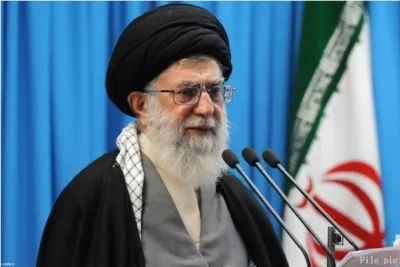
Fabian cautioned that Iran is not easily intimidated, stating: “It is crucial to understand that Iran cannot be easily coerced. Iran represents what could be termed a ‘civilization state.’ When considering the rich history of the Persian Empire along with its geographical significance, it cannot simply be categorized as a standard nation-state.”
“President Trump seems to operate under the illusion that by removing key leaders, Iran will capitulate. This assumption has been proven false. Leadership may be replaced, individuals may be eliminated, but an ideology cannot be extinguished,” he conveyed to IANS.
On the global stage, Fabian underscored that Iran is likely aiming for clear protocols concerning international engagement, particularly in relation to the strategic Strait of Hormuz: “While Iran may not have explicitly articulated this, it would be prudent to adopt a strategic framework. The term ‘checkmate’ has its origins in Persian. It would be advantageous if Iran issued a public declaration regarding the Strait of Hormuz.”
“For example, Iran could assert that there was free passage prior to February 28, when hostilities began. If hostilities cease and guarantees are provided that they will not resume, then the Strait of Hormuz would remain open for free navigation. Naturally, Iran may impose a fee to cover security maintenance, especially in light of threats from American and Israeli forces.
“In this context, Iran is reportedly collaborating on a protocol with other coastal nations, including Oman, and preliminary discussions have already commenced,” he added.
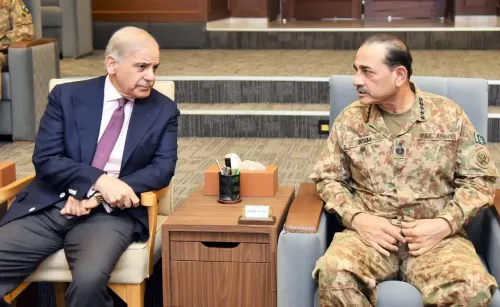
According to Fabian, Iran should articulate such a clear message, yet it has not done so thus far. While Pakistan and China have issued a vague five-point note, it lacks practical significance. A clear and straightforward statement from Iran is desperately needed.
However, the challenge lies in the fact that Iran’s leadership may find it difficult to issue such a statement while contending with Trump’s disparaging rhetoric. The Iranian populace may perceive such a move as a sign of weakness or capitulation to threats. Nevertheless, Iran should adopt a broader, more strategic perspective. It would be prudent to issue such a statement without delay.
Fabian’s critique also addressed US decision-making in the ongoing conflict, emphasizing the importance of intelligence and international alliances.
“How many instances have we observed where President Trump has claimed to have cornered himself? This sentiment is echoed by Time magazine, The New York Times, and numerous others. We need to consider the broader context. Trump has engaged in a conflict initiated by Netanyahu. As stated by prominent scholars such as Professor John Mearsheimer of the University of Chicago, he has entered a war he cannot win,” he remarked.
“If he anticipated that Iran would surrender within the first few days, it seems that Mossad provided that assessment to Trump via Netanyahu. In defiance of the counsel from his intelligence officials, including Tulsi Gabbard, and military leaders at the Pentagon, Trump appears to have adopted Netanyahu’s narrative. Consequently, he finds himself in a precarious situation,” he continued.
He also pointed out that having a leader like Trump, who is easily agitated and prone to questionable judgments in a position of substantial power, armed with extensive resources, presents significant risks.
Fabian’s analysis highlights the intricate nature of the US-Iran standoff and the pitfalls of utilizing public threats as a tool in foreign policy.
Point of View
I view K.P. Fabian's insights as crucial in understanding the multifaceted nature of the US-Iran conflict. His analysis underscores the importance of ideology in international relations and the need for strategic communication in diplomacy.
NationPress
16 Sept 2026
Frequently Asked Questions
What is the main point of K.P. Fabian's analysis?
K.P. Fabian argues that Iran cannot be easily intimidated by US threats, as it possesses a strong ideological foundation that transcends leadership changes.
What does Fabian suggest regarding the Strait of Hormuz?
He suggests that Iran should issue clear protocols for international engagement concerning the Strait of Hormuz to ensure free passage.
How does Fabian critique US foreign policy?
He criticizes the US for relying on intimidation tactics and emphasizes the importance of intelligence and alliances in decision-making.