IRCTC official jailed 3 years, fined ₹14.75 lakh in disproportionate assets case
Synopsis
A CBI court in Lucknow has jailed a former IRCTC Chief Regional Manager for three years and fined him ₹14.75 lakh after finding he held assets worth ₹1.44 crore — over 102 per cent above his known income. The case, rooted in a 2009 bribery trap, took over 15 years to reach conviction, spotlighting the CBI's grinding but persistent pursuit of public-servant corruption.
Key Takeaways
Krishna Mohan Tripathi , former Chief Regional Manager, IRCTC Lucknow , sentenced to 3 years' imprisonment and fined ₹14.75 lakh by a CBI court.
Tripathi was found in possession of assets worth ₹1.44 crore — 102.53% above his known income.
The case originated from a trap operation on 31 October 2009 , when he allegedly accepted ₹70,000 as illegal gratification.
CBI registered the DA case on 24 February 2010 ; charge sheet filed on 13 December 2011 .
The conviction is part of a series: CBI courts have also sentenced an ESIC inspector (Ahmedabad, 2025) and a private individual (Ahmedabad, March 2026) in separate DA cases.
In February 2026 , the CBI booked a Pondicherry University deputy registrar over alleged disproportionate assets of ₹54 lakh .
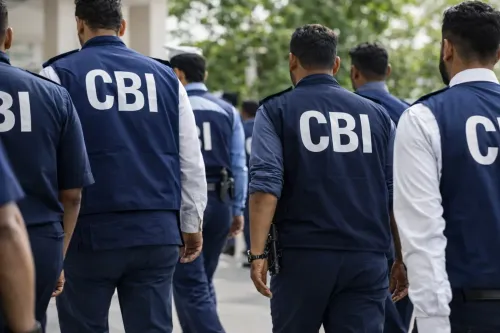
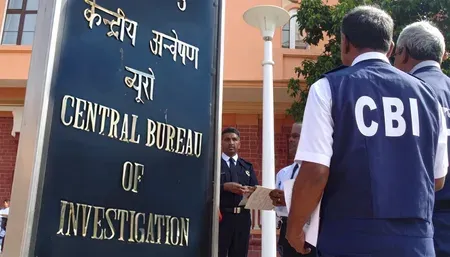
A Central Bureau of Investigation (CBI) court in Lucknow has convicted Krishna Mohan Tripathi, former Chief Regional Manager of the Indian Railway Catering and Tourism Corporation (IRCTC)'s Regional Office in Lucknow, sentencing him to three years' imprisonment and a fine of ₹14.75 lakh in a disproportionate assets (DA) case. The verdict, delivered on Monday, caps a legal process that began with a trap operation more than 15 years ago.
How the Case Began
The chain of events traces back to 31 October 2009, when Tripathi was allegedly caught red-handed demanding and accepting ₹70,000 as illegal gratification during a trap operation. The CBI formally registered the DA case on 24 February 2010 and, after completing its investigation, filed a charge sheet against him on 13 December 2011.
Scale of Disproportionate Assets
During the trial, the prosecution established that Tripathi was in possession of assets worth ₹1.44 crore — assessed to be 102.53 per cent higher than his total known sources of income during the relevant period. The court, after examining the evidence on record, found him guilty and awarded the sentence accordingly.
Pattern of CBI Action in DA Cases
The conviction is part of a broader pattern of CBI enforcement against public servants accused of accumulating wealth beyond their legitimate earnings. In January 2025, a CBI court in Ahmedabad sentenced Anil Kumar Singh, a former Employees' State Insurance Corporation (ESIC) inspector, to three years' rigorous imprisonment and a fine of ₹20 lakh after the agency alleged he possessed assets 314 per cent above his known income.
In March 2026, the same Ahmedabad court sentenced Jashodaben Rameshbhai Vadadia — a private individual — to two years' rigorous imprisonment and a fine of ₹20,000 for abetting the acquisition of disproportionate assets by her husband, a former Income Tax officer.
Fresh Cases on the CBI Radar
The agency has also continued registering new DA cases. In February 2026, the CBI booked a Pondicherry University deputy registrar over alleged disproportionate assets of around ₹54 lakh accumulated over approximately two and a half years. This signals that the bureau's anti-corruption net is widening beyond traditional government departments to include autonomous educational institutions.
The Tripathi verdict underscores the CBI's sustained push to prosecute legacy DA cases to their conclusion — a signal to serving officials that delayed trials do not mean forgotten charges.
Point of View
But it raises a pointed question: does delayed justice deter corruption among serving officials, or does it quietly signal that the system can be outlasted? The CBI's parallel push to register fresh DA cases, including against a university official in Pondicherry, suggests the bureau is trying to compress that lag. But the real test of deterrence is not the number of convictions — it is whether the sentence lands while the accused is still in a position of influence, not years after retirement.
NationPress
25 Sept 2026
Frequently Asked Questions
Who is Krishna Mohan Tripathi and what was he convicted for?
Krishna Mohan Tripathi is a former Chief Regional Manager of IRCTC's Regional Office in Lucknow. A CBI court convicted him of possessing disproportionate assets worth ₹1.44 crore — 102.53 per cent above his known income — and sentenced him to three years' imprisonment and a ₹14.75 lakh fine.
When did the IRCTC disproportionate assets case against Tripathi begin?
The case originated from a trap operation on 31 October 2009, when Tripathi was allegedly caught accepting ₹70,000 as illegal gratification. The CBI registered the formal DA case on 24 February 2010 and filed a charge sheet on 13 December 2011.
What are disproportionate assets under Indian law?
Disproportionate assets refer to wealth held by a public servant that cannot be accounted for by their known, legitimate sources of income. Possession of such assets is a criminal offence under the Prevention of Corruption Act, prosecuted by the CBI and state anti-corruption bureaus.
Are there other recent CBI convictions in similar DA cases?
Yes. In January 2025, a CBI court in Ahmedabad sentenced former ESIC inspector Anil Kumar Singh to three years' rigorous imprisonment for holding assets 314 per cent above his income. In March 2026, the same court jailed a private individual for abetting her husband, a former Income Tax officer, in accumulating disproportionate assets.
What fresh DA cases has the CBI registered recently?
In February 2026, the CBI booked a deputy registrar of Pondicherry University over alleged disproportionate assets of around ₹54 lakh accumulated over roughly two and a half years, indicating the bureau is expanding its anti-corruption focus to autonomous institutions.