ISI building Hamas-LeT-JeM axis for Gaza-style tunnel war in Kashmir
Synopsis
Indian intelligence sources and a new Usanas Foundation report warn that Pakistan's ISI is engineering a three-way tactical alliance between Hamas, Lashkar-e-Taiba, and Jaish-e-Mohammed — not just to fuel attacks in Kashmir, but to replicate Gaza's underground tunnel warfare doctrine on Indian borders, while giving Islamabad full plausible deniability.
Key Takeaways
Pakistan's ISI is reportedly cultivating a tactical alliance between Hamas , Lashkar-e-Taiba , and Jaish-e-Mohammed , according to intelligence sources.
Usanas Foundation 's paper 'Hamas-Pakistan Nexus: A Threat to India and Israel' warns of Gaza-style tunnel networks being built in Pakistan-occupied Kashmir (PoK) .
The strategy would allow the Pakistan Army to maintain deniability while terror groups sustain a prolonged confrontation with Indian forces.
Drone and glider tactics used in the 7 October Hamas attack on Israel could reportedly be replicated in Kashmir .
A meeting in Doha between Pakistan's envoy Lt.
Gen. (Retd) Muhammad Aamer and Hamas official Basem Naim is cited as evidence of state-level backing for the nexus.
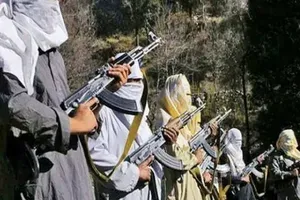
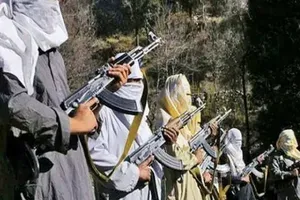
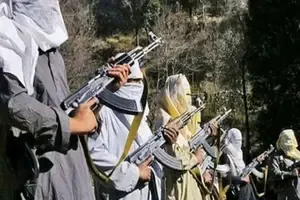
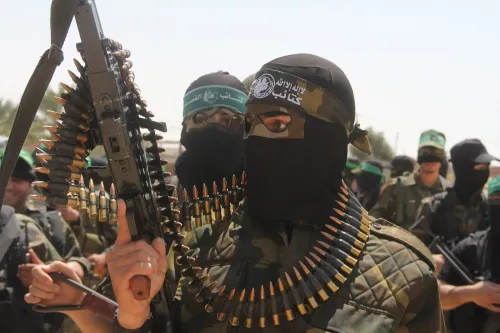
Pakistan's military establishment and the Inter-Services Intelligence (ISI) are actively cultivating a tactical alliance between Hamas and Pakistan-based terror outfits Lashkar-e-Taiba (LeT) and Jaish-e-Mohammed (JeM), according to intelligence sources and a new security report published on 13 August. The reported nexus, officials warn, is designed not merely to escalate attacks in Jammu and Kashmir but to fundamentally upgrade the operational capabilities of Pakistan-backed groups by importing Hamas's battle-hardened guerrilla doctrine.
The Strategic Design
Indian security officials say the Pakistani establishment's objective goes well beyond orchestrating individual terror strikes. The broader aim, according to these officials, is to bring LeT and JeM up to the operational standards of Hamas — enabling them to sustain a prolonged, attrition-style confrontation with Indian armed forces, mirroring the way Hamas has continued its conflict with Israel.
An Intelligence Bureau (IB) official described the arrangement as highly advantageous for the Pakistan Army, as it would allow terror groups to remain engaged in sustained conflict while keeping the Pakistani military largely out of direct involvement. 'The Pakistan establishment will also have a deniability factor in the case of such a war. None can accuse Pakistan of launching a full-fledged war with India using its army,' the official said.
The Think Tank's Findings
Usanas Foundation, an Udaipur-based security and foreign policy think tank, has detailed the threat in its latest paper titled 'Hamas-Pakistan Nexus: A Threat to India and Israel.' The paper argues that Hamas's arrival in Pakistan is mutually beneficial: Pakistan offers safe havens and financial support to a movement facing major reverses in West Asia, while Pakistani terror groups gain access to Hamas's expertise in guerrilla warfare and tunnel-centric infrastructure.
'In return, Pakistani terror groups will leverage the expertise of Hamas in guerrilla warfare and creating infrastructure for tunnel-centric warfare in Pakistan-occupied Kashmir (PoK),' the paper states. Should vast tunnel networks be established in PoK, the report warns, Indian forces could face jihadists waging guerrilla warfare from underground — a scenario directly analogous to what Israeli forces confront in Gaza.
Drone Threat and Propaganda Warfare
Beyond tunnel infrastructure, the research paper flags the likelihood that drone and glider tactics — used to devastating effect during the 7 October Hamas attack on Israel — could be replicated in Kashmir. Officials note that Hamas's well-documented propaganda capabilities, which have reportedly shaped narratives on American university campuses, represent an additional threat dimension for India in the event of an escalation.
Pakistan's own information machinery has already sought to draw parallels between Gaza and Kashmir, a framing that officials say has amplified anti-Israel sentiment domestically and contributed to hostility toward the Jewish community. Several high-profile rallies in Pakistan in recent months have featured leaders and representatives linked to Hamas, LeT, and JeM, with speakers reportedly drawing what officials describe as misleading comparisons between the two conflicts.
Diplomatic Signals
Security experts point to a meeting in Doha last year between Pakistan's envoy to Qatar, Lt. Gen. (Retd) Muhammad Aamer, and Basem Naim, a senior Hamas official, as concrete evidence of institutional backing for the nexus. During the meeting, both sides reportedly emphasised that the struggles in Kashmir and Gaza are one and the same — a framing that experts say reflects coordinated strategic messaging rather than mere solidarity rhetoric.
Indian security agencies have flagged the emerging Hamas-Pakistan terror links repeatedly in recent months. Analysts say the convergence represents a qualitative shift: this is no longer a bilateral arrangement between two militant outfits, but one that reportedly carries the explicit blessing of the Pakistani state apparatus. How India and its strategic partners respond to this evolving threat architecture will be closely watched in the months ahead.
Point of View
Not a non-state one. If the tunnel-warfare doctrine is genuinely being transferred, India faces a threat that is qualitatively different from infiltration-based terrorism: a subterranean insurgency that neutralises conventional military superiority. The propaganda dimension deserves equal attention — Hamas's campus influence operations in the West show that information warfare is as central to its doctrine as tunnels. India's strategic response will need to be multi-domain, and the Usanas Foundation report, while from a think tank rather than an official body, surfaces a scenario that policymakers cannot afford to treat as speculative.
NationPress
13 Aug 2026
Frequently Asked Questions
What is the reported Hamas-ISI-LeT-JeM alliance about?
According to Indian intelligence sources and a security paper by the Usanas Foundation, Pakistan's ISI is fostering a tactical alliance between Hamas and Pakistan-based terror groups Lashkar-e-Taiba and Jaish-e-Mohammed. The goal, officials say, is to upgrade the operational capabilities of Pakistani terror outfits by importing Hamas's guerrilla warfare and tunnel-building expertise for potential use in Kashmir.
What is the Usanas Foundation report and what does it say?
The Usanas Foundation, an Udaipur-based security and foreign policy think tank, published a paper titled 'Hamas-Pakistan Nexus: A Threat to India and Israel.' It argues that Hamas benefits from Pakistani safe havens and finances, while Pakistani terror groups gain access to Hamas's tunnel warfare and drone tactics — expertise that could be deployed against Indian forces in Pakistan-occupied Kashmir.
How does the Gaza tunnel model pose a threat to India?
The Usanas Foundation paper warns that if extensive tunnel networks are built in Pakistan-occupied Kashmir, Indian forces could face guerrilla attacks from underground — mirroring the challenge Israel faces in Gaza. Additionally, drone and glider tactics used in Hamas's 7 October attack on Israel could reportedly be replicated in Kashmir.
What evidence exists of state-level Pakistani backing for this nexus?
Security experts cite a meeting in Doha between Pakistan's envoy to Qatar, Lt. Gen. (Retd) Muhammad Aamer, and senior Hamas official Basem Naim, during which both sides reportedly equated the struggles in Kashmir and Gaza. Officials say this meeting reflects institutional, state-level support rather than a non-state arrangement.
Why would Pakistan pursue a deniable terror alliance rather than direct confrontation?
An Intelligence Bureau official explained that the arrangement allows Pakistan to exert influence and provide support from the background without direct military involvement. This gives the Pakistani state full plausible deniability — it cannot be accused of waging a conventional war against India even as sponsored groups sustain prolonged conflict with Indian forces.