ISI plots 100-150 terrorist infiltration into Kashmir, expands OGW network
Synopsis
Indian intelligence has flagged a calculated ISI plan to flood the Kashmir Valley with 100 to 150 terrorists while proxy groups armed with names, addresses, and phone numbers of Kashmiri Pandits and migrant workers flood the region with personalised threat letters — a deliberate diversionary play designed to split security agency focus at the worst possible moment.
Key Takeaways
The ISI is reportedly planning to push 100 to 150 terrorists into the Kashmir Valley over the next few months, according to an Intelligence Bureau official.
Proxy groups — including The Resistance Front (linked to Lashkar-e-Taiba) and the United Liberation Council (linked to Jaish-e-Mohammed) — are circulating threat letters targeting Kashmiri Pandits and migrant workers .
The threat letters reportedly contain specific names, residential addresses, and phone numbers, suggesting the groups have embedded assets within local systems.
A head constable and two migrant workers were recently killed in Kashmir , which officials say was intended to lend credibility to the threats.
The ISI's strategy is a two-pronged approach : expand the OGW support network and facilitate large-scale terrorist infiltration via the Line of Control .
Officials warn that attempts to provoke communal tensions are also underway as an additional layer of distraction for security forces.
Indian security agencies are on high alert following an intelligence assessment indicating that Pakistan's Inter-Services Intelligence (ISI) is orchestrating a two-pronged offensive in Jammu and Kashmir — pushing 100 to 150 terrorists into the Kashmir Valley over the next few months while simultaneously expanding its over-ground worker (OGW) network. Proxy terror outfits have been circulating targeted threat messages, warning Kashmiri Pandits against relocating and ordering migrant workers to leave the region immediately.
The ISI's Two-Pronged Strategy
According to an Intelligence Bureau (IB) official, the ISI is currently pursuing two simultaneous objectives in the Valley. 'First, the Pakistani intelligence agency wants to expand its over-ground worker (OGW) network to ensure that terrorists have access to logistics and safe shelter. Second, Pakistan is seeking to facilitate a major infiltration attempt, to push at least 100 to 150 terrorists into the Valley over the next couple of months,' the official said.
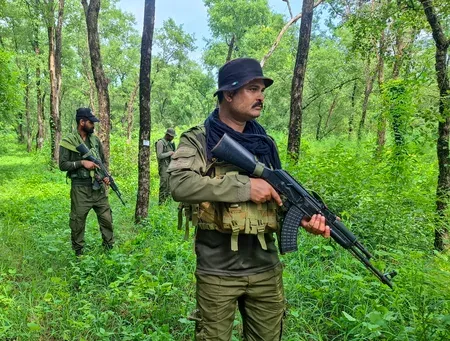
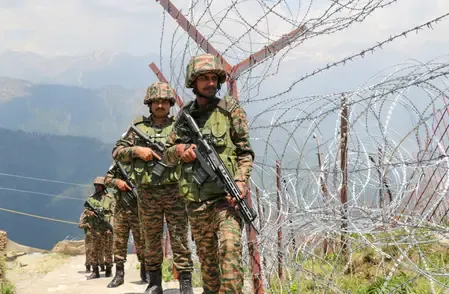
Security officials note that tight surveillance along the Line of Control (LoC) has so far frustrated large-scale infiltration bids by operatives of Jaish-e-Mohammed, Lashkar-e-Taiba, and Hizbul Mujahideen. The ISI is reportedly using the surge in threat letters as a diversionary tactic — forcing agencies to split their attention between managing civilian panic and maintaining operational focus on the border.
Targeted Threats With Precise Personal Data
What has alarmed counter-terrorism experts is the specificity of the threat communications. The warning letters reportedly contain the names, residential addresses, and phone numbers of targeted individuals — both Kashmiri Pandits and migrant workers. Another official said the precision of this information suggests that proxy groups have embedded assets within the system feeding them real-time data.
'Groups such as the United Liberation Council and The Resistance Front, which are proxies of the Jaish-e-Mohammed and Lashkar-e-Taiba, respectively, have assets within the system. Operatives of these groups could possibly be feeding them with such precise information,' the official added.
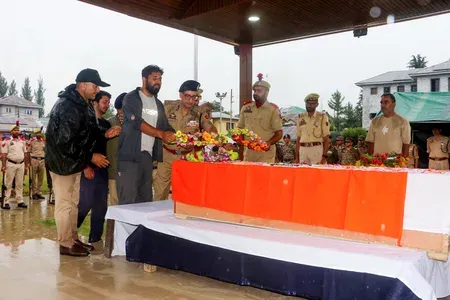
Officials warned that such threat letters will continue to circulate in the Valley in significantly higher numbers. A second official noted that the recent killing of a head constable and two migrant workers by terrorists in Kashmir was intended to signal that these threats carry lethal intent and must not be dismissed.
The Security Dilemma on the Ground
For Indian security agencies, the situation presents a compounded challenge. Ignoring the threats risks emboldening proxy groups to carry out targeted attacks to establish credibility. Responding in full force, however, risks diverting resources from the active OGW recruitment drive and infiltration corridors along the LoC — precisely what the ISI appears to be engineering.
Officials also flagged attempts to stoke communal tensions in the region as an additional layer of distraction. Such incidents, they said, could force security agencies to further disperse their focus, creating operational windows that the ISI could exploit to advance its infiltration agenda.
Historical Pattern and What Comes Next
This is not the first time the ISI has deployed diversionary tactics alongside infiltration pushes. Security analysts note that similar patterns have preceded major terror operations in the Valley in the past. The current escalation, however, is notable for the scale of the planned infiltration and the granular intelligence proxy groups appear to possess about civilian targets.
Officials said threat activity is expected to intensify in the weeks ahead. Security agencies are calibrating their response to avoid falling into what they describe as a deliberate trap — one designed to stretch their operational bandwidth at a moment when the ISI is reportedly positioning foreign terrorists along the LoC for a coordinated push into the Valley.
Point of View
But the precision of the threat letters marks a qualitative escalation. When proxy groups can name, address, and phone-number their targets, it signals a deeper intelligence penetration of civilian databases than security agencies may be publicly acknowledging. The real danger is not the threat letters themselves but the two-front bind they create: agencies that chase every letter risk thinning their LoC vigil; agencies that ignore them hand the ISI a low-cost way to demonstrate reach and intent. The communal provocation layer compounds this — it is a force-multiplier for distraction. The question that mainstream coverage is not asking loudly enough is how proxy groups obtained such granular civilian data, and whether that breach has been contained.
NationPress
4 Sept 2026
Frequently Asked Questions
What is the ISI's reported plan in Jammu and Kashmir?
According to an Intelligence Bureau official, the ISI is pursuing a two-pronged strategy: expanding its over-ground worker (OGW) network to provide logistics and shelter to terrorists, and facilitating the infiltration of 100 to 150 foreign terrorists into the Kashmir Valley over the next few months.
Who are the proxy groups issuing threats in Kashmir?
The Resistance Front, a proxy of Lashkar-e-Taiba, and the United Liberation Council, linked to Jaish-e-Mohammed, are among the groups circulating threat letters. Officials say these groups appear to have embedded operatives feeding them precise personal data on targeted civilians.
Why are the threat letters considered especially alarming?
Unlike generic warnings, the letters reportedly include specific names, home addresses, and phone numbers of Kashmiri Pandits and migrant workers. Counter-terrorism experts say this level of detail suggests an active intelligence leak and makes the threats significantly more credible and dangerous.
What recent attack is connected to these threats?
A head constable and two migrant workers were recently killed by terrorists in Kashmir. Officials said the attack was deliberately timed to signal that the threat letters carry real intent and should not be dismissed by recipients or security agencies.
How are security agencies responding to the situation?
Agencies are on high alert but face a deliberate strategic dilemma: fully mobilising to address the threat letters risks diverting focus from LoC infiltration routes, which is reportedly the ISI's intended outcome. Officials are working to calibrate a response that addresses both threats simultaneously.