ISI recruiting gangsters to destabilise Punjab ahead of 2027 polls: Intel
Synopsis
With Punjab's Assembly elections still months away, Intelligence Bureau officials say Pakistan's ISI is already on the ground — recruiting gangsters to inflame local disputes, planning targeted killings of political leaders, and using manufactured chaos as cover to push drugs and arms across the border. The warning marks a significant escalation in the security calculus ahead of February 2027.
Key Takeaways
Pakistan's ISI is allegedly recruiting small-time gangsters in Punjab to engineer unrest ahead of February 2027 Assembly elections , according to Intelligence Bureau officials.
Recruited individuals are reportedly tasked with identifying local disputes — including personal conflicts — and escalating them into large-scale violence.
The ISI has also reportedly directed operatives to carry out targeted killings of political leaders to create a climate of fear and suppress voter turnout.
Manufactured unrest is allegedly intended to divert security forces, enabling stepped-up cross-border smuggling of drugs and arms.
Officials flagged a coordinated social media and OTT campaign defaming the Punjab Police and central agencies, promoting a pro-Khalistan narrative.
Counter-terror officials warn that newer drone infiltration tactics — including the use of loud music to mask movement — are being deployed along the border.
Intelligence agencies have flagged an active campaign by Pakistan's Inter-Services Intelligence (ISI) to recruit small-time gangsters in Punjab ahead of the state's February 2027 Assembly elections, with the alleged aim of engineering communal unrest, suppressing voter turnout, and diverting security forces to enable large-scale drug and arms smuggling across the border. The warning, relayed by an Intelligence Bureau (IB) official, underscores growing concern that Punjab — already a sensitive border state — faces one of its most complex security tests in years.
How the Alleged Recruitment Operation Works
According to the IB official, the ISI has been tasked with identifying and co-opting low-level gangsters who are then deployed to monitor ground-level disputes — not necessarily political ones. 'These disputes need not necessarily be political and could include personal conflicts, which could then be exploited to fuel tension,' the official said.
The recruited individuals are reportedly instructed to infiltrate local flashpoints and deliberately escalate them into large-scale confrontations involving violence and bloodshed. Officials noted that such disputes are ordinarily resolvable but are being weaponised to overwhelm local administration and law enforcement during the election period.
Targeted Killings and the Fear Strategy
Beyond inflaming local incidents, the ISI has also reportedly directed its operatives to carry out targeted killings of political leaders in Punjab. Intelligence officials said the broader objective is to create an atmosphere of fear that could suppress voter participation. 'By attempting to create fear during the election period and suppress voter participation, the ISI is also seeking to embarrass the Centre,' officials said.
They added that as a border state with a significantly larger deployment of central security agencies than most other states, Punjab presents a high-value target for destabilisation efforts. A drop in voter turnout amid violence, they argued, would serve as a propaganda victory for Pakistan-backed groups.
Smuggling, Drones, and the Security Diversion
A second layer of the alleged strategy involves using manufactured unrest as cover for stepped-up cross-border smuggling. 'By keeping the security establishment occupied with maintaining law and order, the ISI intends to step up large-scale smuggling of drugs and arms across the border,' an official said.
Counter-terror officials said newer drone infiltration techniques are also being deployed, including the use of loud music along the border to mask drone movement and evade detection — a tactic that reflects an evolving operational playbook.
Khalistan Narrative and Social Media Propaganda
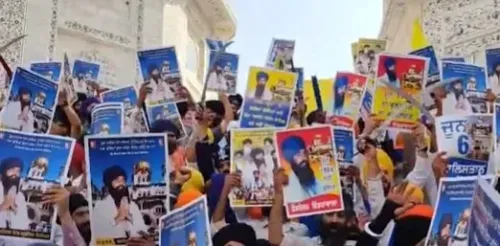
Security experts cited in official briefings said the ISI has increasingly shifted its focus toward Punjab over Kashmir, viewing the state's volatile conditions as fertile ground for reviving Khalistan ideology. The effort reportedly includes a coordinated social media and OTT platform campaign aimed at defaming the Punjab Police and central security agencies.
Officials said the narrative being circulated highlights alleged excesses by security forces while systematically omitting violence carried out by Khalistani militants — including the targeting of minority communities and the killing of large numbers of police personnel during the peak of militancy. 'This points to a deliberate attempt to build a false narrative against the state and its security agencies,' the official said.
Officials specifically cautioned against groups such as Babbar Khalsa International (BKI), warning that Punjab must not be allowed to return to the conditions those organisations once created. They urged the youth of the state not to fall into what they described as ISI attempts to lure and exploit them.
What Security Agencies Are Watching
Counter-terror officials said 2026-27 is expected to be one of the most challenging periods for Punjab's security apparatus, with the ISI anticipated to operate simultaneously on multiple fronts — local disturbances, terror-linked activity, and cross-border infiltration. Intelligence agencies have already intercepted multiple cross-border communications pointing to plans for targeted killings and communal incitement. The coming months, as election campaigning intensifies, are being treated as a high-alert window.
Point of View
But the operational detail — gangsters tasked with weaponising personal disputes, drones masked by border music, OTT-platform propaganda — signals a more granular and adaptive adversary than earlier cycles. What is striking is the explicit framing of voter suppression as a strategic goal: the ISI, according to officials, is not merely trying to cause violence but to make elections look ungovernable. That is a qualitatively different threat, and it demands a response that goes beyond law enforcement to include counter-narrative infrastructure — something India has historically been slow to build at scale in Punjab.
NationPress
17 Jul 2026
Frequently Asked Questions
What is the ISI allegedly planning in Punjab ahead of the 2027 elections?
According to Intelligence Bureau officials, Pakistan's ISI is allegedly recruiting small-time gangsters to monitor and inflame local disputes in Punjab, with the aim of triggering large-scale violence during the February 2027 Assembly election period. The strategy also reportedly includes targeted killings of political leaders and stepped-up cross-border drug and arms smuggling.
How are gangsters being used in the alleged ISI operation?
Officials say recruited gangsters are being instructed to identify minor local disputes — including personal conflicts unrelated to politics — and deliberately escalate them into major confrontations. The objective is to overwhelm Punjab's security apparatus and divert attention from cross-border smuggling operations.
Why is Punjab considered a key target for Pakistan's ISI?
Security experts say the ISI has increasingly prioritised Punjab over Kashmir, viewing the state's conditions as more exploitable for reviving Khalistan ideology. As a border state, Punjab also has a large deployment of central security agencies, making it a high-value target for destabilisation that could embarrass the Centre.
What propaganda tactics is the ISI reportedly using in Punjab?
Officials say the ISI is running a coordinated campaign across social media and OTT platforms to defame the Punjab Police and central security agencies. The narrative reportedly highlights alleged security force excesses while omitting violence by Khalistani militants, including attacks on minority communities and killings of police personnel.
What new drone tactics are being used along the Punjab border?
Counter-terror officials said operatives are now using loud music along the border to mask drone movement and avoid detection — a newer infiltration method that reflects an evolving operational approach to smuggling drugs and arms into Indian territory.