ISI plots multi-state disruption ahead of 2027 assembly polls: Intel agencies
Synopsis
Indian intelligence agencies have sounded a sharp alarm: the ISI has activated a multi-state plot — terror in UP, drugs and grenades in Punjab, ethnic chaos in Manipur — all calibrated to destabilise seven states heading to polls in early 2027. The ISI's operative Shahzad Bhatti reportedly recruited Indian youth pan-India, while proxy networks in Bangladesh are working to reignite Manipur's 2023-scale violence and spread it across the Northeast.
Key Takeaways
Pakistan's ISI has launched a coordinated destabilisation campaign targeting Uttar Pradesh , Punjab , and Manipur ahead of 2027 assembly elections , intelligence agencies warn.
Seven states — UP, Gujarat, Punjab, Uttarakhand, Himachal Pradesh, Manipur, and Goa — are set to vote between February and March 2027 .
ISI operative Shahzad Bhatti reportedly recruited Indian youth pan-India for terror surveillance, narcotics smuggling, and currency counterfeiting.
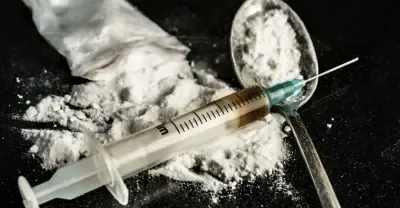
In Punjab , the strategy involves flooding the state with arms and drugs while using pro- Khalistan violence to distract security forces.
In Manipur , ISI-backed proxies in Bangladesh and India are allegedly working to reignite the 2023 -scale ethnic violence and spread unrest across the Northeast .
Security agencies have prepared vulnerability assessments; central and state forces are on heightened alert.
Pakistan's Inter-Services Intelligence (ISI) has launched a coordinated, multi-state destabilisation campaign targeting Uttar Pradesh, Punjab, and Manipur in the run-up to the 2027 assembly elections, intelligence agencies have warned. The plot, according to officials, involves terror attacks, narcotics smuggling, arms trafficking, and engineered ethnic unrest — all timed to coincide with the election cycle.
The Seven States at Risk
As many as seven states — Uttar Pradesh, Gujarat, Punjab, Uttarakhand, Himachal Pradesh, Manipur, and Goa — are scheduled to go to the polls between February and March 2027. Intelligence agencies have assessed all seven for vulnerability, but have flagged Uttar Pradesh, Punjab, and Manipur as the most exposed to ISI-driven interference.
According to an Intelligence Bureau (IB) official, these three states are 'extremely vulnerable' to such activities. 'In Uttar Pradesh, the focus will be on terror attacks and espionage activities. In Punjab, it will be arms and narcotics smuggling, besides random grenade attacks. In Manipur, the attempts will be aimed at creating widespread unrest in the state ahead of the elections,' the official said.
The Bhatti Network: Recruitment and Reach
The destabilisation plan was reportedly set in motion nearly a year ago when the ISI engaged an operative identified as Shahzad Bhatti to recruit Indian youths across the country. Investigators say recruitment was particularly concentrated in Punjab and Uttar Pradesh.
According to officials, Bhatti's recruits were tasked with carrying out targeted killings, installing surveillance equipment in sensitive and crowded locations, conducting reconnaissance for potential terror strikes, and participating in narcotics smuggling and Indian currency counterfeiting. Investigators note that the network's emphasis on locations such as railway stations and bus stands in UP points to planning for large-scale, high-casualty attacks.
Officials stress that Bhatti's network is not the only ISI-backed operation in play. 'There are multiple players on the payrolls of the ISI who have been on the job,' a second official said, indicating a broader and layered covert campaign.
Punjab: Drugs, Arms, and the Khalistan Angle
In Punjab, the ISI's strategy reportedly centres on flooding the state with narcotics and weaponry ahead of the elections. 'The ISI-backed networks have been told to dump as much ammunition and narcotics into the state ahead of the elections,' an official said. This has coincided with a spate of stray grenade attacks and acts of vandalism attributed to pro-Khalistan operatives.
Officials believe the sporadic violence serves a dual purpose: promoting the Khalistan separatist cause while simultaneously keeping law enforcement stretched thin, allowing the smuggling operations to proceed with reduced scrutiny. This pattern, analysts note, has historical precedent in the ISI's Punjab playbook from the 1980s and 1990s.
Manipur: Exploiting Unresolved Ethnic Tensions
Security agencies are described as 'particularly worried' about Manipur, where the ethnic violence that erupted in 2023 has subsided in intensity but left several disputes unresolved. Officials characterise the current situation as a 'low-intensity crisis' that remains susceptible to external provocation.
According to one official, ISI-backed groups — working through proxies in both Bangladesh and India — are actively attempting to revive the 2023-level unrest by spreading disinformation and fuelling community tensions during the election year. The stated strategic objective, the official said, extends beyond Manipur: 'The larger game is to ensure that violence spreads across the North-eastern region.' The Centre has been engaged in peace efforts in Manipur since 2023, but officials say the unresolved nature of the conflict makes it a prime target for exploitation.
Intelligence Response and What Comes Next
Security agencies have drawn up vulnerability assessments for all seven election-bound states and have reportedly shared threat matrices with state police and central paramilitary forces. No specific timeline for preventive operations has been disclosed publicly. With elections in UP, Punjab, and Manipur less than six months away, the pressure on both central and state intelligence machinery to neutralise these networks before polling day is intensifying.
Point of View
Decentralised cells — mirrors low-cost hybrid warfare tactics increasingly favoured by state-backed actors globally. India's intelligence community faces a structural challenge: the seven election-bound states span vastly different threat profiles, forcing a simultaneous counter-terrorism, counter-narcotics, and counter-disinformation response. The key question mainstream coverage glosses over is accountability — whether the intelligence warnings translate into prosecutions and network dismantlement, or remain confined to periodic briefings that do not disrupt the actual operations.
NationPress
8 Oct 2026
Frequently Asked Questions
What is the ISI's alleged plan ahead of India's 2027 assembly elections?
According to Indian intelligence agencies, Pakistan's ISI has activated a multi-state plot targeting Uttar Pradesh, Punjab, and Manipur with activities including terror attacks, narcotics and arms smuggling, currency counterfeiting, and the fanning of ethnic unrest. The plan was reportedly set in motion nearly a year ago and is timed to coincide with seven state assembly elections scheduled for February-March 2027.
Who is Shahzad Bhatti and what role does he play in the alleged ISI plot?
Shahzad Bhatti is identified by investigators as an ISI-linked operative tasked with recruiting Indian youth on a pan-India basis for a range of covert activities, including conducting surveillance on sensitive locations, carrying out targeted killings, and facilitating narcotics smuggling. Recruitment was reportedly heaviest in Punjab and Uttar Pradesh.
Why is Manipur considered especially vulnerable to ISI interference?
Manipur experienced intense ethnic violence in 2023 that has since subsided into what security officials describe as a low-intensity crisis, with several underlying disputes still unresolved. Intelligence agencies warn that ISI-backed proxies in Bangladesh and India are attempting to exploit these tensions to revive large-scale unrest during the election period, with a stated aim of spreading instability across the entire Northeast.
What is the ISI's strategy in Punjab specifically?
In Punjab, the ISI strategy reportedly involves saturating the state with narcotics and arms ahead of elections, while pro-Khalistan operatives carry out stray grenade attacks and vandalism. Officials say the violence is designed to keep security agencies occupied so that the smuggling networks can operate with less scrutiny.
Which states are going to polls in early 2027 and which are on high alert?
Seven states — Uttar Pradesh, Gujarat, Punjab, Uttarakhand, Himachal Pradesh, Manipur, and Goa — are scheduled to hold assembly elections between February and March 2027. Of these, UP, Punjab, and Manipur have been flagged by intelligence agencies as 'extremely vulnerable' to ISI-driven destabilisation activities.