ISI-backed Lahore meets plot multi-front drug surge into India, agencies warn
Synopsis
Indian intelligence has intercepted plans from ISI-backed Lahore meetings that map out a simultaneous narcotics offensive across Punjab, J&K, India's northeast, and southern states — recruiting domestic carriers and bypassing drones. It is the most ambitious alleged ISI drug push since the government launched its 2026-29 drug-free mission.
Key Takeaways
Multiple covert meetings were reportedly held in Lahore involving ISI officials, the Dawood Ibrahim syndicate , and drug traffickers to plan a large-scale narcotics push into India .
The alleged strategy targets Punjab , Jammu and Kashmir , the northeastern states , and southern India simultaneously.
ISI-linked cartels have been directed to diversify beyond drones and use land, sea, and internal courier routes.
Domestic recruitment of drug carriers inside India is reportedly being stepped up to offset network losses from Indian crackdowns.
Between 2014 and 2026 , Indian agencies registered 8,75,000 cases and made 10,97,000 arrests — compared to just 1,95,000 arrests in the decade before.
747 foreign nationals were arrested in 2025 , and 5 high-profile traffickers including Salim Dola were extradited from the UAE, Sri Lanka, and Malaysia.
Indian intelligence agencies have warned that Pakistan's Inter-Services Intelligence (ISI) is orchestrating a large-scale push to ramp up narcotics smuggling into India, with multiple covert meetings reportedly held in Lahore in recent weeks involving ISI officials, members of the Dawood Ibrahim syndicate, and other drug traffickers. The disclosures come as Union Home Minister Amit Shah confirmed earlier this month that the government's war on drugs had entered an 'intensive mission mode' for 2026-29.
What the Lahore Meetings Reportedly Involved
According to an Intelligence Bureau (IB) official, the most recent gathering — held last month in Lahore — deliberated on multiple methods to push narcotics into India through the borders of both Punjab and Jammu and Kashmir. Officials describe this as part of a calculated three-pronged strategy: raising funds for terror groups, overstretching Indian security agencies, and directly challenging the Narendra Modi government's stated vision of a drug-free India.
'The writing on the wall is clear. The agencies do not just have to battle against the existing networks and tactics, but will also have to counter emerging tactics that the ISI would look to deploy,' the official said. The next couple of months, officials added, would be 'extremely challenging.'
A Multi-Border Offensive: Punjab, J&K, Northeast and South
While the primary thrust of the alleged ISI-directed narcotics push targets the Punjab and Jammu and Kashmir borders, intelligence intercepts indicate the plan extends well beyond. According to officials, Pakistan is looking to deepen ties with cartels operating at the Golden Triangle — the border region where Myanmar, Laos, and Thailand converge — which specialises in heroin and synthetic drug trafficking. This nexus is said to pose the greatest threat to India's northeastern states.
Notably, the ISI is assessed to have longstanding links with insurgent groups in the northeast and is reportedly seeking to leverage drug money to bolster those networks. Southern India is also reportedly on the radar, with officials pointing to Haji Salim — a trafficker the ISI is said to be backing heavily — as a key operator targeting that region.
Tactics Being Diversified Beyond Drones
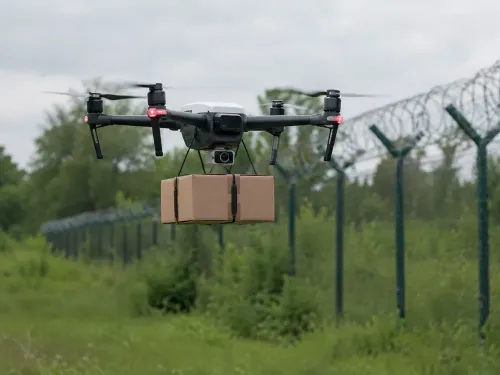
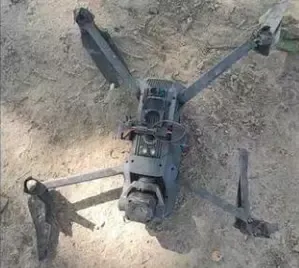
A significant operational shift has reportedly been ordered: ISI-linked cartels have been instructed not to rely solely on drones for cross-border smuggling, but to exploit every available avenue — land routes, sea routes, and internal courier networks. Officials say Indian agencies disrupted carrier networks so severely that traffickers are now facing a shortage of personnel, prompting a fresh drive to recruit carriers inside India itself.
This comes amid a sustained law enforcement offensive. Between 2014 and 2026, Indian agencies registered 8,75,000 cases and arrested 10,97,000 people, including smugglers, carriers, and individuals with links to drug networks. By contrast, the preceding decade (2004-2014) saw only 1,95,000 arrests — a stark illustration of how the enforcement intensity has grown.
Foreign Nationals and High-Profile Extraditions
The scale of the problem has an international dimension as well. In 2025, 747 foreign nationals — primarily from Nigeria, Nepal, and Myanmar — were arrested on drug-related charges in India, up from 660 in 2024 and 735 in 2023. Additionally, five high-profile traffickers, including Salim Dola, have been extradited from countries such as the United Arab Emirates, Sri Lanka, and Malaysia.
Officials argue these statistics explain why the ISI keeps re-strategising and is now turning to domestic recruitment as a fallback. As Indian enforcement tightens, the pressure on cross-border networks intensifies — and, according to agencies, so does the adversary's motivation to adapt.
Government's Drug-Free India Push
Home Minister Amit Shah's declaration of 'intensive mission mode' for 2026-29 signals that narcotics interdiction will remain a top national security and governance priority. The Modi administration's campaign has already produced historic arrest and case-registration numbers, but intelligence officials caution that the ISI's latest moves represent a qualitative escalation — not merely a quantitative one — in the threat calculus.
With agencies now bracing for an adversary that is simultaneously diversifying its smuggling corridors, rebuilding domestic carrier networks, and exploiting insurgency-prone regions, the next phase of India's drug war is set to be fought on multiple fronts at once.
Point of View
If accurate, reveal a strategic pivot by the ISI — from a border-centric drone model to a distributed, multi-corridor narcotics offensive that exploits India's most vulnerable geographies simultaneously. What is being described is not a smuggling network adapting to enforcement pressure in a routine way; it is a state-backed adversary recalibrating after suffering significant attrition. The inclusion of the Golden Triangle and southern coastal routes alongside the traditional Punjab corridor suggests the ISI has studied India's interdiction playbook and is deliberately probing for gaps. The domestic recruitment push is the most telling signal: it indicates that Indian enforcement has genuinely degraded cross-border carrier networks — but it also means the next phase of the threat will be harder to detect at the border and easier to miss inside the country.
NationPress
18 Sept 2026
Frequently Asked Questions
What did ISI officials reportedly discuss at the Lahore meetings?
According to Indian intelligence officials, meetings in Lahore — the most recent held last month — involved ISI officials, Dawood Ibrahim syndicate members, and drug traffickers, and focused on how to push more narcotics into India through the Punjab and Jammu and Kashmir borders, as well as through the northeast and southern states.
Why is the ISI reportedly escalating drug smuggling into India?
Officials say the ISI's motivation is three-fold: to raise funds for terror groups, to overstress Indian security agencies, and to undermine the Modi government's drug-free India initiative. The ISI is also said to be using drug revenues to bolster insurgent networks in India's northeast.
Which regions of India are most at risk from this alleged narcotics push?
Intelligence officials identify Punjab and Jammu and Kashmir as the primary targets, with the northeastern states at risk from Golden Triangle cartels linked to Myanmar, Laos, and Thailand. Southern India is also reportedly in the crosshairs, with trafficker Haji Salim said to be the ISI's key operator in that region.
How significant has India's drug enforcement effort been between 2014 and 2026?
Indian agencies registered 8,75,000 cases and arrested 10,97,000 people between 2014 and 2026 — compared to 1,95,000 arrests in the decade from 2004 to 2014. In 2025 alone, 747 foreign nationals were arrested, and five high-profile traffickers including Salim Dola were extradited.
What new tactics is the ISI reportedly directing drug cartels to use?
ISI-linked cartels have reportedly been instructed to move beyond drones and exploit land routes, sea routes, and internal courier networks. They are also being directed to accelerate recruitment of domestic carriers inside India to replace networks disrupted by Indian security agencies.