ISI chief Shamraiz Khan plans multiple BATs to boost J&K infiltration
Synopsis
Pakistan's newly appointed ISI chief Major General Shamraiz Khan — a BAT specialist, not a traditional spymaster — is reportedly restructuring cross-border infiltration operations with smaller, more numerous Border Action Teams involving Pakistani commandos and LeT, JeM and Hizbul Mujahideen terrorists. With 500-plus militants waiting at PoK launchpads, Indian intelligence agencies say this is the most systematic overhaul of Pakistan's BAT strategy in years.
Key Takeaways
Major General Muhammad Shamraiz Khan was appointed ISI chief approximately one month ago, replacing his predecessor amid Pakistan's stalled infiltration attempts.
Khan commands field experience from leading the 17th Infantry Division at Kharian , which has historically managed BAT forces.
New BATs are being downsized from the traditional 7–10 members to 4–5 members — but multiplied in number — to stretch Indian security forces simultaneously.
Over 500 terrorists are reportedly waiting at launchpads in Pakistan-occupied Kashmir (PoK) , according to Indian intelligence officials.
Khan has held meetings with Field Marshal Asim Munir and top leadership of Lashkar-e-Taiba , Jaish-e-Mohammed , and Hizbul Mujahideen .
The strategy envisages four to five simultaneous ambushes along the Line of Control (LoC) to open multiple infiltration corridors at once.
New Delhi, 22 October 2026: Major General Muhammad Shamraiz Khan, appointed chief of Pakistan's Inter-Services Intelligence (ISI) roughly a month ago, is reportedly working to overhaul the agency's infiltration strategy against Jammu and Kashmir by building multiple, smaller Border Action Teams (BATs) in coordination with the Pakistan Army. According to Indian intelligence officials, over 500 terrorists are currently waiting at launchpads in Pakistan-occupied Kashmir (PoK), unable to cross over due to the absence of adequate BAT cover.
Khan's Background and Why It Signals a Tactical Shift
Khan is an officer of the 40 Field Regiment who previously headed the Sindh Rangers. After his promotion to Major General in 2023, he commanded the 17th Infantry Division at Kharian — a formation specifically known for handling BAT forces and building specialised cross-border units. Intelligence officials say his appointment, despite limited conventional intelligence experience, signals the Pakistani establishment's current priority: not intelligence gathering, but enabling physical infiltration.
'Khan has taken a different approach and has not indulged in any sort of misadventure as yet. He is working towards strengthening the Border Action Teams to aid terrorists in their infiltration bids,' an Intelligence Bureau official said, according to reports.
The New BAT Structure: Smaller, More Numerous, Coordinated
Traditionally, Pakistan deploys between 7 and 10 members per BAT unit. Under the new strategy being put in place by Khan, teams are being reduced to a maximum of 4 to 5 members — ideally two Pakistan Army commandos and two terrorists. The rationale, according to officials, is not reduced capability but multiplication of units: the aim is to field enough simultaneous teams to stretch Indian security forces across multiple locations at once.
'The plan is to create multiple such teams so that they can ambush Indian Army border posts, which would eventually free up infiltration points,' an official was quoted as saying in reports. The intention is to enable at least four to five simultaneous ambushes at any given time along the Line of Control (LoC).
Terror Groups Involved: LeT, JeM, Hizbul Mujahideen
In the weeks since his appointment, Khan has reportedly held meetings with Pakistan Army chief Field Marshal Asim Munir as well as the top leadership of Lashkar-e-Taiba (LeT), Jaish-e-Mohammed (JeM), and Hizbul Mujahideen. The new BAT units being assembled draw members from all three groups. Notably, the terrorists embedded within these teams are not intended to infiltrate themselves — their role is to support infiltration corridors for other operatives who would then enter the Kashmir Valley and sustain a prolonged presence.
'Infiltrations are crucial, and they are not taking place currently. There are over 500 terrorists at the launchpads waiting to infiltrate, and for that to take place, they need the support of strong Border Action Teams,' a second official said, according to reports.
Indian Intelligence Assessment and Security Posture
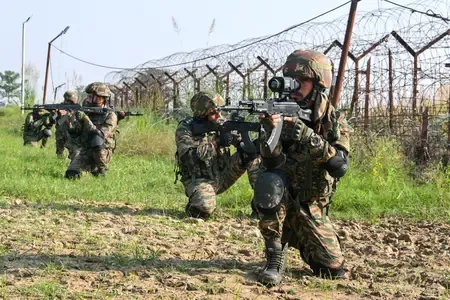
Inputs being tracked and analysed by Indian intelligence agencies point to a significant restructuring of BAT capabilities under the ISI's new leadership. The proposed approach marks a departure from previous one-off cross-border strikes, moving towards coordinated multi-point assaults designed to simultaneously overwhelm Indian border posts and open infiltration windows. Indian security forces along the LoC are expected to factor this evolving threat into their deployment and response strategies.
The coming weeks will be critical, with Indian agencies closely monitoring movements at known launchpads in PoK and calibrating counter-infiltration operations accordingly.
Point of View
And it believes the barrier is logistical, not ideological. The shift to smaller, more numerous teams is tactically significant because it trades depth for breadth, aiming to simultaneously overwhelm multiple LoC posts rather than achieve one high-profile breach. What mainstream coverage under-weights is the 500-plus figure at the launchpads — this backlog suggests India's current counter-infiltration posture is working, and the BAT restructuring is a direct response to that effectiveness. The real question is whether Indian security planners have already gamed out this multi-point ambush scenario, or whether it represents a genuine gap in current deployment doctrine.
NationPress
22 Oct 2026
Frequently Asked Questions
Who is ISI chief Muhammad Shamraiz Khan?
Major General Muhammad Shamraiz Khan is the newly appointed head of Pakistan's Inter-Services Intelligence (ISI), installed approximately one month ago. He is an officer of the 40 Field Regiment who previously commanded the Sindh Rangers and, after his 2023 promotion to Major General, led the 17th Infantry Division at Kharian — a formation known for managing Border Action Team forces.
What are Border Action Teams (BATs) and why do they matter for J&K?
Border Action Teams are covert, mixed units comprising Pakistan Army commandos and militants that carry out quick cross-border raids to ambush Indian posts along the Line of Control. Their primary tactical purpose is to overwhelm Indian border posts long enough to open infiltration corridors through which additional terrorists can enter Jammu and Kashmir.
How is Pakistan's new BAT strategy different from before?
Traditionally, Pakistan deployed teams of 7–10 members per BAT unit. Under the restructuring overseen by ISI chief Khan, teams are being capped at 4–5 members — two Pakistani Army commandos and two terrorists — but the number of teams is set to increase significantly. The goal is to enable four to five simultaneous ambushes at different LoC points rather than isolated one-off strikes.
Which terror groups are involved in the new BAT plans?
According to Indian intelligence officials, the new BATs draw members from Lashkar-e-Taiba (LeT), Jaish-e-Mohammed (JeM), and Hizbul Mujahideen. Khan has reportedly met the top leadership of all three groups in the weeks since his appointment as ISI chief.
What is India's response to this threat?
Indian intelligence agencies are actively tracking and analysing inputs pointing to the BAT restructuring. More than 500 terrorists are reportedly waiting at launchpads in Pakistan-occupied Kashmir (PoK), and Indian security forces along the LoC are expected to recalibrate their counter-infiltration operations in response to the evolving multi-point ambush threat.