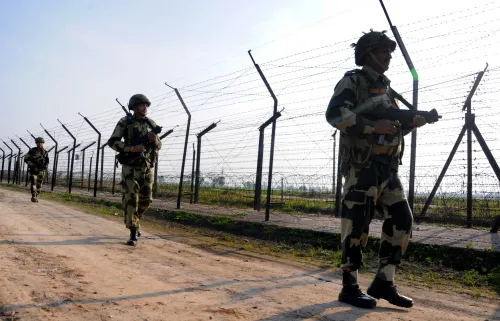
Pakistan Reactivates 70 Terror Launchpads, 800 Terrorists Poised for Infiltration

Synopsis
Amid rising tensions, Pakistan has reactivated 70 terror launchpads with plans to infiltrate 800 terrorists into Jammu and Kashmir. This strategy aims to exploit global distractions and ongoing elections in India.
Key Takeaways
70 terror launchpads reactivated by Pakistan.
Approximately 800 terrorists are ready for infiltration.
Infiltration strategies are being revised to challenge Indian security forces.
Local terror networks have weakened under pressure.
Pakistan aims to exploit global distractions for infiltration attempts.
New Delhi, April 15 (NationPress) The Inter-Services Intelligence (ISI) of Pakistan, along with its military, has reportedly reactivated a minimum of 70 terrorist launchpads along the Line of Control and International Border, with plans to facilitate the infiltration of approximately 800 terrorists into Jammu and Kashmir, as disclosed by intelligence sources on Wednesday.
Authorities believe that the Pakistani establishment is attempting to leverage the current global focus on the conflict in the Middle East and the ongoing state elections in India to enable this infiltration.
The international spotlight has mainly been directed towards the recent events in the Middle East, particularly the tensions involving the US, Israel, and Iran. Despite Pakistan's efforts to mediate talks between the US and Iran—which ultimately did not succeed—the ISI, in conjunction with the military, has pushed for the reactivation of these launchpads within Pakistan-occupied Kashmir (PoK).
In light of these global dynamics and the ongoing assembly elections across various states in India, the Pakistan establishment is perceived to be eager to increase its infiltration activities, according to an official.
The number of terrorists being moved into PoK has been consistently rising, with many kept on these launchpads, poised for infiltration into Jammu and Kashmir.
Intelligence assessments suggest that at least 70 launchpads are operational along the border, comprising around 10 along the International Border and the remainder along the Line of Control (LoC). Estimates indicate that nearly 800 terrorists are prepared to cross the border at any moment.
An official from the Intelligence Bureau mentioned that the infiltration strategy has been modified following several thwarted attempts to breach Jammu and Kashmir's borders due to increased security vigilance.
“The current plan involves launching coordinated infiltration from multiple points simultaneously to challenge security forces. Groups of 10 to 15 terrorists may attempt to breach at once, with the expectation that a few could succeed,” the official stated.
He further noted that Pakistan aims to capitalize on ongoing developments both domestically and internationally, hoping to exploit any operational vulnerabilities to facilitate infiltration.
A sense of urgency seems to have emerged following Operation Sindoor in May last year, during which Indian armed forces targeted and dismantled terror infrastructure within Pakistan and PoK, in response to the tragic Pahalgam attack in April that resulted in the deaths of 26 Indian tourists.
Since that operation, Indian security forces have successfully thwarted numerous infiltration attempts. Sources indicate that the ISI and Pakistani military are under pressure from terrorist organizations like Lashkar-e-Taiba due to a perceived lack of operational activity in Jammu and Kashmir.
Officials have stated that the situation in Jammu and Kashmir is crucial for these groups, making ongoing unrest a significant objective for the Pakistani establishment, particularly concerning local dynamics.
Moreover, terrorist factions continue to leverage the Jammu and Kashmir issue as a critical recruitment tool. Intelligence reports suggest that the ISI is attempting to rejuvenate attacks in the region, which necessitates multiple successful infiltration operations. However, local terror networks have been considerably weakened, and support systems for over-ground workers (OWGs) have struggled to expand under sustained security scrutiny.
It is believed that the agency is focusing on deploying trained, combat-experienced operatives from across the border, deemed more capable of executing impactful attacks than local recruits.
“The strategy seems to involve inserting 10 to 15 operatives initially, followed by efforts to orchestrate a larger assault in the Valley,” an official concluded.
Point of View
But the urgency of infiltration attempts underscores the need for continued surveillance and strategic countermeasures.
NationPress
18 Sept 2026
Frequently Asked Questions
What are the implications of reactivating terror launchpads?
The reactivation poses a significant threat to regional security, potentially leading to increased infiltration attempts into Jammu and Kashmir.
How many terrorists are reportedly ready for infiltration?
Intelligence reports indicate that approximately 800 terrorists are prepared to infiltrate into Jammu and Kashmir.
What is the strategy behind this infiltration?
Pakistan aims to exploit current global distractions and the ongoing elections in India to facilitate these infiltration attempts.
What actions have Indian forces taken against infiltration attempts?
Indian security forces have successfully thwarted multiple infiltration attempts and continue to maintain heightened vigilance along the borders.
How has the local terror network in Jammu and Kashmir been affected?
Local terror networks have been significantly weakened due to sustained security pressure, impacting their operational capabilities.