ISRO alone can't meet India's space needs, says Chairman Dr V Narayanan amid privatisation debate
Synopsis
ISRO Chairman Dr V Narayanan has put a number to India's space ambition gap — 56 satellites today, hundreds needed tomorrow. His defence of private sector participation, delivered on the day GSLV-F17 set a new payload record, reframes the privatisation debate: this isn't about ceding ground, it's about scaling up an ecosystem ISRO alone cannot build.
Key Takeaways
ISRO Chairman Dr V Narayanan stated India currently has 56 satellites against a requirement of hundreds , justifying private sector expansion.
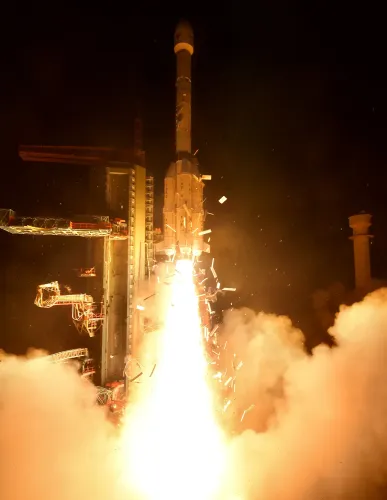
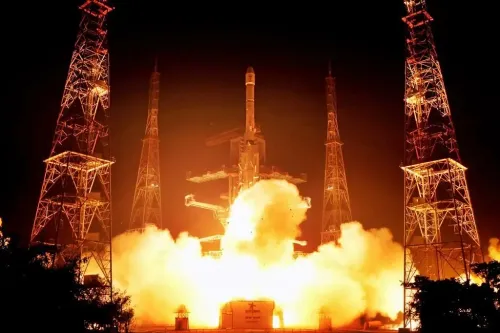
The GSLV-F17 rocket successfully launched the EOS-05 Earth observation satellite from Sriharikota at 2:55 am IST on 4 September .
The GSLV Mark II vehicle's payload capacity has grown by nearly 40 per cent since its inception, with EOS-05 being its heaviest satellite to date.
The Kulasekarapattinam spaceport project is on track for completion by March .
The first uncrewed Gaganyaan mission is targeted for this year, Narayanan confirmed.
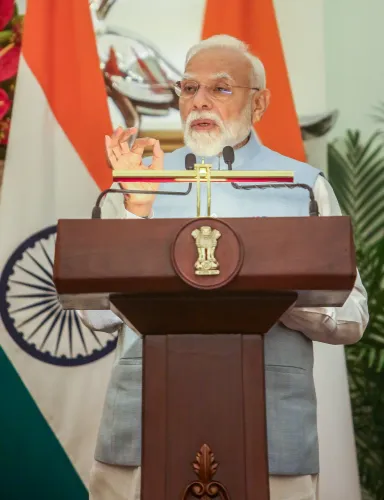
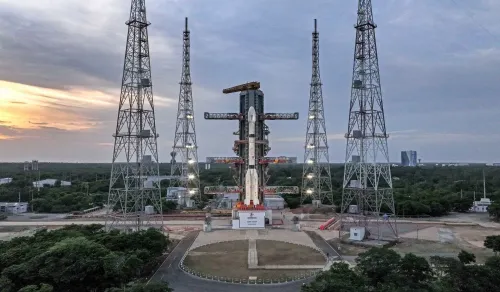
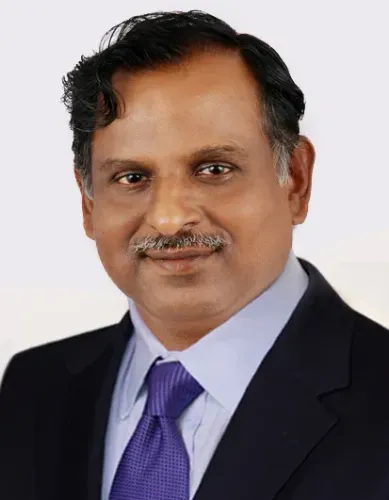
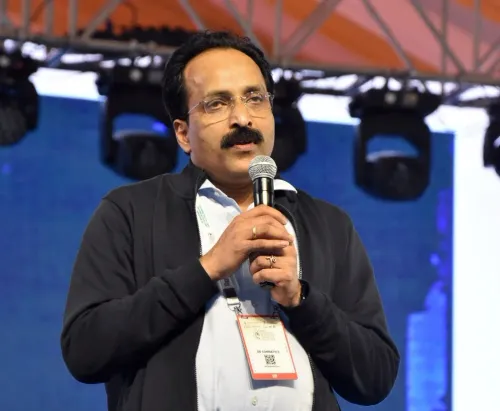
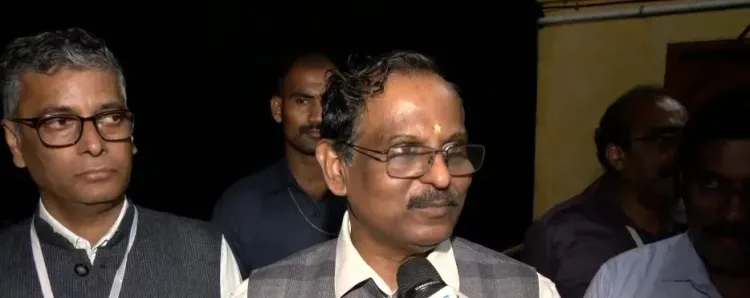
ISRO Chairman Dr V Narayanan on Friday, 4 September defended the growing role of private players in India's space sector, stating that the organisation alone cannot fulfil the country's expanding requirements. His remarks came on the sidelines of the successful launch of the GSLV-F17 rocket carrying the EOS-05 Earth observation satellite from the Satish Dhawan Space Centre in Sriharikota.
Why ISRO Says Private Participation Is Necessary
'Please understand, our country's space economy has to grow and the space ecosystem has to grow because ISRO alone cannot meet the needs of the country. Right now, we have 56 satellites, but the requirement is for hundreds of satellites,' Narayanan said.
He clarified that the government's space sector reforms are designed to enable broader industry participation, with ISRO playing a mentoring and support role rather than a gatekeeper one. 'We have to really ensure that the space ecosystem in our country grows. Therefore, we will have a lot of job opportunities, the economy will grow and more satellites will be produced,' he added.
GSLV-F17 Launch: A Record-Setting Mission
The GSLV-F17 rocket lifted off at 2:55 am IST on Friday in a pre-dawn mission that Narayanan described as a landmark achievement. For the first time, the GSLV Mark II vehicle carried the heaviest payload in its history. 'The GSLV Mark II vehicle's capability, when we started, was only 1,536 kg. Today, we have improved the capability by almost 40 per cent, and this is the heaviest satellite lifted by this vehicle,' Narayanan said.
The mission marks a significant step in India's push to enhance its indigenous heavy-lift capacity, a capability that directly reduces dependence on foreign launch services.
Kulasekarapattinam Spaceport and Gaganyaan Updates
Narayanan also provided progress updates on two other high-priority programmes. Construction at the Kulasekarapattinam spaceport project is reportedly on schedule and expected to be completed by March. The facility, once operational, is expected to serve as a dedicated small satellite launch hub, further supporting private space operators.
On the Gaganyaan human spaceflight programme, Narayanan confirmed that the mission is progressing as planned, with the first uncrewed mission targeted for this year. This comes amid heightened national interest in India's crewed space ambitions.
The Broader Privatisation Debate
Criticism over the privatisation of India's space sector has grown as more commercial entities enter what was long a state-dominated domain. Narayanan's remarks are a direct rebuttal to those concerns, framing private participation not as a dilution of ISRO's mandate but as a structural necessity. This is consistent with the broader policy shift since 2020, when the government opened the space sector to private players through the Indian National Space Promotion and Authorisation Centre (IN-SPACe).
With India's satellite requirement running into the hundreds and the Gaganyaan mission on the horizon, the pressure on ISRO to scale — and to scale through partnerships — is only set to intensify.
Point of View
Not a funding one. The real question the privatisation debate sidesteps is governance: IN-SPACe is still finding its regulatory footing, and without a robust authorisation and liability framework, scaling private participation carries mission-safety risk. The GSLV Mark II's 40 per cent payload improvement is a genuine technical achievement — but India's ambition of hundreds of satellites demands a quantum leap, not incremental gains. Whether private players can deliver that at cost and schedule without ISRO's institutional depth remains unproven.
NationPress
4 Sept 2026
Frequently Asked Questions
Why is ISRO supporting private sector participation in India's space sector?
ISRO Chairman Dr V Narayanan has stated that India currently operates only 56 satellites while the national requirement runs into the hundreds, making it impossible for ISRO alone to meet demand. The government's space sector reforms, backed by IN-SPACe, are designed to enable private players to help close this gap.
What is the GSLV-F17 and EOS-05 mission?
GSLV-F17 is an Indian Space Research Organisation rocket that successfully launched the EOS-05 Earth observation satellite from Sriharikota at 2:55 am IST on 4 September. The mission set a new record for the GSLV Mark II vehicle, which carried its heaviest payload yet — a roughly 40 per cent improvement over its original capacity of 1,536 kg.
When will the Kulasekarapattinam spaceport be ready?
According to Dr V Narayanan, construction at the Kulasekarapattinam spaceport is progressing on schedule and is expected to be completed by March. The facility is intended to serve as a dedicated small satellite launch hub.
What is the current status of the Gaganyaan mission?
The Gaganyaan human spaceflight programme is progressing as planned, with the first uncrewed mission targeted for this year, Narayanan confirmed. The programme represents India's first attempt at a crewed orbital mission.
What is IN-SPACe and how does it relate to space privatisation?
The Indian National Space Promotion and Authorisation Centre (IN-SPACe) was established in 2020 to open India's space sector to private players. It acts as the regulatory and promotional body that facilitates private participation, with ISRO providing technical mentorship and support to new entrants.