ISRO's Advanced Radar Centre under Project NETRA to come up in Assam's Chandrapur

Synopsis
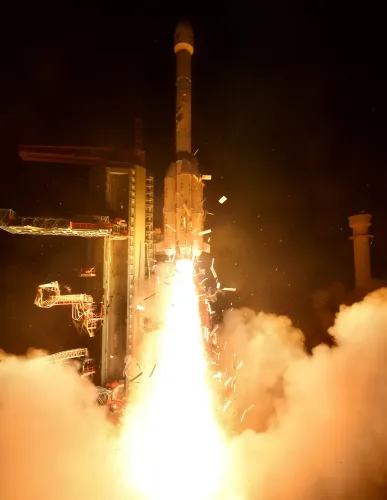
Assam is no longer on India's technology periphery — at least on paper. Chief Minister Himanta Biswa Sarma's ground-breaking of ISTRAC's Advanced Radar Research Centre in Chandrapur puts the state at the heart of Project NETRA, India's bid to independently monitor and protect its orbital assets in an increasingly congested space environment.
Key Takeaways
Assam CM Himanta Biswa Sarma performed the Bhumi Pujan for ISTRAC's Advanced Radar Research Centre in Chandrapur on 21 September 2026 .
The facility is part of Project NETRA , India's initiative to strengthen space situational awareness and orbital tracking.
The centre will enhance India's ability to monitor satellites, debris, and other objects in Earth's orbit.
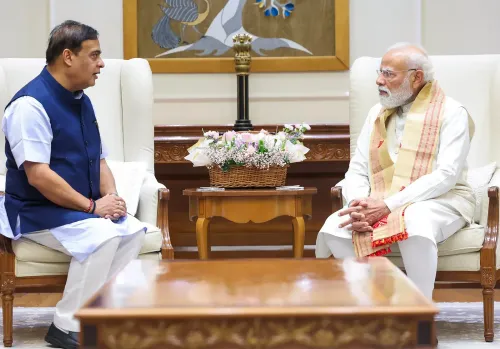
Sarma credited Prime Minister Narendra Modi and the Centre for choosing Assam for the strategic project.
The facility is among the first major ISRO infrastructure investments in northeast India , marking a shift in the country's science and technology geography.
Assam Chief Minister Himanta Biswa Sarma on Monday, 21 September 2026, performed the Bhumi Pujan for the ISTRAC Advanced Radar Research Centre in Chandrapur, Assam, marking the formal ground-breaking of a facility that will form part of Project NETRA — India's national initiative to strengthen space situational awareness and satellite tracking. The Chief Minister described the development as a landmark moment for the state's emergence as a hub for advanced technological infrastructure.
What Project NETRA and the Chandrapur Facility Entail
Project NETRA is India's dedicated programme to build a network of sensors and radars that can monitor objects in Earth's orbit, detect potential collision threats, and safeguard critical space assets. The Chandrapur radar research centre, being set up under the Indian Space Research Organisation's tracking arm ISTRAC (ISRO Telemetry, Tracking and Command Network), is expected to significantly enhance the country's ground-based space monitoring capabilities. The facility will contribute to tracking satellites, debris, and other orbital objects whose numbers have grown sharply in recent years.
Strategic Significance for India's Space Programme
As Earth's orbital environment becomes increasingly congested, space situational awareness has assumed a direct bearing on national security, communications infrastructure, and scientific missions. The Chandrapur facility is positioned to bolster India's independent capacity to monitor and respond to orbital threats — a capability that major space-faring nations have been rapidly expanding. Notably, this is among the first major ISRO infrastructure investments in northeast India, a region that has historically been at the periphery of the country's science and technology footprint.
What the Chief Minister Said
Sarma shared details of the ground-breaking through a post on social media platform X, expressing satisfaction at the Centre's decision to locate the facility in Assam. 'For a state once considered far from India's major centres of technology, it is deeply satisfying to see Assam today becoming home to such cutting-edge national infrastructure,' Sarma wrote. He also acknowledged Prime Minister Narendra Modi and the Centre for selecting Assam for the strategically significant project.
Assam's Growing Role in National Infrastructure
The Chandrapur announcement is part of a broader pattern of high-value national projects being directed to northeastern states. For Assam specifically, the facility represents an opportunity to link the state's identity to India's space and defence technology ecosystem. State officials have increasingly sought to position Assam as a destination for major research and strategic infrastructure, and the ISRO radar centre is a tangible milestone in that effort.
What Comes Next
Construction timelines and the facility's operational date have not yet been officially announced. As the project progresses under ISTRAC's oversight, it is expected to integrate into India's wider Project NETRA network. The development will be closely watched by both the space science community and policymakers focused on India's long-term space security architecture.
Point of View
And decentralising critical space infrastructure also reduces single-point vulnerability. But the announcement raises a question that every Bhumi Pujan leaves open: execution. India's space situational awareness network remains nascent compared to peers like the US Space Surveillance Network or China's equivalent. Project NETRA's ambitions are clear; the pace of delivery and integration with allied sensor networks will determine whether this ground-breaking translates into genuine strategic capability — or remains a headline for Assam's political calendar.
NationPress
21 Sept 2026
Frequently Asked Questions
What is Project NETRA and why is it significant?
Project NETRA is India's national programme to build a network of radars and sensors capable of monitoring objects in Earth's orbit, detecting collision risks, and protecting the country's space assets. It is significant because space situational awareness is increasingly critical to national security, satellite communications, and scientific missions as orbital congestion grows.
What will the ISTRAC Advanced Radar Research Centre in Chandrapur do?
The facility will serve as a ground-based radar research centre under ISRO's tracking arm ISTRAC, contributing to the monitoring of satellites, debris, and other orbital objects. It will form part of India's broader Project NETRA network aimed at strengthening the country's independent space surveillance capability.
Who performed the ground-breaking of the Chandrapur radar facility?
Assam Chief Minister Himanta Biswa Sarma performed the Bhumi Pujan on 21 September 2026. He acknowledged Prime Minister Narendra Modi and the Centre for selecting Assam as the site for this strategically important ISRO infrastructure.
Why was Assam chosen for the ISRO radar centre?
The Chief Minister indicated that the Centre selected Assam for the facility as part of broader efforts to develop high-end scientific and strategic infrastructure in regions beyond India's traditional metropolitan technology hubs. Northeast India's geography may also offer operational advantages for space tracking purposes.
When will the Chandrapur radar facility become operational?
An official construction timeline and operational date have not yet been announced. The project will be developed under ISTRAC's oversight and is expected to eventually integrate with India's wider Project NETRA sensor network.