Dr. Jitendra Singh Hails ITBP All-Women Everest Team, Kathua's Anjali Devi
Synopsis
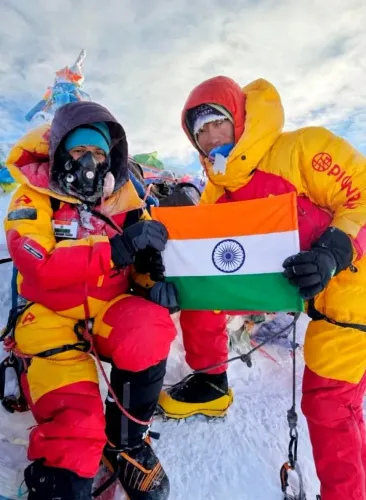
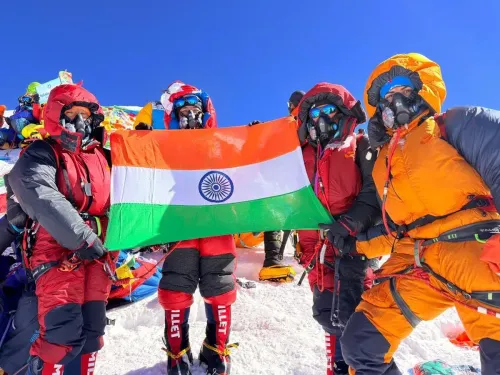
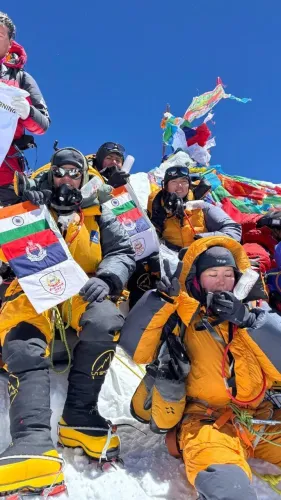
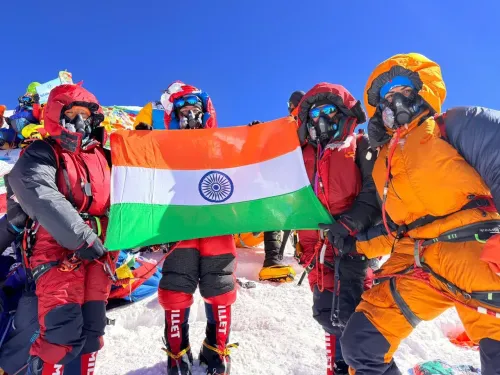
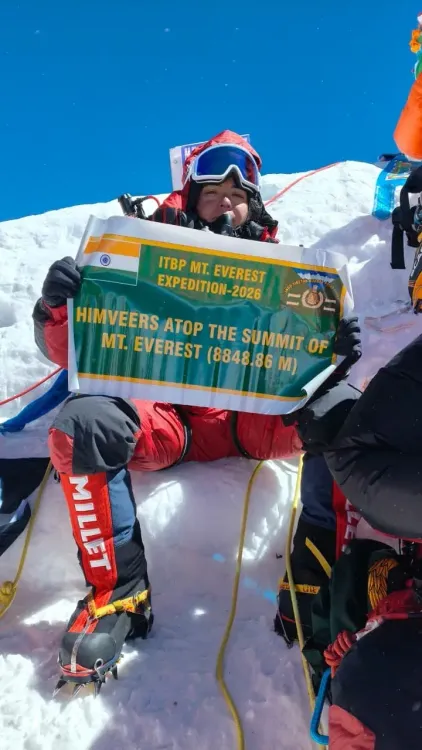
ITBP's first all-women team has summited Mount Everest, with Kathua's Anjali Devi among the climbers. Union Minister Dr. Jitendra Singh hailed the feat as a landmark for Nari Shakti and credited PM Modi's encouragement of women in demanding national roles.
Key Takeaways
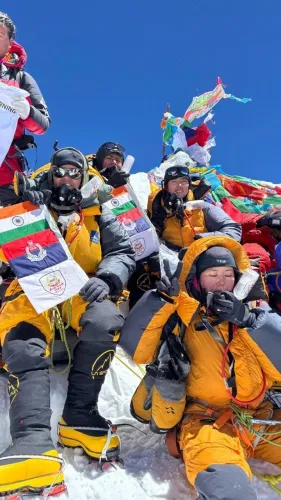
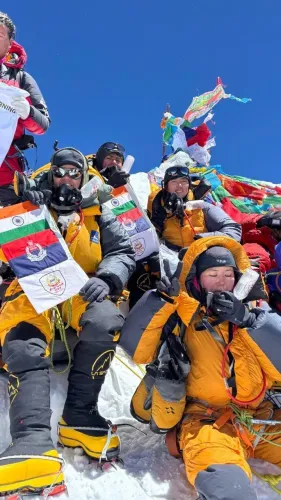
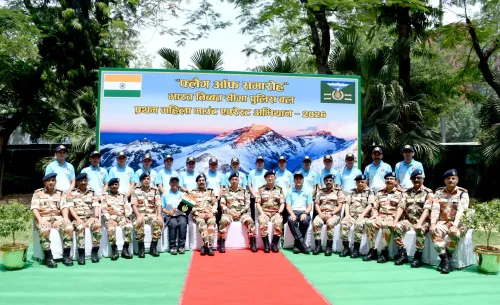
The ITBP fielded its first all-women expedition team to successfully summit Mount Everest .
Anjali Devi , daughter of Shri Balwant Singh and resident of Sunkhal, Kathua, Jammu and Kashmir , was a member of the historic team.
Jitendra Singh posted congratulations on 23 May 2026 , calling it a 'moment of immense pride' for Kathua.
The achievement follows policy directives from 2015–16 that opened select adventure and combat roles in Central Armed Police Forces to women.
PM Narendra Modi was credited in the post with encouraging India's daughters to redefine Nari Shakti on the global stage.
India's first woman to summit Everest, Bachendri Pal , did so in 1984 ; the ITBP all-women team now adds a new institutional milestone to that legacy.
Union Science and Technology Minister Dr. Jitendra Singh on Saturday, 23 May 2026 congratulated the Indo-Tibetan Border Police (ITBP)'s first all-women expedition team for successfully scaling Mount Everest, singling out Anjali Devi of Sunkhal village, Kathua district, Jammu and Kashmir as a local hero who played a 'historic role' in the achievement.
Context
The minister's post, shared on 23 May 2026, described the summit as 'history made at the top of the world' and extended 'heartiest congratulations' to the ITBP's all-women team. He specifically named Anjali Devi, daughter of Shri Balwant Singh and a resident of Sunkhal in Kathua, as a member of the team whose participation he called 'a moment of immense pride' for the district and for Jammu and Kashmir.
The feat marks the first time an all-women team from the ITBP — one of India's Central Armed Police Forces — has collectively summited the world's highest peak. Bachendri Pal had set an early national benchmark when she became the first Indian woman to summit Everest in 1984; the ITBP team's achievement now adds a new institutional milestone to that legacy.
Policy Backdrop
The ITBP all-women Everest expedition sits within a broader policy shift that accelerated after 2015–16, when select combat and adventure roles in Central Armed Police Forces were progressively opened to women. That policy direction has since been invoked repeatedly by the central government as evidence of expanding Nari Shakti — women's empowerment — in physically demanding national endeavours.
Dr. Jitendra Singh credited Prime Minister Narendra Modi with encouraging and promoting such participation, writing that 'India's daughters are redefining India's Nari Shakti on the global stage.' The framing connects an individual mountaineering achievement to the government's wider women-in-uniform and women-in-sports narrative.
Stakeholders and Impact
Anjali Devi's inclusion in the team is particularly significant for Kathua, a district in the Jammu division that Dr. Jitendra Singh — who represents the Udhampur Lok Sabha constituency — has repeatedly spotlighted for positive local developments since the 2019 reorganisation of Jammu and Kashmir. Her success is expected to inspire adventure-sports aspirants and young women across the Union Territory.
For the ITBP as an institution, fielding an all-women team on the world's most iconic summit reinforces the force's mountaineering credentials and signals a deepening commitment to gender inclusion at the highest operational levels. Women serving in CAPFs and families of mountaineers from smaller towns and villages across Jammu and Kashmir stand as the most immediate stakeholders.
What's Next
The achievement is likely to prompt calls for expanded state-level sports and adventure-training infrastructure in Jammu and Kashmir, particularly for districts like Kathua that have produced elite mountaineers. Observers will watch for any follow-up announcements from the Indian Mountaineering Foundation or the ITBP regarding future all-women high-altitude expeditions.
More broadly, the summit adds momentum to policy conversations about formalising women's pathways into high-altitude and combat roles within India's paramilitary forces — a conversation that is increasingly tied to the government's Nari Shakti branding ahead of future electoral cycles.
Point of View
And the central government's Nari Shakti brand. By naming Anjali Devi specifically — down to her father's name and village — the minister personalises a national achievement for a local audience in Kathua, a constituency-adjacent district. Tying the feat to PM Modi's encouragement also pre-empts any reading of the achievement as purely institutional, folding it into the BJP's broader women-empowerment electoral messaging. The pattern of spotlighting Kathua repeatedly, as the hashtag 'Kathua again in Good News' signals, suggests a deliberate constituency-outreach strategy running alongside the policy narrative.
NationPress
23 Sept 2026
Frequently Asked Questions
Has ITBP's all-women team climbed Mount Everest?
Yes. The Indo-Tibetan Border Police fielded its first all-women expedition team that successfully summited Mount Everest, as confirmed by Union Minister Dr. Jitendra Singh's post on 23 May 2026.
Who is Anjali Devi from Kathua?
Anjali Devi is a resident of Sunkhal village in Kathua district, Jammu and Kashmir, and daughter of Shri Balwant Singh. She was a member of the ITBP's historic first all-women Everest expedition team.
What is ITBP's role in mountaineering?
The Indo-Tibetan Border Police is one of India's Central Armed Police Forces and has a long tradition of high-altitude operations and mountaineering, given its deployment along the Himalayan frontier with China.
Who was the first Indian woman to climb Mount Everest?
Bachendri Pal became the first Indian woman to summit Mount Everest in 1984, setting a national benchmark that the ITBP all-women team's 2026 achievement now builds upon institutionally.
What is Nari Shakti and how does it relate to this Everest climb?
Nari Shakti, meaning women's power or empowerment, is a central government initiative and branding concept promoted under PM Narendra Modi. The ITBP all-women Everest summit has been cited by Dr. Jitendra Singh as an example of Indian women redefining Nari Shakti on the global stage.