Sonowal Hails ITBP's First All-Women Everest Summit
Synopsis
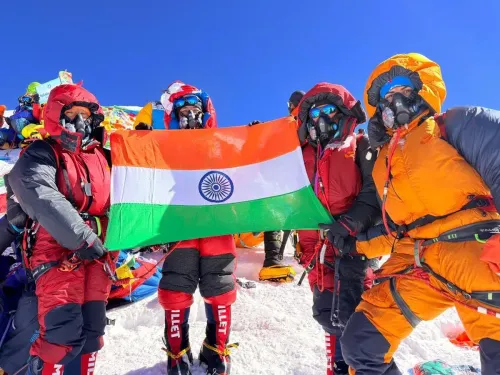
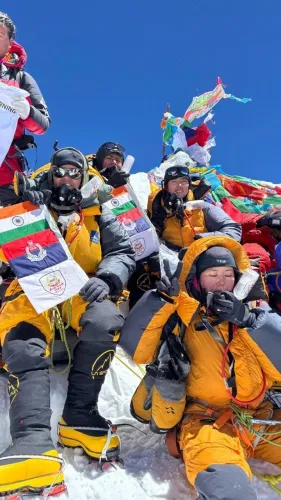
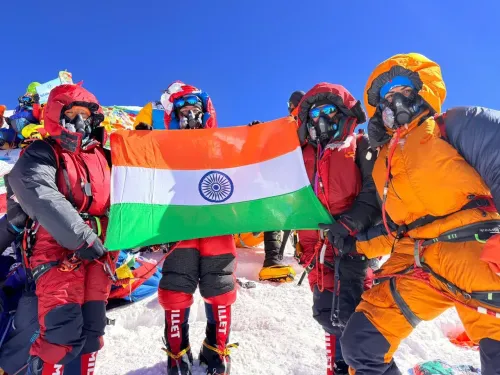
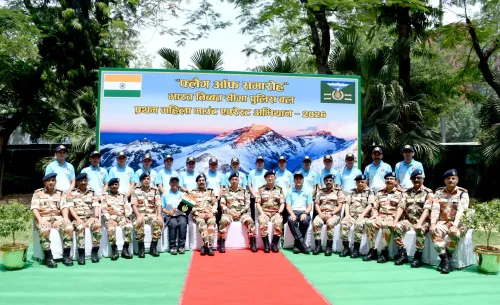
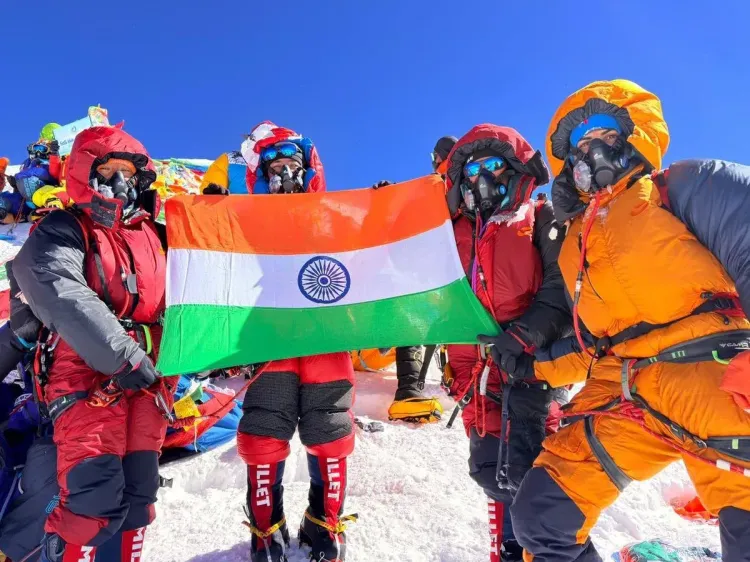
All 11 members of the ITBP's first-ever all-women expedition successfully summited Mount Everest on 23 May 2026. Union Minister Sarbananda Sonowal hailed the feat as a 'monumental triumph for India's Nari Shakti,' marking a historic milestone for women in India's central paramilitary forces.
Key Takeaways
Union Minister Sarbananda Sonowal congratulated the ITBP on 23 May 2026 for its first-ever all-women Everest expedition.
All 11 climbers in the team successfully reached the summit of Mount Everest , Earth's highest peak.
This is the first time the Indo-Tibetan Border Police has fielded an exclusively women's team on Everest.
The achievement advances the government's Nari Shakti agenda of increasing women's visibility in physically demanding and strategically sensitive roles.
The Ministry of Home Affairs has progressively raised women's authorised strength in CAPFs since the mid-2010s, providing policy context for the climb.
The feat echoes Bachendri Pal's landmark 1984 Everest summit, the first by an Indian woman, and adds a new chapter from within the uniformed services.
Union Minister of Ports, Shipping and Waterways Sarbananda Sonowal on Saturday, 23 May 2026 congratulated the Indo-Tibetan Border Police's (ITBP) first-ever all-women expedition team for successfully summiting Mount Everest, calling the achievement a 'monumental triumph for India's Nari Shakti.' All 11 climbers reached the world's highest peak, marking a historic milestone for the central paramilitary force.
Context
The ITBP, a Central Armed Police Force (CAPF) under the Ministry of Home Affairs, has a long-standing mountaineering tradition rooted in its core mandate of guarding India's high-altitude frontier with China. This expedition, however, is the first time the force has fielded an exclusively women's team on Everest — a distinction that sets it apart from all previous ITBP Himalayan climbs. Sonowal described the feat as one of 'unparalleled grit, courage and indomitable spirit.'
The successful summit of all 11 members of the team amplifies the significance of the achievement. In high-altitude mountaineering, full-team summits are rare and operationally demanding, making this outcome particularly noteworthy.
Policy Backdrop
The climb sits within a broader governmental push, accelerated since the mid-2010s, to raise the authorised strength and visibility of women across all CAPFs, including the ITBP. The Ministry of Home Affairs has progressively expanded women's roles in these forces, and high-profile expeditions have served as visible markers of that policy direction.
India's history of women on Everest stretches back to 1984, when Bachendri Pal became the first Indian woman to reach the summit, establishing a precedent for state-supported women's mountaineering. The ITBP's all-women expedition now adds a new chapter to that legacy, this time from within the uniformed services.
Stakeholders and Impact
The achievement carries symbolic weight for women serving across India's central paramilitary forces, where female personnel have historically been concentrated in administrative and support roles rather than physically demanding field operations. A successful Everest summit by an all-women ITBP team signals expanding operational expectations and recognition for women in uniform.
The expedition also reinforces the ITBP's institutional identity as a high-altitude force. Its mountaineering record intersects directly with its border-security mandate in sectors that reach extreme elevations along the India-China frontier, lending operational credibility to such climbs beyond their symbolic value.
What's Next
The ITBP's all-women Everest summit is likely to feature in the Ministry of Home Affairs' annual reporting on CAPF gender integration and could set a benchmark for similar expeditions by other central forces. Observers will watch whether this milestone translates into structural policy moves — such as dedicated high-altitude training pipelines for women in the ITBP — or remains primarily a symbolic milestone within the government's Nari Shakti narrative.
With women's participation in India's uniformed services under sustained political and policy focus, the success of this expedition is expected to strengthen the case for expanding such opportunities across all paramilitary organisations.
Point of View
While ceremonial in form, plugs into a deliberate policy arc that has sought to raise women's operational profiles in CAPFs since the mid-2010s. The choice of a senior Cabinet minister outside the Home Ministry to amplify the achievement suggests the government views this as cross-portfolio political capital. Whether the milestone catalyses structural change — dedicated training pipelines, leadership roles in border operations — or remains a symbolic moment will be the real test of the Nari Shakti framing.
NationPress
19 Sept 2026
Frequently Asked Questions
What did the ITBP all-women team achieve on Everest in 2026?
The Indo-Tibetan Border Police's first-ever all-women expedition successfully summited Mount Everest in May 2026, with all 11 climbers reaching the top.
Who is Sarbananda Sonowal and why did he comment on the ITBP Everest climb?
Sarbananda Sonowal is India's Union Minister of Ports, Shipping and Waterways and a senior BJP leader. He congratulated the ITBP team as part of the broader government celebration of the achievement under the Nari Shakti banner.
What is Nari Shakti and how does it relate to this Everest summit?
Nari Shakti is a government-promoted narrative highlighting women's empowerment across sectors. The ITBP Everest expedition has been framed within this narrative to underscore women's capability in physically and strategically demanding roles.
Has ITBP climbed Everest before?
The ITBP has a long mountaineering tradition tied to its high-altitude border mandate, but this 2026 expedition is the first time the force fielded an exclusively all-women team on Everest.
What is the significance of all 11 climbers reaching the Everest summit?
In high-altitude mountaineering, a full-team summit is operationally rare and demanding. All 11 members of the ITBP women's team reaching the top amplifies the historic nature of the achievement.