CM Majhi Hails BSF All-Women Everest Team's Historic Summit

Synopsis
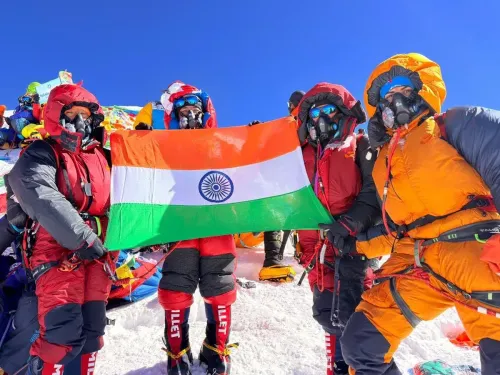
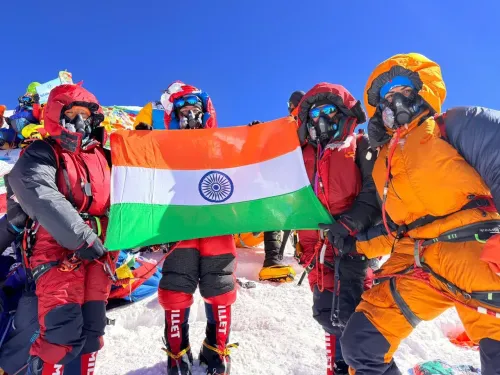
The Border Security Force's first-ever all-women team has successfully scaled Mount Everest under #MissionVandeMataram during the force's Diamond Jubilee year. Odisha Chief Minister Mohan Charan Majhi hailed the feat as a proud national moment and a testament to Nari Shakti.
Key Takeaways
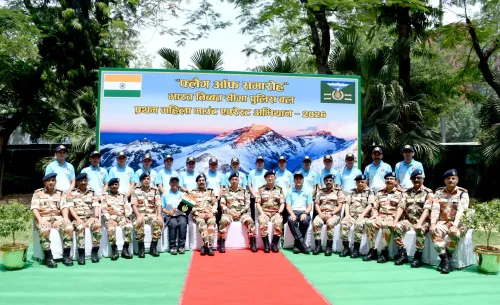
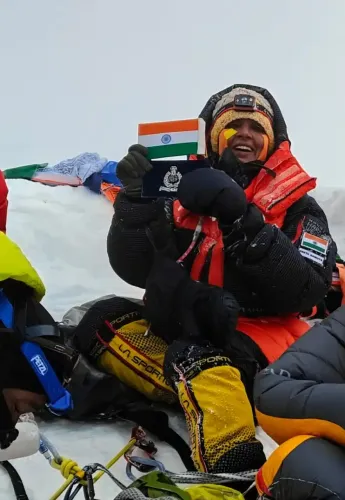
The BSF's first-ever all-women Mount Everest expedition team successfully summited the world's highest peak under #MissionVandeMataram .
The feat was achieved during the BSF's Diamond Jubilee year , marking sixty years since the force's establishment on 1 December 1965 .
Odisha Chief Minister Mohan Charan Majhi publicly congratulated the team on 22 May 2026 , calling it 'a proud moment for the nation.' Mount Everest stands at 8,848.86 metres , making it the highest and most demanding summit in the world.
The achievement is being framed as a demonstration of Nari Shakti , consistent with India's broader push to expand women's roles in paramilitary and defence organisations.
Odisha Chief Minister Mohan Charan Majhi on Friday, 22 May 2026, congratulated the Border Security Force's first-ever all-women Mount Everest expedition team on successfully scaling the world's highest peak under #MissionVandeMataram, calling the feat a proud moment for the nation.
Context
In his post, CM Majhi wrote that the team's 'courage, endurance and unwavering determination reflect the true spirit of Nari Shakti and the extraordinary capabilities of India's daughters.' The achievement marks the first time an all-women team from the BSF has summited Mount Everest, the world's highest peak at 8,848.86 metres in the Himalayas.
The expedition was conducted under #MissionVandeMataram, a BSF initiative framed around the force's Diamond Jubilee year. CM Majhi described the summit as 'a proud moment for the nation,' closing his message with Jai Hind — a traditional patriotic salutation.
Policy Backdrop
The Border Security Force was established on 1 December 1965 to secure India's borders with Pakistan and Bangladesh. Having completed sixty years of service in 2025, the force entered a year-long Diamond Jubilee celebration that has included special expeditions and commemorative programmes.
Since the mid-2010s, successive Indian governments have steadily expanded women's roles in paramilitary and defence organisations, extending opportunities to combat postings and adventure training. Political leaders across the spectrum have regularly framed such milestones as proof of Nari Shakti — a term denoting women's empowerment — particularly during force anniversaries and national commemorations.
Stakeholders and Impact
The successful expedition carries symbolic weight for women serving across India's paramilitary forces, demonstrating that high-altitude mountaineering at the most demanding level is within reach of female BSF personnel. It also reinforces the BSF's institutional identity during its jubilee year, projecting the force's capabilities beyond border security.
For Odisha, where CM Majhi has governed since June 2024, the statement aligns with a pattern of the BJP-led state government publicly acknowledging national security and defence achievements. Broader civil society interest is expected from mountaineering communities, women's rights advocates, and veterans' groups.
What's Next
With the BSF Diamond Jubilee year still under way, further women-led expeditions or updates to recruitment and adventure-training policy from the force and its sister organisations remain possible. The success of the #MissionVandeMataram Everest team could serve as a reference point for future all-women paramilitary expeditions and may prompt formal policy discussions on expanding such programmes across central armed police forces.
Point of View
It amplifies the institutional narrative of modernisation and inclusion within India's paramilitary establishment. Chief Minister Majhi's prompt congratulatory statement reflects the ruling BJP's consistent political strategy of publicly championing women's achievements in security forces as evidence of Nari Shakti in action. The expedition fits a broader arc in which successive governments have used adventure and combat firsts by women in uniform to signal policy intent on gender inclusion without requiring legislative change. Whether the momentum translates into structural recruitment or training policy updates at the BSF will be the more consequential test.
NationPress
7 Oct 2026
Frequently Asked Questions
What is the BSF all-women Everest expedition?
It is the Border Security Force's first-ever expedition composed entirely of women personnel that successfully summited Mount Everest, conducted under the force's #MissionVandeMataram initiative during its Diamond Jubilee year.
What is #MissionVandeMataram?
#MissionVandeMataram is a BSF initiative launched as part of the force's Diamond Jubilee celebrations marking sixty years since its establishment in 1965; the all-women Everest climb was conducted under this mission.
What is the BSF Diamond Jubilee year?
The Border Security Force completed sixty years of service in 2025, entering a Diamond Jubilee year marked by special expeditions, commemorative events, and institutional programmes celebrating the force's history.
Why did Odisha CM Mohan Majhi congratulate the BSF team?
Chief Minister Majhi issued congratulations on 22 May 2026 to honour the historic all-women summit, calling it a proud national moment and praising the team's courage, endurance, and determination as a reflection of Nari Shakti.
What is Nari Shakti in the context of Indian security forces?
Nari Shakti, meaning women's power or empowerment, is a term used by Indian political leaders and policymakers to describe and celebrate the expanding role of women in defence, paramilitary, and public service roles across the country.