Smart Enhancements Coming to Jaipur's Traffic Management System
Synopsis
Jaipur is set to revolutionize its traffic management with a new action plan aimed at modernizing the system. This initiative promises to improve efficiency through strategic reforms and advanced technology, paving the way for a smoother urban experience.
Key Takeaways
Action plan initiated to modernize traffic management.
Increase in police personnel to enhance efficiency.
Use of advanced technology for real-time monitoring.
Focus on creating Model Traffic Corridors.
Public cooperation is crucial for success.
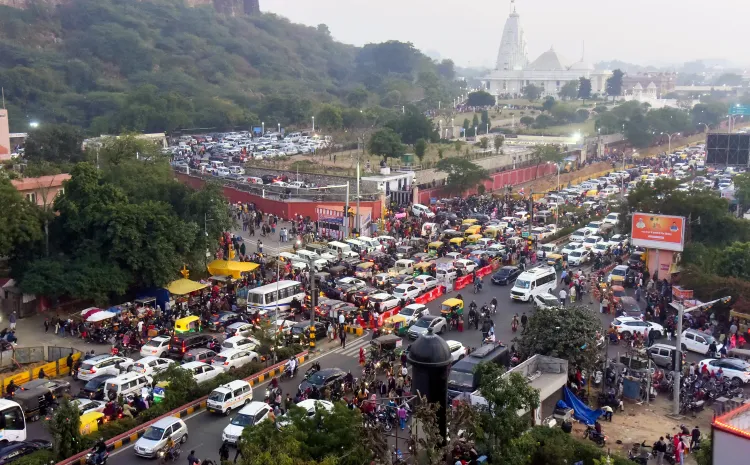
Jaipur, April 13 (NationPress) A dedicated action strategy has been established to enhance and innovate the traffic management framework within Jaipur city.
The Jaipur Traffic Police has crafted a detailed reform plan grounded in extensive research and site inspections of traffic systems in key metropolitan areas across India, followed by a thorough analysis. In alignment with the Chief Minister’s vision, the administrative system is being upgraded for improved efficiency.
The number of Additional Deputy Commissioner of Police (Traffic) roles will rise from 2 to 4, ensuring one is stationed in every police district of Jaipur city.
This enhancement will streamline decision-making processes and augment supervisory capabilities. Likewise, the number of Assistant Commissioner of Police (Traffic) positions will increase from four to eight, with two allocated to each district.
Furthermore, Traffic Inspectors will see an increase from 15 to 20, ensuring an average of five per district. Jaipur city will be segmented into 72 traffic beats to clearly define responsibilities.
Deployment of personnel within each beat will be optimized and fortified to facilitate effective traffic management and rapid response during peak times.
To bolster mobility and enforcement efficiency, 20 specially adapted motorcycles will be assigned to Traffic Inspectors, allowing for agile movement in densely populated regions.
The integration of advanced technology will be expanded, featuring additional CCTV camera installations linked to the Abhay Command Centre for real-time oversight. Drones will also be utilized for monitoring traffic conditions and assessing congestion.
Components of the Intelligent Traffic Management System will be rolled out in phases. Traffic Inspectors’ uniforms will be reimagined to improve comfort, functionality, and distinctive identity.
Initially, Tonk Road (from Yadgar to Sanganer) will be developed as a Model Traffic Corridor, setting a standard for future initiatives.
Key modifications will encompass scientific redesigns of U-turns and crossing areas, the closure of hazardous and unnecessary median openings, the creation of continuous pedestrian pathways, improvements at intersections, parking management, and dynamic traffic systems.
Priority will be given to eliminating encroachments on roadways and sidewalks, with additional cranes deployed to manage illegal parking.
Clearly marked parking and no-parking zones will be established, and sufficient parking facilities will be created with proper signage.
Traffic signal systems will be upgraded to dynamic operations, with real-time timing adjustments based on traffic flow. Lane markings, zebra crossings, and stop lines will be refreshed to enhance orderliness.
A continuous monitoring and evaluation system will be instituted to assess the effectiveness of these reforms, with adjustments made based on field feedback.
An accountability framework for officials will be introduced, complemented by a performance-based evaluation system.
With collaborative efforts from all relevant departments, including the Municipal Corporation, Jaipur Development Authority, and the Transport Department, along with active public engagement, these initiatives are anticipated to bring substantial and lasting improvements to Jaipur’s traffic management system.
Point of View
The proposed traffic management reforms in Jaipur represent a significant advancement in urban mobility. With an emphasis on technology and efficiency, these changes are poised to enhance the quality of life for residents while setting a precedent for other cities in India. The collaborative effort among various departments underscores a commitment to sustainable urban development.
NationPress
30 Sept 2026
Frequently Asked Questions
What are the key features of the new traffic management system in Jaipur?
The new system includes an increase in police personnel, the introduction of advanced technology like CCTV and drones, and the establishment of a dynamic traffic signal system.
How will the reforms affect traffic flow in Jaipur?
The reforms aim to streamline traffic flow through better management, real-time monitoring, and the creation of dedicated traffic corridors.
When will the changes be implemented?
The implementation will occur in phases, starting with the development of Tonk Road as a Model Traffic Corridor.
What role will technology play in the new system?
Technology will facilitate real-time monitoring of traffic conditions, helping to enforce rules and respond quickly to congestion.
How will public cooperation be encouraged?
Public cooperation will be vital, and the authorities will engage with citizens to ensure compliance and support for the new initiatives.