Jaishankar Arrives in Kuwait, Meets Deputy FM Al-Mashaan
Synopsis
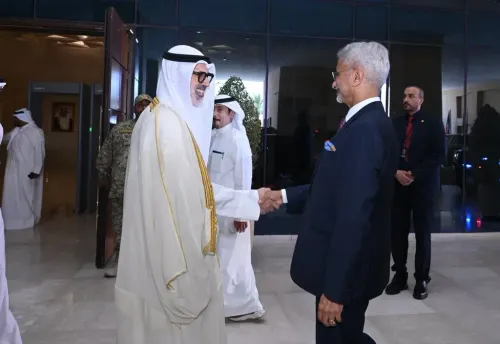
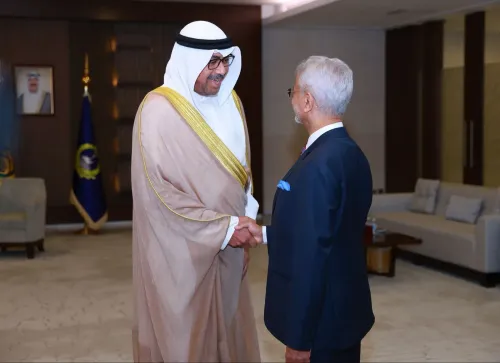
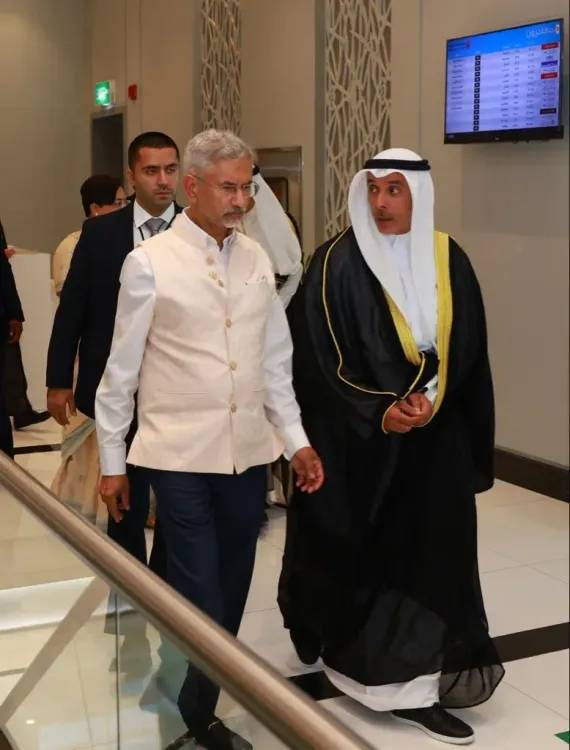
External Affairs Minister Dr. S. Jaishankar arrived in Kuwait on 7 July 2026 and was received by Deputy Foreign Minister H.E. Hamad Suleiman Mashaan Al-Mashaan. The visit underscores India's sustained high-level engagement with Gulf states on energy, diaspora welfare, and bilateral trade.
Key Takeaways
Jaishankar arrived in Kuwait on 7 July 2026 for a high-level diplomatic visit.
He was received by Deputy Foreign Minister H.E.
Hamad Suleiman Mashaan Al-Mashaan of Kuwait.
India and Kuwait have maintained diplomatic relations since 1962 , spanning over six decades.
Kuwait is a key supplier of crude oil to India and hosts one of the largest Indian expatriate communities in the Gulf.
The visit is part of India's sustained high-level engagement with GCC member states on energy, trade, and diaspora welfare.
Specific agenda items and outcomes are yet to be officially disclosed.
Union External Affairs Minister Dr. S. Jaishankar arrived in Kuwait on Tuesday, 7 July 2026, and was received by Deputy Foreign Minister H.E. Hamad Suleiman Mashaan Al-Mashaan, signalling the start of a high-level bilateral engagement between the two countries. The minister acknowledged the warm reception extended by the Kuwaiti side and expressed anticipation for his scheduled engagements during the visit.
Context
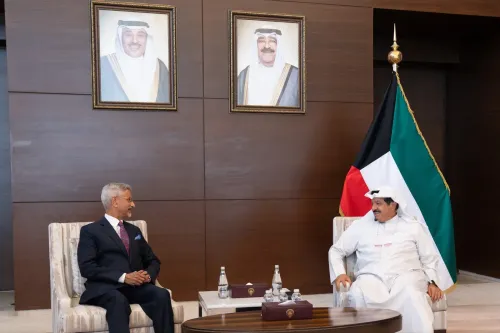
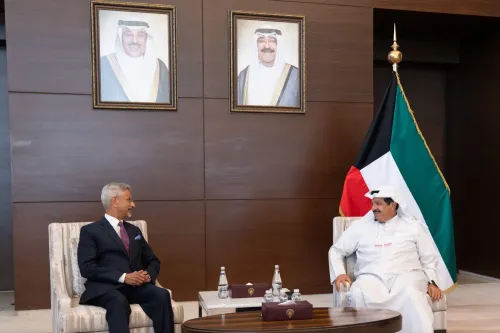
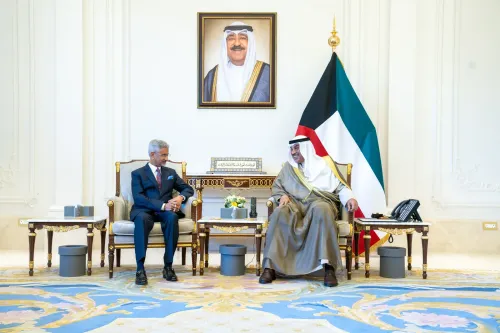
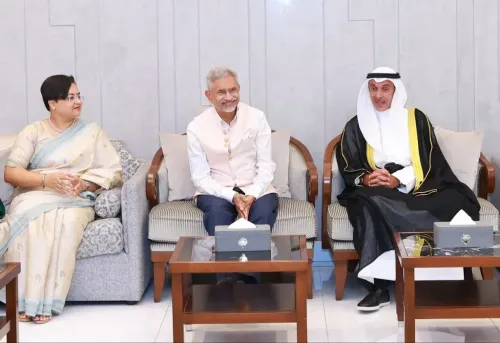
Posting on X shortly after landing, Dr. Jaishankar wrote: 'Thank Deputy Foreign Minister H.E. Hamad Suleiman Mashaan Al-Mashaan for the warm reception on my arrival in Kuwait. Look forward to my engagements.' The post, addressed to @MOFAKuwait, was accompanied by two images capturing the arrival formalities, underscoring the diplomatic significance the Indian side attached to the visit.
Kuwait and India have maintained formal diplomatic relations since 1962, the year Kuwait gained independence. The two nations share deep ties rooted in energy trade, a large Indian expatriate community, and growing investment linkages.
Policy Backdrop
India is a major importer of Kuwaiti crude oil, making the Gulf state a critical node in New Delhi's energy security architecture. The Gulf Cooperation Council (GCC) region as a whole accounts for a substantial share of India's hydrocarbon imports, and successive External Affairs Ministers have maintained a cadence of high-level visits to member states to reinforce these ties.
Beyond energy, the Indian diaspora in Kuwait represents one of the largest expatriate communities in the Gulf, contributing remittances that form a meaningful part of household incomes across several Indian states. Protecting the welfare of these workers and expanding bilateral trade and investment have been consistent priorities in the India-Kuwait diplomatic agenda.
India's sustained engagement with GCC states also carries a strategic dimension, as New Delhi seeks to balance its partnerships across the broader West Asian region while deepening economic integration with Gulf capitals.
Stakeholders and Impact
The visit is of direct relevance to the Indian expatriate community in Kuwait, which looks to high-level diplomatic contact as a signal of the Indian government's commitment to their welfare and consular interests. Any outcomes from Dr. Jaishankar's engagements — whether on labour mobility, social security arrangements, or trade facilitation — would carry practical consequences for this community.
Energy sector stakeholders on both sides will also be watching closely. Kuwaiti crude continues to be a significant component of India's import basket, and bilateral discussions at the ministerial level often provide the diplomatic scaffolding for longer-term commercial agreements.
The Ministry of Foreign Affairs of Kuwait (@MOFAKuwait) being directly tagged in the minister's post reflects the formal, protocol-driven nature of the engagement, with both governments signalling institutional seriousness around the visit.
What's Next
The specific agenda for Dr. Jaishankar's engagements in Kuwait has not been officially disclosed at the time of writing. Observers will watch for any joint statements, signed memoranda of understanding, or official read-outs that may emerge from his meetings with Kuwaiti counterparts.
The visit fits into a broader pattern of reciprocal high-level contact between New Delhi and Kuwait City, and any outcomes are likely to set the tone for the next phase of bilateral cooperation across energy, diaspora welfare, and trade.
Point of View
Reflecting New Delhi's recognition that the GCC is not merely an energy supplier but a strategic partner for trade, investment, and diaspora engagement. The personal acknowledgement of Deputy Foreign Minister Al-Mashaan in the minister's post — and the direct tagging of MOFA Kuwait — signals careful protocol management aimed at reinforcing institutional warmth at the official level. For India, high-level ministerial visits to Kuwait serve the dual purpose of securing energy partnerships and demonstrating to the large Indian expatriate community that their welfare remains a foreign-policy priority. Any tangible outcomes — MoUs, joint statements, or welfare agreements — will be read as a measure of how far the bilateral relationship has matured beyond its historically energy-centric foundations.
NationPress
6 Oct 2026
Frequently Asked Questions
Why did Jaishankar visit Kuwait in July 2026?
Dr. S. Jaishankar visited Kuwait on 7 July 2026 for high-level bilateral engagements, continuing India's sustained diplomatic outreach to Gulf Cooperation Council states on energy, trade, and diaspora welfare. Specific agenda items were not officially disclosed at the time of his arrival.
Who received Jaishankar in Kuwait?
Deputy Foreign Minister of Kuwait, H.E. Hamad Suleiman Mashaan Al-Mashaan , received Dr. Jaishankar upon his arrival and extended a warm reception on behalf of the Kuwaiti government.
What is the relationship between India and Kuwait?
India and Kuwait established formal diplomatic relations in 1962 following Kuwait's independence. The two countries share strong ties in energy trade, with Kuwait supplying crude oil to India, and Kuwait hosts one of the largest Indian expatriate communities in the Gulf.
How important is Kuwait to India's energy security?
Kuwait is a significant supplier of crude oil to India, making it a key partner in India's energy security strategy. The Gulf Cooperation Council region as a whole accounts for a major share of India's hydrocarbon imports.
How large is the Indian community in Kuwait?
The Indian expatriate community in Kuwait is one of the largest in the Gulf region. These workers contribute remittances to households across India, and their welfare is a standing priority in India-Kuwait diplomatic engagements.