Jaishankar: Cabinet Clears Delhi Tunnel, Kanpur-Kabrai Highway
Synopsis
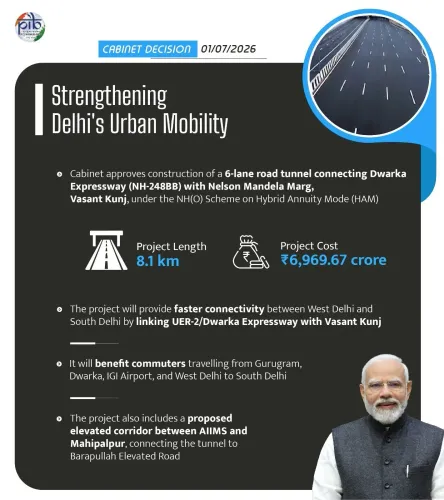
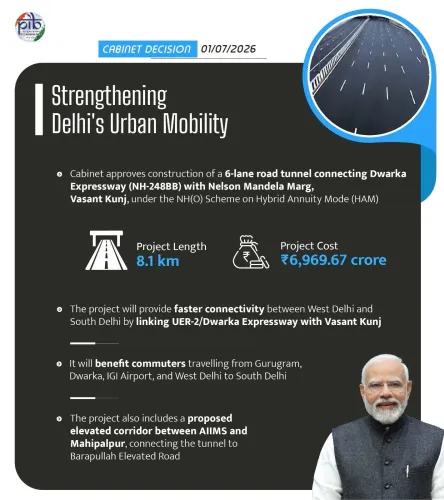
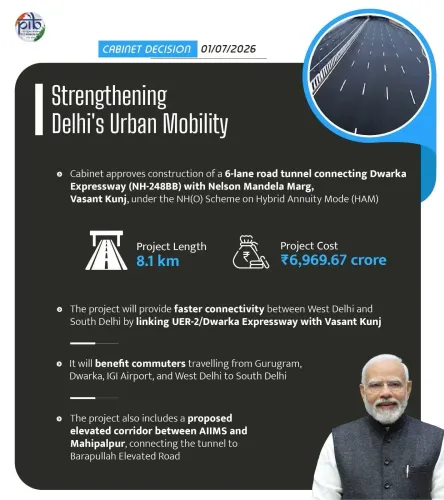
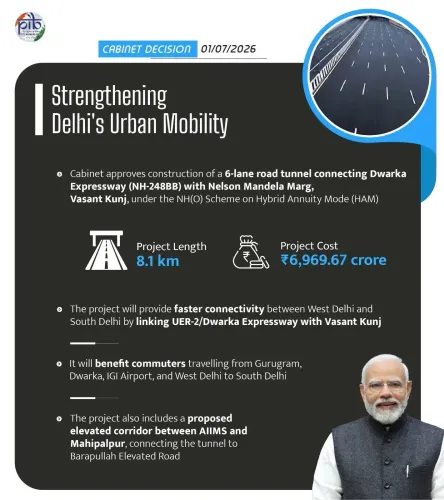
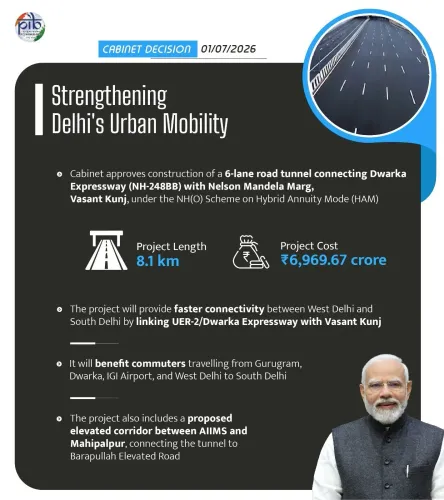
The Union Cabinet on 1 July 2026 approved an 8.1-km 6-lane tunnel in Delhi to ease connectivity to IGI Airport and Gurugram, and a 118-km Kanpur-Kabrai greenfield highway in Uttar Pradesh. EAM Dr. S. Jaishankar announced the decisions, citing 17.5 lakh person-days of employment generation from the Delhi project alone.
Key Takeaways
The Union Cabinet approved two road infrastructure projects on 1 July 2026 under PM Narendra Modi's leadership.
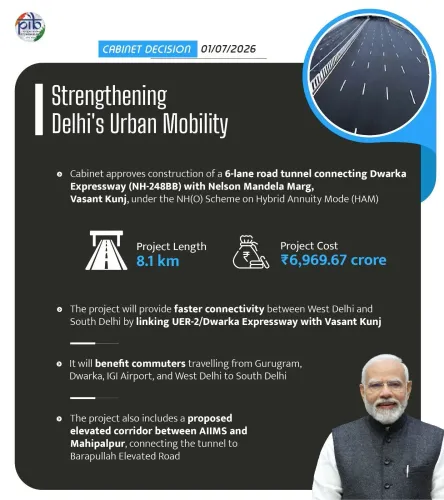
An 8.1-km, 6-lane road tunnel in Delhi will improve connectivity between West Delhi , South Delhi , Gurugram , and IGI Airport .
The Delhi tunnel is projected to generate 17.5 lakh person-days of direct and indirect employment.
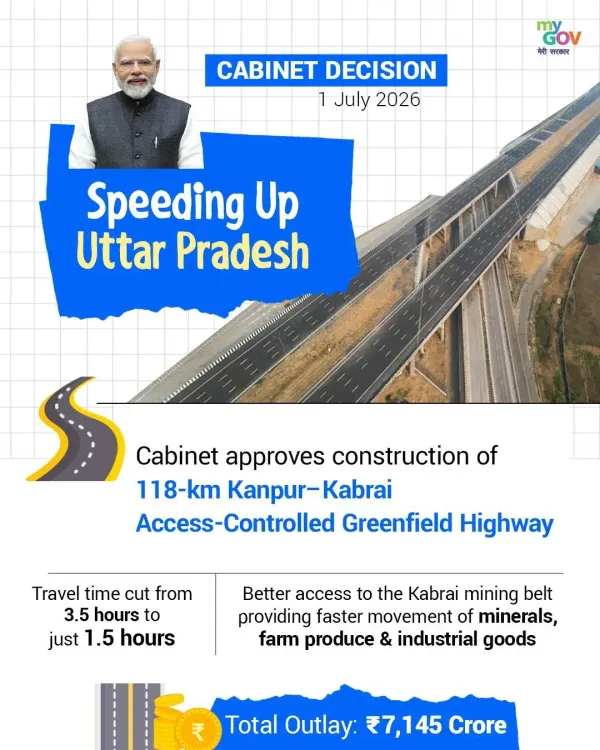
A 118-km Kanpur–Kabrai Access-Controlled Greenfield Highway in Uttar Pradesh was also approved to boost trade, agriculture, and industry.
Both projects align with the Bharatmala Pariyojana and PM Gati Shakti frameworks for national highway and logistics development.
NHAI tendering timelines and land acquisition will be key milestones to watch for both corridors.
Union External Affairs Minister Dr. S. Jaishankar announced on Wednesday, 1 July 2026 that the Union Cabinet, under the leadership of Prime Minister Narendra Modi, has approved two major road infrastructure projects — an 8.1-km, 6-lane tunnel in Delhi and a 118-km Kanpur–Kabrai Access-Controlled Greenfield Highway in Uttar Pradesh.
Context
The Delhi tunnel project is designed to improve connectivity between West Delhi, South Delhi, Gurugram, and Indira Gandhi International (IGI) Airport — one of the most congested corridors in the National Capital Region (NCR). The Cabinet approval projects that the tunnel will generate 17.5 lakh person-days of direct and indirect employment. Jaishankar noted in his post that the project will ease long-standing bottlenecks for commuters and airport-bound traffic in the region.
The second approval covers the Kanpur–Kabrai Access-Controlled Greenfield Highway, spanning 118 km through Uttar Pradesh. The project is positioned to accelerate travel, streamline logistics, and strengthen connectivity for trade, agriculture, and industry in the region, including the historically significant industrial belt around Kanpur.
Policy Backdrop
Both approvals fit within a broader central government push for greenfield expressways and urban infrastructure under the Bharatmala Pariyojana, launched in 2015 to develop over 34,800 km of national highways and optimal freight corridors. The programme has been a centrepiece of the Modi government's infrastructure agenda, with successive cabinet cycles adding new corridors and urban connectors.
The PM Gati Shakti National Master Plan, announced in 2021, further institutionalised multimodal infrastructure planning, aiming to reduce logistics costs and cut transit times across northern India. The National Infrastructure Pipeline, unveiled in 2019, had targeted Rs 111 lakh crore in roads and urban investment through 2025, with projects such as these representing the pipeline's continued execution. The National Highways Authority of India (NHAI) is expected to oversee tendering and implementation for both corridors.
Stakeholders and Impact
For Delhi-NCR commuters, particularly those travelling between western and southern parts of the capital and IGI Airport, the 6-lane tunnel promises significant reduction in travel time and congestion. Gurugram, a major business hub in Haryana, stands to benefit from smoother airport connectivity, which has been a persistent infrastructure complaint from the corporate sector.
In Uttar Pradesh, the Kanpur–Kabrai corridor is expected to benefit traders, manufacturers, and farmers in the Bundelkhand region — an area that has historically faced infrastructure deficits. Improved access-controlled highway infrastructure in this belt is seen as a catalyst for agricultural supply chains and industrial logistics. NHAI contractors and construction-sector workers are also direct beneficiaries, given the employment generation targets attached to the Delhi tunnel project.
What's Next
Attention will now turn to NHAI tendering timelines and land-acquisition progress for both projects, which are typically the critical-path variables in greenfield highway and urban tunnel execution. Parliamentary committee reviews and possible references in the next Union Budget could provide further clarity on funding allocation and completion targets.
If implemented on schedule, the two projects would mark a significant addition to northern India's road network, reinforcing the central government's stated goal of reducing logistics costs and improving urban mobility — with implications for investment sentiment in both the Delhi-NCR and Kanpur-Bundelkhand economic corridors.
Point of View
While the Kanpur–Kabrai corridor extends the infrastructure push into Bundelkhand — a region the central government has sought to develop as part of its UP-centric political economy. The 17.5 lakh person-days employment metric attached to the Delhi project also reflects a deliberate effort to frame infrastructure spending in terms of job creation, a recurring theme in Cabinet communications. Collectively, these approvals reinforce the pattern of using Cabinet decisions as a vehicle for both policy delivery and political signalling ahead of budget and electoral cycles.
NationPress
1 Jul 2026
Frequently Asked Questions
What is the Delhi tunnel project approved by the Union Cabinet?
The Union Cabinet approved an 8.1-km, 6-lane road tunnel in Delhi on 1 July 2026 , aimed at improving connectivity between West Delhi , South Delhi , Gurugram , and IGI Airport , with an expected generation of 17.5 lakh person-days of employment.
What is the Kanpur-Kabrai highway project?
The Kanpur–Kabrai Access-Controlled Greenfield Highway is a 118-km road project in Uttar Pradesh , approved by the Union Cabinet to improve travel speed, logistics, and connectivity for trade, agriculture, and industry in the region.
Who announced the Cabinet infrastructure decisions on 1 July 2026?
Union External Affairs Minister Dr. S. Jaishankar announced the Cabinet approvals on his official X account on 1 July 2026 , attributing the decisions to the leadership of PM Narendra Modi .
How many jobs will the Delhi tunnel project create?
The Cabinet approval document cited by Dr. Jaishankar projects 17.5 lakh person-days of direct and indirect employment from the Delhi tunnel project .
How do these projects relate to Bharatmala Pariyojana?
Both projects align with Bharatmala Pariyojana , the central government's flagship highway development programme launched in 2015 to build over 34,800 km of national highways, greenfield expressways, and optimal freight corridors across India.