Jaishankar Calls on Mongolia President Khurelsukh
Synopsis
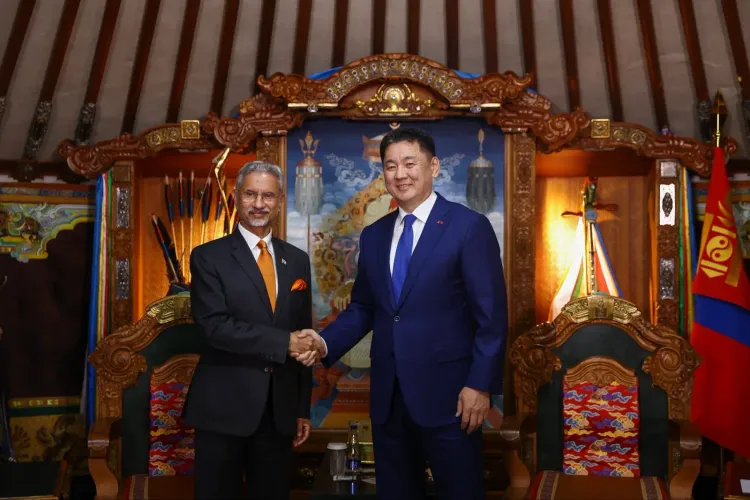
EAM Dr. S. Jaishankar called on Mongolian President Khurelsukh Ukhnaa on 22 June 2026, conveying greetings from President Murmu and PM Modi. Both leaders reaffirmed the India-Mongolia Strategic Partnership and agreed that spiritual friendship remains the cornerstone of their enduring bilateral ties.
Key Takeaways
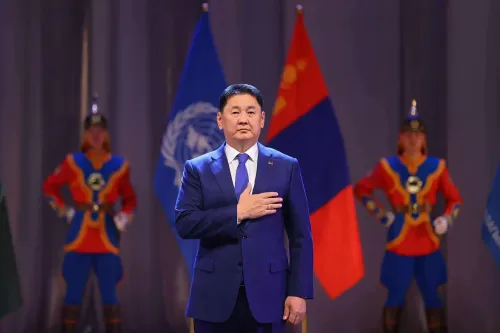
Jaishankar met President Khurelsukh Ukhnaa of Mongolia on 22 June 2026 , conveying greetings from President Droupadi Murmu and PM Narendra Modi .
President Ukhnaa's visit to India last year was acknowledged as having 'imparted a strong momentum' to the India-Mongolia Strategic Partnership .
The Strategic Partnership was established in 2015 during PM Modi's visit to Ulaanbaatar, covering defence, education, mining, and cultural cooperation.
Both leaders affirmed that 'the greatest friendship is spiritual friendship,' echoing India's longstanding framing of Mongolia as a 'spiritual neighbour.' Mongolia's 'third neighbour' policy positions India as a key partner beyond immediate neighbours Russia and China.
Future cooperation is expected to advance across renewable energy, IT, and defence training , with engagement likely continuing at SCO and UNGA forums.
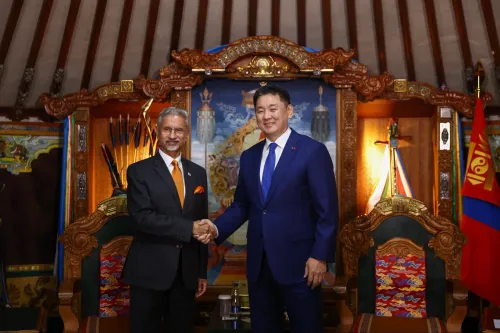
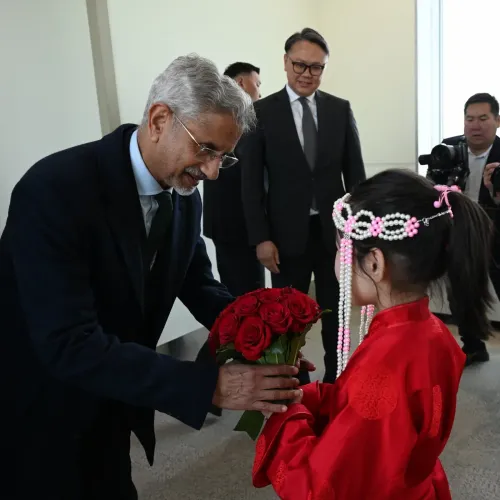
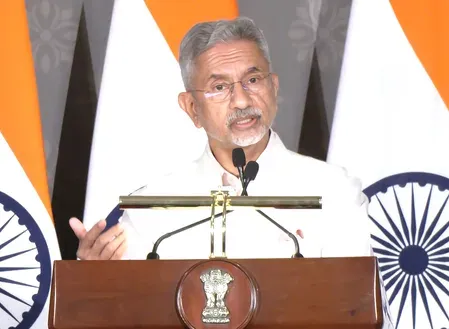
Union External Affairs Minister Dr. S. Jaishankar met President Khurelsukh Ukhnaa of Mongolia on Monday, 22 June 2026, conveying the heartfelt greetings of President Droupadi Murmu and Prime Minister Narendra Modi during the high-level diplomatic engagement.
Context
Dr. Jaishankar described the meeting as an honour, noting that President Ukhnaa's visit to India last year 'imparted a strong momentum to our Strategic Partnership.' The call underscores the sustained high-level diplomatic cadence that India and Mongolia have maintained since elevating their ties to a Strategic Partnership in 2015.
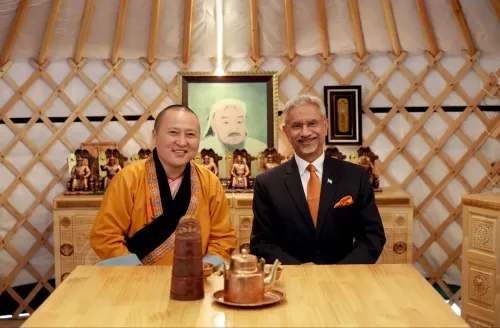
Reflecting on the tenor of the meeting, the Minister quoted a shared conviction: 'the greatest friendship is spiritual friendship' — a phrase that resonates with the longstanding cultural and Buddhist heritage thread running through bilateral relations.
Policy Backdrop
The India-Mongolia Strategic Partnership, established during Prime Minister Modi's landmark 2015 visit to Ulaanbaatar, covers cooperation in defence, education, mining, and cultural exchange. India at the time described Mongolia as a 'spiritual neighbour,' a framing that has since become a defining motif of the relationship.
Mongolia's foreign policy rests on a 'third neighbour' doctrine, articulated in the 1990s, which identifies partners beyond its immediate neighbours Russia and China — with India holding a prominent place in that framework. For New Delhi, the engagement fits into its extended neighbourhood outreach, which seeks to deepen ties with countries across Central and East Asia.
Cooperation tracks have expanded over the years to include defence training, Buddhist heritage restoration, and mining sector collaboration, with more recent discussions touching on renewable energy and information technology.
Stakeholders and Impact
The meeting carries significance for diplomatic officials, defence establishments, and educational institutions on both sides that are active participants in the Strategic Partnership's working frameworks. Buddhist communities in both countries also have a direct stake in the cultural diplomacy dimension that Dr. Jaishankar's 'spiritual friendship' remark underscores.
For Mongolia, deepening ties with India provides strategic diversification at a time when it remains geographically and economically dependent on Russia and China. For India, the relationship reinforces its Act East and extended neighbourhood policies while adding a culturally resonant partner to its diplomatic portfolio.
What's Next
Dr. Jaishankar expressed that he values President Ukhnaa's 'guidance on advancing our strong cooperation in a wide range of sectors,' signalling that the conversation covered the full breadth of bilateral priorities. Observers will watch for follow-through on agreed projects in renewable energy, IT, and defence training in the months ahead.
Both sides are also expected to maintain contact on the sidelines of upcoming multilateral forums, including the Shanghai Cooperation Organisation (SCO) and the United Nations General Assembly (UNGA), where the two nations can coordinate on shared interests. The meeting reinforces that the India-Mongolia partnership, though often understated, is being actively nurtured at the highest diplomatic levels.
Point of View
' New Delhi is activating a culturally resonant diplomatic register that complements the harder strategic and economic tracks, differentiating India's offer from that of Russia or China. The meeting also fits a broader pattern of India maintaining high-level contact with partners who are geographically sandwiched between major powers, lending New Delhi soft-power leverage without the friction of formal alliance commitments. Sustained engagement at this level suggests that the India-Mongolia partnership, while modest in trade volume, is being deliberately cultivated as a long-term strategic asset.
NationPress
22 Jun 2026
Frequently Asked Questions
Why did Jaishankar meet the President of Mongolia?
Dr. S. Jaishankar called on President Khurelsukh Ukhnaa on 22 June 2026 to advance the India-Mongolia Strategic Partnership and convey greetings from President Droupadi Murmu and Prime Minister Narendra Modi.
What is the India-Mongolia Strategic Partnership?
The India-Mongolia Strategic Partnership is a bilateral framework established in 2015 during PM Modi's visit to Ulaanbaatar, covering cooperation in defence, education, mining, and cultural exchange, with India describing Mongolia as a 'spiritual neighbour.'
What did Jaishankar mean by 'spiritual friendship' with Mongolia?
The phrase refers to the deep Buddhist and cultural bonds shared by India and Mongolia. Dr. Jaishankar quoted a shared belief that 'the greatest friendship is spiritual friendship,' echoing India's longstanding cultural diplomacy with Ulaanbaatar.
What is Mongolia's 'third neighbour' policy and how does India fit in?
Mongolia's 'third neighbour' policy, developed in the 1990s, seeks partnerships with countries beyond its immediate neighbours Russia and China. India is one of the key partners identified under this doctrine.
What areas of cooperation are India and Mongolia focusing on?
India and Mongolia cooperate across defence training, Buddhist heritage restoration, mining, and are expanding into renewable energy and information technology under the Strategic Partnership framework.