Jaishankar Hails Slovakia's Top Honour for PM Modi
Synopsis
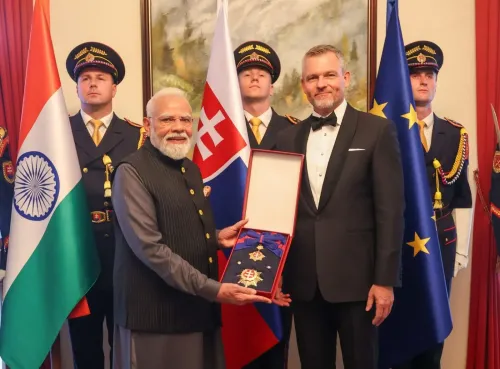
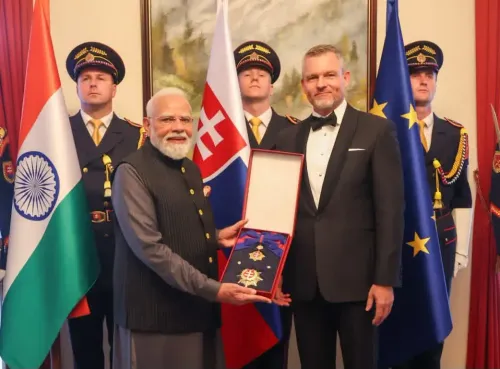
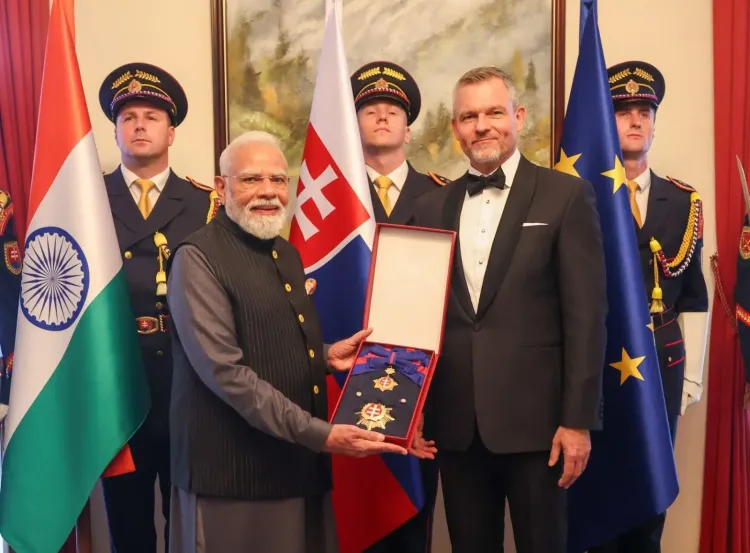
External Affairs Minister Dr. S. Jaishankar has welcomed the Slovak Republic conferring its highest state decoration, the Order of the White Double Cross (1st Class), on PM Narendra Modi, calling it a reflection of his leadership in advancing India-Slovakia ties and India's broader European engagement.
Key Takeaways
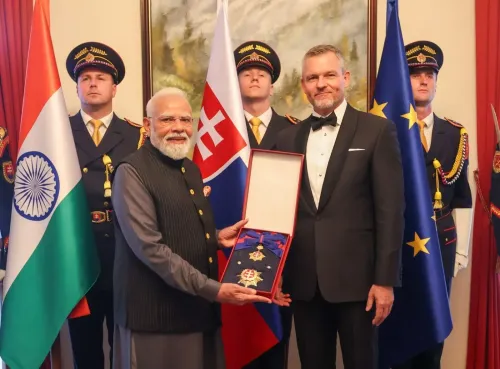
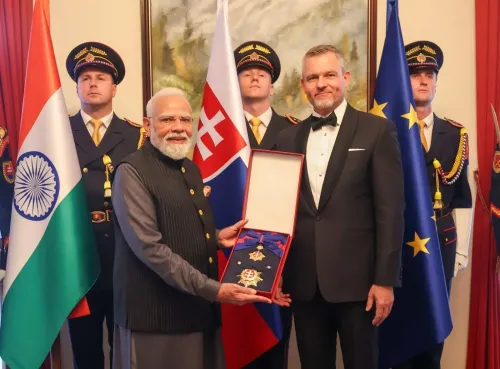
The Slovak Republic conferred its highest state honour, the Order of the White Double Cross (1st Class) , upon PM Narendra Modi .
Jaishankar called the award a testament to Modi's leadership in strengthening India-Slovakia partnership.
India and Slovakia have maintained diplomatic relations since 1993 , following Slovakia's independence from Czechoslovakia.
The visit is described as 'historic,' with Jaishankar expressing confidence it will open 'new avenues for cooperation.' The engagement fits India's broader strategy of deepening ties with Central Europe and the Visegrad Group within the EU framework.
Follow-up on MoUs and outcomes from the next India-EU summit will be key indicators of concrete progress.
Union External Affairs Minister Dr. S. Jaishankar on Tuesday, June 16, 2026, welcomed the conferment of The Order of the White Double Cross (1st Class) — the highest state decoration of the Slovak Republic — upon Prime Minister Narendra Modi, calling it a testament to his leadership in strengthening India-Slovakia ties and advancing India's engagement with Europe.
Context
The Order of the White Double Cross (1st Class) is the Slovak Republic's most prestigious state honour, awarded for distinguished contributions to bilateral or international relations. Its conferment upon PM Modi comes in the backdrop of what Dr. Jaishankar described as a 'historic visit,' signalling a significant elevation in the diplomatic relationship between the two nations. The External Affairs Minister expressed confidence that 'this honour, coupled with the historic visit, will impart fresh momentum to our bilateral ties and open new avenues for cooperation.'
Policy Backdrop
India and the Slovak Republic established formal diplomatic relations in 1993, following Slovakia's independence from Czechoslovakia. Over the past three decades, the relationship has grown steadily, though it has historically operated below the level of high-profile bilateral engagement that India maintains with larger Western European economies. Slovakia is a member of both the European Union and NATO, making it a strategically relevant partner as India deepens its outreach to Central Europe.
The award and visit align with India's sustained diplomatic push toward the Visegrad Group — comprising Slovakia, Czech Republic, Poland and Hungary — as part of a broader strategy to diversify political and economic engagement within the EU framework beyond traditional Western European partners. PM Modi has consistently pursued a pattern of reciprocal high-level visits aimed at expanding trade, technology, and security cooperation inside the EU architecture.
Stakeholders and Impact
The honour carries significance for both business communities and diplomatic partners across the EU. A high-profile state decoration of this nature typically precedes or accompanies the signing of agreements that translate political goodwill into concrete economic and institutional frameworks. Indian and Slovak business communities, as well as EU diplomatic partners watching India's engagement with Central Europe, stand to benefit from any follow-on agreements that emerge from the visit.
Dr. Jaishankar's framing of the award as evidence of Modi's role in 'advancing India's engagement with Europe' also positions the visit within the larger context of India-EU relations, where both sides have been working toward a long-pending Free Trade Agreement and enhanced connectivity partnerships.
What's Next
Attention will now turn to any Memoranda of Understanding (MoUs) or bilateral agreements signed during the visit, which would give substance to the diplomatic symbolism of the award. The next scheduled India-EU summit is also being watched as a potential venue for translating the momentum from engagements such as this into concrete deliverables on trade, technology, and connectivity. Dr. Jaishankar's statement signals that New Delhi views the Slovakia visit as a building block in a larger, sustained European engagement strategy.
Point of View
Welcomed publicly by EAM Jaishankar, is a deliberate diplomatic signal — one that fits a well-established pattern of India using reciprocal high-level visits to build political capital inside the EU with partners beyond the traditional Franco-German axis. Jaishankar's framing of the award as evidence of India 'advancing engagement with Europe' suggests New Delhi is consciously positioning these Central European relationships as part of a portfolio strategy, not merely bilateral courtesies. The emphasis on 'fresh momentum' and 'new avenues' also implies that both sides see the current moment — amid a shifting global order and ongoing India-EU trade negotiations — as an opportune window to upgrade the relationship. Whether that momentum translates into signed agreements and institutional frameworks will be the real measure of this visit's legacy.
NationPress
14 Sept 2026
Frequently Asked Questions
What is the Order of the White Double Cross awarded to PM Modi?
The Order of the White Double Cross (1st Class) is the highest state decoration of the Slovak Republic, conferred upon individuals for distinguished contributions to bilateral or international relations. PM Modi received it during a bilateral visit to Slovakia in June 2026.
Why did Slovakia give PM Modi its highest honour?
According to EAM Dr. S. Jaishankar, the honour recognises PM Modi's leadership in strengthening the India-Slovakia partnership and advancing India's engagement with Europe as a whole.
What are India-Slovakia diplomatic relations?
India and Slovakia established diplomatic relations in 1993 after Slovakia's independence from Czechoslovakia. The relationship has grown steadily over three decades, with Slovakia being an EU and NATO member of strategic interest to India's Central European outreach.
What is India's strategy with Central European countries?
India has been deepening ties with Central European nations, including the Visegrad Group countries — Slovakia, Czech Republic, Poland, and Hungary — to diversify its political and economic engagement within the EU beyond traditional Western European partners.
What comes next after PM Modi's Slovakia visit?
Key follow-ups include any MoUs or bilateral agreements signed during the visit and developments at the next India-EU summit, which will indicate whether the diplomatic momentum translates into concrete trade, technology, or connectivity outcomes.