Jaishankar Marks 14th Passport Seva Divas, Flags e-Passport Rollout

Synopsis
On the 14th Passport Seva Divas, EAM Dr. S. Jaishankar highlighted the rollout of Passport Seva Programme 2.0, chip-enabled e-Passports, new PSKs and POPSKs, and record passport issuance, reaffirming MEA's commitment to faster, more transparent citizen services.
Key Takeaways
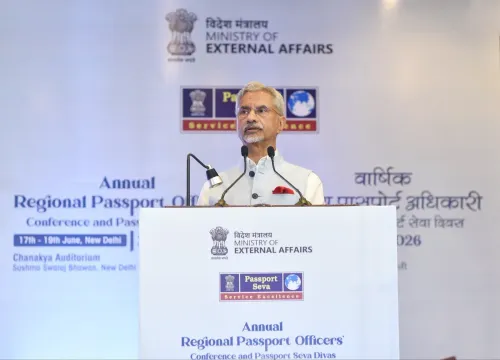
Jaishankar greeted passport authorities on the 14th Passport Seva Divas on 24 June 2026 .
The Passport Seva Programme 2.0 is being rolled out as the next generation of India's passport e-governance infrastructure.
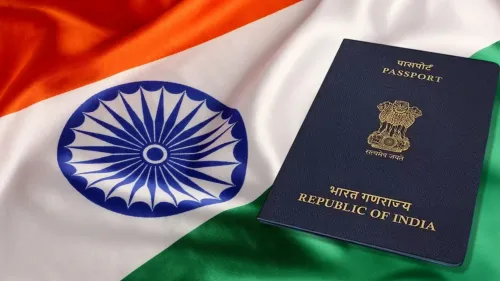
Chip-enabled e-Passports are being introduced to meet ICAO biometric standards and strengthen document security.
New PSKs and POPSKs are expanding geographic access to passport services, particularly in smaller towns.
The MEA's Passport Seva Project has completed 12 years of service delivery , marked by the hashtag #12YearsofSeva .
The ministry reaffirmed its vision of 'Surakshit Passport, Sugam Seva, Sashakt Nagrik' — secure passports, smooth service and empowered citizens.
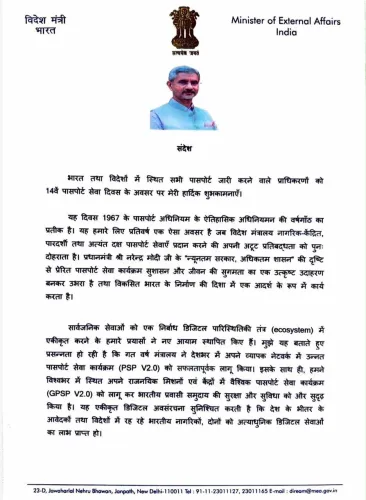
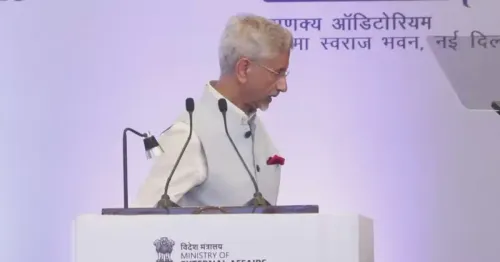
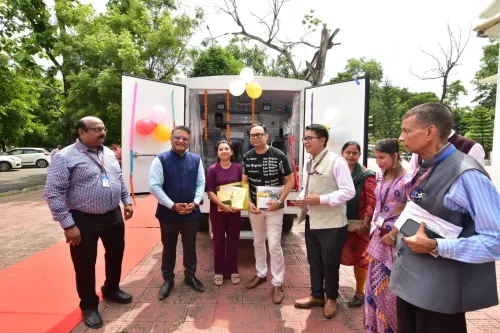
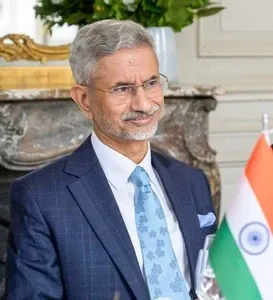
Union External Affairs Minister Dr. S. Jaishankar on Wednesday, 24 June 2026 greeted passport authorities across India and at missions abroad on the occasion of the 14th Passport Seva Divas, highlighting a series of upgrades to the country's passport services infrastructure under the banner of 'Surakshit Passport, Sugam Seva, Sashakt Nagrik' ('Secure Passport, Smooth Service, Empowered Citizen').
Context
In his post, Dr. Jaishankar pointed to four concurrent developments: the rollout of the Passport Seva Programme 2.0, the introduction of chip-enabled e-Passports, the opening of new Passport Seva Kendras (PSKs) and Post Office Passport Seva Kendras (POPSKs), and what he described as 'record levels of passport issuance.' He framed these as measures that are 'enhancing ease of travel, expanding access to global opportunities, and empowering citizens.'
The Ministry of External Affairs (MEA) has observed Passport Seva Divas annually to mark the anniversary of the Passport Seva Project, an e-governance initiative approved in 2008 that began replacing manual processing with a centralised digital system from 2010 onward. This year's observance marks 12 years of service delivery under that framework, as reflected in the hashtag #12YearsofSeva.
Policy Backdrop
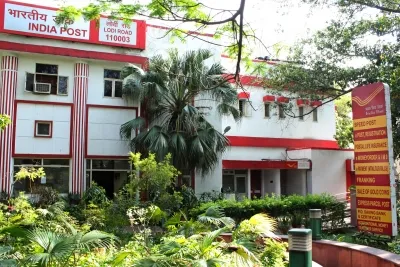
The Passport Seva Programme was conceived as a public-private partnership to digitise the entire passport application, processing and delivery chain. POPSKs, introduced from 2017 onward, extended the service network by co-locating passport application centres within post offices, reducing the need to build standalone infrastructure in smaller towns and semi-urban areas.
The move toward chip-enabled e-Passports aligns India with standards set by the International Civil Aviation Organisation (ICAO), which mandates biometric data storage on embedded chips for machine-readable travel documents. The upgrade is designed to strengthen document security and reduce the risk of forgery, bringing Indian passports in line with those issued by most major economies.
Passport Seva Programme 2.0 represents the next generation of this infrastructure, building on the original platform with enhanced digital capabilities and a broader network of service points. The emphasis on transparency and speed in Dr. Jaishankar's statement echoes the MEA's longstanding positioning of passport services as a direct measure of citizen-state trust.
Stakeholders and Impact
The primary beneficiaries of the expanded network are Indian citizens — particularly those in Tier-2 and Tier-3 cities and rural areas — who previously had to travel long distances to reach a PSK. The addition of POPSKs has been especially significant for first-time applicants and those in states with limited urban infrastructure.
Overseas Indians, including students, workers and members of the diaspora, benefit from the upgraded consular services at Indian missions abroad, which are also part of the Passport Seva network. Faster processing and chip-enabled documents reduce friction at international immigration counters, with direct implications for travel, work authorisation and identity verification abroad.
What's Next
The phased nationwide rollout of chip-enabled e-Passports remains the most closely watched element of the current phase, with citizens and policy observers awaiting MEA announcements on the timeline for universal availability. Further expansion of POPSK coverage — particularly in underserved districts — and any new features introduced under PSP 2.0 are expected to be detailed in subsequent ministerial communications and budget statements.
As demand for passports continues to grow alongside India's expanding middle class and diaspora, the MEA's commitment, reiterated by Dr. Jaishankar, to make services 'faster, more transparent and accessible' will be tested by the scale and pace of implementation in the months ahead.
Point of View
Dr. Jaishankar is positioning passport services as a convergence point between digital governance ambition and last-mile access — two pillars of the current administration's domestic narrative. The 'record issuance' framing, while unquantified, serves to reinforce the broader argument that rising demand is being met rather than backlogged. The restatement of the 'Surakshit Passport, Sugam Seva, Sashakt Nagrik' vision suggests the MEA intends this as a durable brand for consular reform, not a one-off anniversary message.
NationPress
24 Jun 2026
Frequently Asked Questions
What is Passport Seva Divas and why is it celebrated?
Passport Seva Divas is observed annually by India's Ministry of External Affairs to mark the anniversary of the Passport Seva Project, an e-governance initiative launched in 2010 to digitise passport application and processing. The 2026 observance marks the 14th edition and 12 years of service delivery under the programme.
What is the Passport Seva Programme 2.0?
Passport Seva Programme 2.0 is the next-generation upgrade of India's existing passport e-governance infrastructure, building on the original platform introduced in 2010 with enhanced digital capabilities and an expanded network of service points. Full details of its features are being announced in phases by the MEA.
What are chip-enabled e-Passports and when will they be available in India?
Chip-enabled e-Passports are biometric travel documents with an embedded electronic chip storing the holder's personal and biometric data, meeting ICAO international standards. India has begun their rollout, though a nationwide availability timeline is yet to be officially confirmed by the MEA.
What is the difference between a PSK and a POPSK?
A Passport Seva Kendra (PSK) is a dedicated passport application and processing centre, while a Post Office Passport Seva Kendra (POPSK) is a passport service point co-located within a post office, introduced from 2017 to expand coverage in smaller towns without building new standalone infrastructure.
How has passport issuance changed in India in recent years?
The MEA has described passport issuance as reaching record levels, driven by growing demand from India's expanding middle class and diaspora. The expansion of PSKs and POPSKs, along with digital processing upgrades, has been central to meeting this increased demand.