Jaishankar Marks 41st Anniversary of Air India 182 Bombing
Synopsis
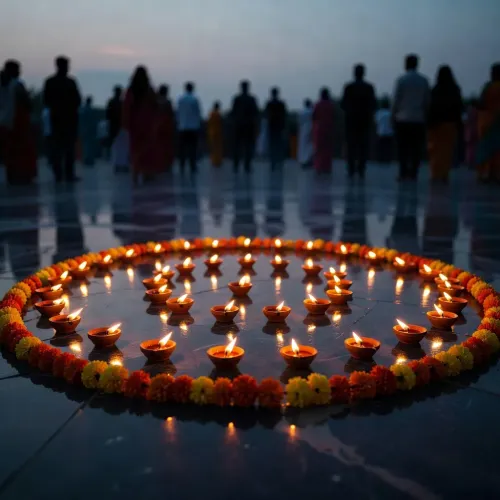
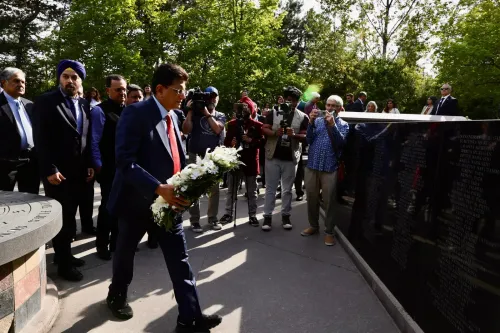
Union External Affairs Minister Dr. S. Jaishankar on 23 June 2026 marked the 41st anniversary of the Air India Flight 182 Kanishka bombing, paying tribute to 329 victims and reaffirming India's commitment to combating terrorism in all its forms.
Key Takeaways
23 June 2026 marks the 41st anniversary of the Air India Flight 182 'Kanishka' bombing.
All 329 people on board were killed in the 1985 attack, making it one of history's deadliest acts of aviation terrorism.
The bombing was carried out by Babbar Khalsa , a militant group linked to the Khalistan separatist movement .
The majority of victims were Canadian citizens of Indian origin , deeply affecting the Indo-Canadian diaspora .
Jaishankar reaffirmed India's commitment to combating terrorism 'in all its forms and manifestations.' Canada's Commission of Inquiry (final report 2010 ) identified intelligence failures and called for stronger counter-terrorism cooperation.
Union External Affairs Minister Dr. S. Jaishankar on Tuesday, 23 June 2026 paid tribute to the 329 victims of the Air India Flight 182 'Kanishka' bombing, marking the 41st anniversary of one of the deadliest acts of aviation terrorism in history, and reaffirmed India's commitment to fighting terrorism in all its forms.
Context
On 23 June 1985, Air India Flight 182, operating the Montreal–London–Delhi route, was destroyed mid-air by a bomb over the Atlantic Ocean off the coast of Ireland, killing all 329 people on board. The attack remains one of the deadliest terrorist strikes involving a civilian aircraft. The majority of those killed were Canadian citizens of Indian origin, making the tragedy a defining moment for the Indo-Canadian diaspora.
Dr. Jaishankar's post on X stated: 'Today, on the 41st anniversary of Air India 182 Kanishka bombing, we honour the memory of those who lost their precious lives in this horrific terror incident. Reaffirm our commitment to combating terrorism in all its forms and manifestations.'
Policy Backdrop
The bombing was carried out by Babbar Khalsa, a Sikh militant organisation operating as part of the Khalistan separatist movement. The attack prompted sustained Indian diplomatic efforts spanning decades, including extradition requests and calls for greater intelligence-sharing cooperation with Canada.
Canada's Commission of Inquiry into the bombing released its final report in 2010, identifying significant intelligence failures and recommending enhanced counter-terrorism cooperation between the two countries. India has consistently marked the anniversary to underscore its position that terrorism — including diaspora-based militancy — must be confronted without exception or distinction.
Annual commemorations have frequently occurred against a backdrop of periodic strains in India-Canada bilateral relations, particularly over extradition requests linked to the bombing and concerns about Khalistan-linked separatist activities on Canadian soil.
Stakeholders and Impact
The families of the 329 victims and the broader Indo-Canadian diaspora remain the most directly affected stakeholders, having pursued justice and accountability for over four decades. Community organisations in Canada hold annual memorial events, keeping the memory of the victims alive and continuing to press for full judicial accountability.
Dr. Jaishankar's statement, issued from New Delhi, carries diplomatic weight as it signals that India continues to treat the Kanishka bombing as a benchmark case in its counter-terrorism diplomacy — particularly in its engagement with Ottawa on issues of diaspora-based extremism and cross-border terrorist networks.
What's Next
Observers will watch for any follow-up statements or concrete measures emerging from the next India-Canada bilateral security dialogue, including updates on pending extradition cases with links to the 1985 bombing. India's consistent annual commemoration of the Kanishka tragedy reinforces its broader diplomatic posture: that counter-terrorism cooperation must be comprehensive, sustained, and free of political selectivity — a message directed as much at partner nations as at domestic audiences.
Point of View
' the statement echoes the standard formulation India deploys when pressing partner nations to act against Khalistan-linked networks without carving out political exceptions. The timing, always on 23 June, ensures that the bilateral pressure is refreshed publicly each year. As India-Canada relations navigate recurring friction over extradition and separatist activity, such commemorations serve as a consistent, low-decibel reminder of New Delhi's expectations from Ottawa.
NationPress
23 Jun 2026
Frequently Asked Questions
What was the Air India Flight 182 Kanishka bombing?
Air India Flight 182, known as 'Kanishka,' was destroyed by a bomb on 23 June 1985 while flying the Montreal–London–Delhi route over the Atlantic Ocean, killing all 329 people on board. It was one of the deadliest acts of aviation terrorism in history.
Who was responsible for the Air India 182 bombing?
The bombing was carried out by Babbar Khalsa, a Sikh militant organisation operating as part of the Khalistan separatist movement. The attack was intended to target the Indian government.
Why does India mark the Kanishka bombing anniversary every year?
India commemorates the anniversary annually to honour the 329 victims, maintain diplomatic pressure on Canada for full accountability, and reinforce its position that terrorism in all forms must be combated without distinction.
What did Jaishankar say on the 41st anniversary of the Kanishka bombing?
EAM Dr. S. Jaishankar posted on X that India honours the memory of those who lost their lives in the 'horrific terror incident' and reaffirms its commitment to combating terrorism in all its forms and manifestations.
What was Canada's Commission of Inquiry into the Air India bombing?
Canada's Commission of Inquiry into the Air India bombing released its final report in 2010, identifying major intelligence failures and recommending improved counter-terrorism cooperation between Canada and India.