Jaishankar Meets Lavrov, Raises Indian Seafarers' Safety
Synopsis
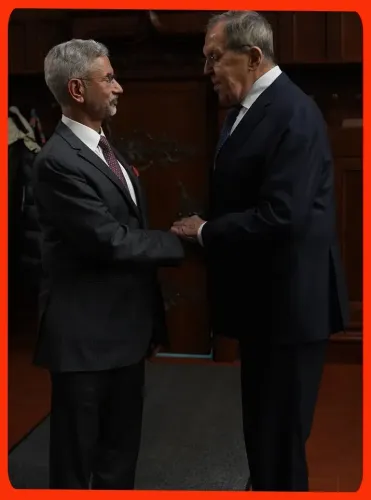
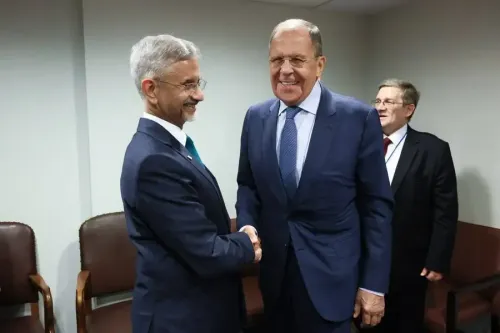
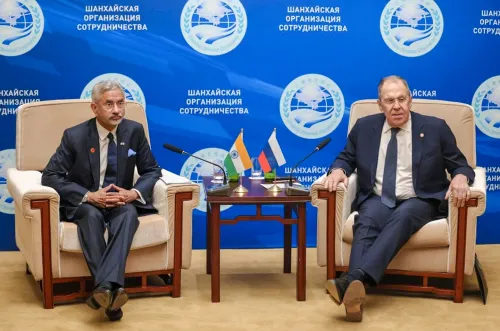
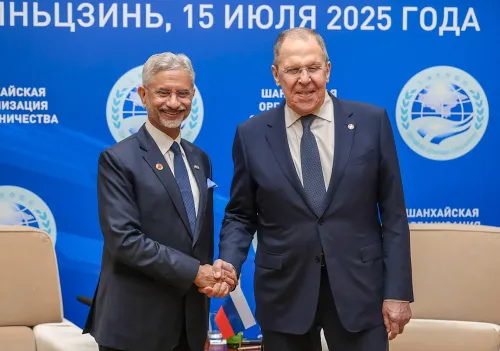
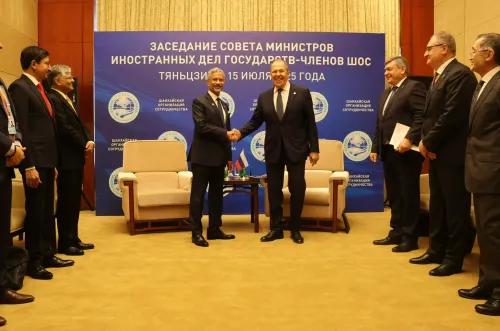
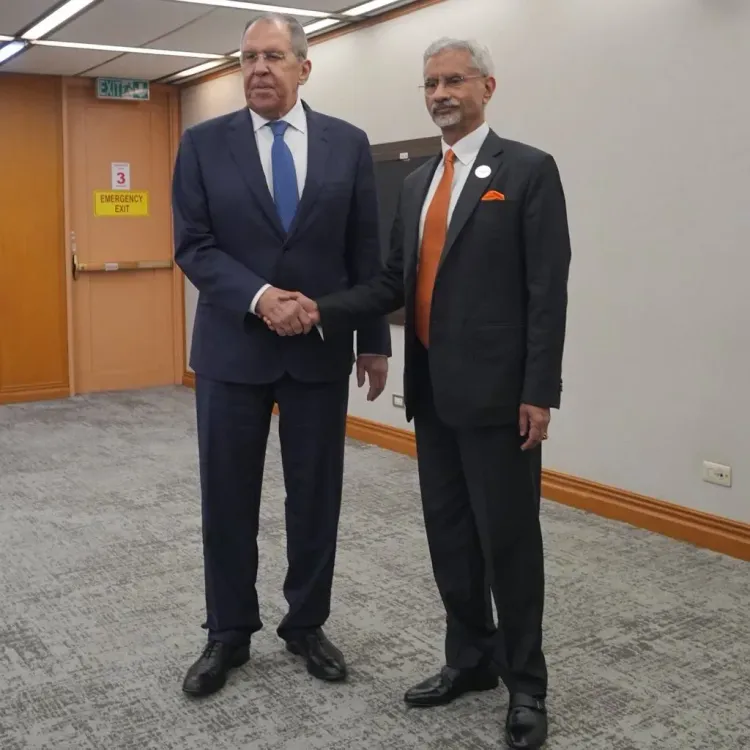
EAM Dr. S. Jaishankar met Russian FM Sergey Lavrov on 22 July 2026 for an in-depth bilateral review covering trade, energy, connectivity, science, and mobility. He reiterated strong concern over Indian seafarers' safety and exchanged views on the Ukraine conflict and Gulf tensions.
Key Takeaways
Jaishankar held a comprehensive bilateral review with Russian FM Sergey Lavrov on 22 July 2026 .
India formally reiterated 'strong concern' over the safety of Indian seafarers in the region directly to Moscow.
Talks covered trade and investment, energy and connectivity, science and technology, and mobility .
Both sides exchanged views on the Ukraine conflict and the Gulf situation , consistent with India's long-standing call for dialogue.
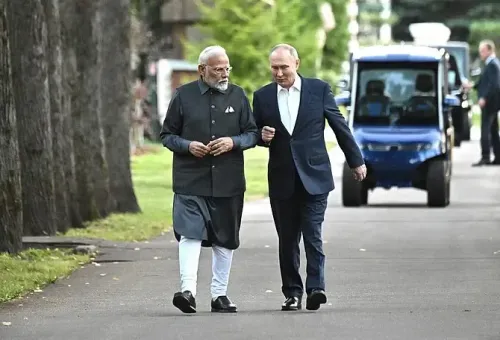
India and Russia share a Special and Privileged Strategic Partnership with annual summits since 2000 and a $5.4 billion S-400 defence deal signed in 2018 .
The meeting sets the stage for the next India-Russia Inter-Governmental Commission session to translate diplomatic signals into concrete outcomes.
Union External Affairs Minister Dr. S. Jaishankar held an in-depth review of India-Russia bilateral relations with Russian Foreign Minister Sergey Lavrov on Wednesday, 22 July 2026, covering trade, energy, connectivity, and pressing humanitarian concerns including the safety of Indian seafarers in the region.
Context
In a post on X, Dr. Jaishankar said the two ministers 'reiterated our strong concern regarding the safety of Indian seafarers in the region' — a pointed signal that New Delhi is pressing Moscow directly on a matter affecting Indian nationals. The meeting also saw an exchange of views on the Ukraine conflict and the Gulf situation, two theatres where India has consistently advocated dialogue and de-escalation.
The agenda spanned 'trade and investment, energy and connectivity, science and technology, and mobility,' indicating a comprehensive stocktaking of one of India's most layered strategic relationships.
Policy Backdrop
India and Russia share a Special and Privileged Strategic Partnership formalised in 2010, with annual summits dating back to 2000 covering defence, nuclear energy, and trade. The relationship deepened significantly on the energy front after Russia's 2022 invasion of Ukraine, when India scaled up purchases of discounted Russian crude oil, helping cushion the country's import bill against global price spikes.
India signed a $5.4 billion deal for Russian S-400 air defence systems in 2018, and cooperation in space and science has remained a durable pillar across successive governments. Even as New Delhi has deepened engagement with the United States, Japan and Australia through the Quad framework, it has maintained robust ties with Moscow — a balancing act that defines India's strategic autonomy doctrine.
On Ukraine, India has called for dialogue and a negotiated settlement while abstaining on several UN votes, reiterating support for the territorial integrity of all states. The same principle of dialogue underpins India's stated position on tensions in the Gulf.
Stakeholders and Impact
The explicit mention of Indian seafarers places a human-rights and consular dimension at the centre of what might otherwise be read as a routine diplomatic meeting. Indian maritime workers operating in conflict-adjacent waters face acute risks, and raising the issue directly with Foreign Minister Lavrov signals that New Delhi is using every high-level channel available to secure their safety.
Energy importers and Indian industry also have a direct stake in the trajectory of India-Russia trade. Sustained dialogue on connectivity and mobility — including potential corridors such as the International North-South Transport Corridor — carries long-term implications for supply-chain resilience and reduced logistics costs for Indian exporters.
What's Next
Attention will now turn to the next annual India-Russia summit and the forthcoming session of the India-Russia Inter-Governmental Commission on Trade, Economic, Scientific, Technological and Cultural Cooperation, where the outcomes of today's ministerial-level discussion are expected to be translated into actionable deliverables. The resolution of the seafarers' situation and any movement on the Ukraine and Gulf fronts will be closely watched as indicators of diplomatic progress.
Frequently Asked Questions
Why did Jaishankar meet Lavrov in July 2026?
Dr. Jaishankar met Russian FM Sergey Lavrov on 22 July 2026 for an in-depth review of India-Russia bilateral relations, covering trade, energy, connectivity, science, technology, mobility, and exchanging views on the Ukraine conflict and Gulf situation.
What did Jaishankar say about Indian seafarers with Russia?
Jaishankar reiterated India's 'strong concern' regarding the safety of Indian seafarers in the region directly to Foreign Minister Lavrov, signalling that New Delhi is pressing Moscow on this consular and humanitarian issue at the highest diplomatic level.
What is the India-Russia Special and Privileged Strategic Partnership?
The India-Russia Special and Privileged Strategic Partnership was formalised in 2010 and is underpinned by annual summits held since 2000, covering defence, nuclear energy, space cooperation, and trade.
How has India's relationship with Russia changed after the 2022 Ukraine invasion?
After Russia's 2022 invasion of Ukraine, India significantly increased purchases of discounted Russian crude oil to stabilise its energy import bill, while continuing to call for a negotiated settlement and abstaining on several UN votes on the conflict.
What is India's position on the Ukraine conflict?
India has consistently called for dialogue and a negotiated settlement on the Ukraine conflict, reiterating support for the territorial integrity of all states, while maintaining its policy of strategic autonomy and engaging both Russia and Western partners.