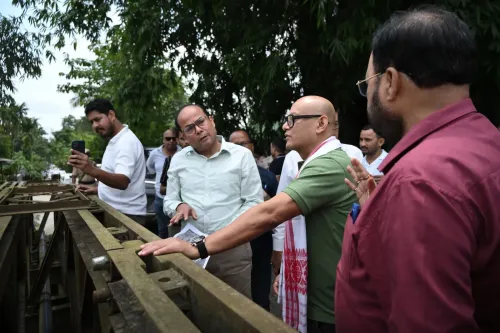
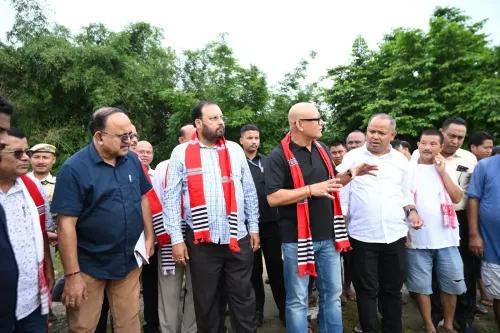
CM Himanta Flags Assam Flood Damage, Vows Rehabilitation
Synopsis
Assam Chief Minister Himanta Biswa Sarma on 22 July 2026 posted images of extensive flood damage and assured affected families of full state government support through rehabilitation and livelihood rebuilding, as the Brahmaputra valley faces peak monsoon inundation.
Key Takeaways
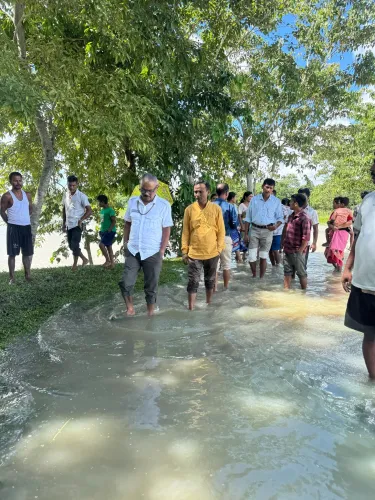
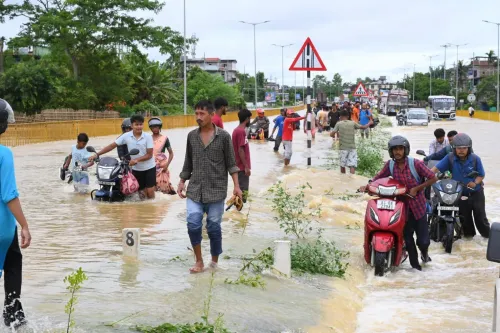
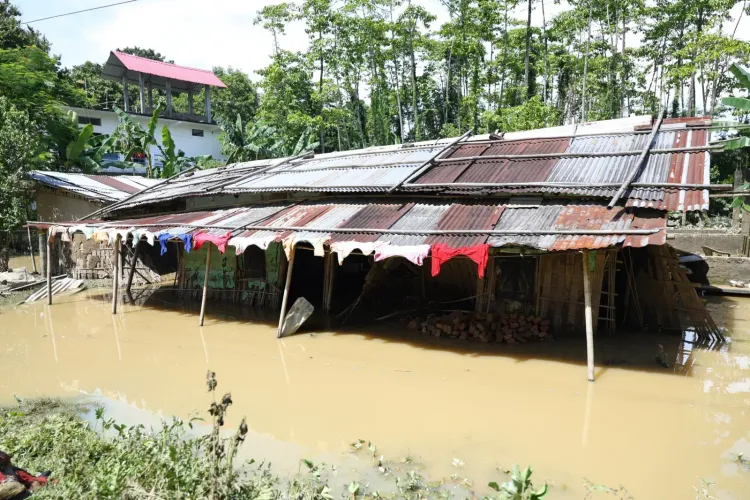
CM Himanta Biswa Sarma posted four images of Assam flood damage on 22 July 2026 , highlighting the scale of devastation.
He personally assured affected families that the state government will support them 'in every step of rehabilitation and rebuilding of livelihoods.' Assam draws on the State Disaster Response Fund (SDRF) and NDRF deployments for annual monsoon flood relief under the Disaster Management Act, 2005 .
The Brahmaputra Board , set up in 1980 , oversees long-term flood control, but seasonal displacement of communities remains a recurring challenge.
The next key steps include formal central assistance requests and state budget allocations for disaster management in the coming months.
Assam Chief Minister Himanta Biswa Sarma on Wednesday, 22 July 2026, shared photographs of widespread flood damage across the state and pledged that his government would stand by affected families through every stage of rehabilitation and livelihood rebuilding.
Context
Posting four images of flood-ravaged areas, CM Sarma wrote that he had personally assured affected families: 'they are not alone in this crisis.' He added that the state government is committed to supporting them 'in every step of rehabilitation and rebuilding of livelihoods.' The post comes during the peak monsoon season, when the Brahmaputra and its tributaries routinely breach embankments across Assam.
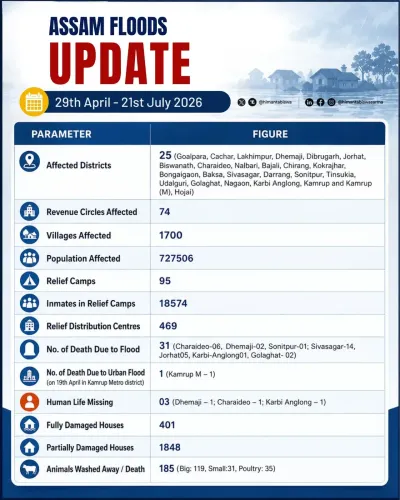
The 2026 Assam floods have caused extensive damage to homes, crops, and infrastructure, as visible in the images shared by the Chief Minister. The visuals underscored the scale of inundation affecting communities across the Brahmaputra valley.
Policy Backdrop
Assam has grappled with severe annual flooding since well before independence, but the institutional framework for relief was formalised under the Disaster Management Act, 2005. Since then, successive state governments have drawn on the State Disaster Response Fund (SDRF) — a central scheme — and deployed the National Disaster Response Force (NDRF) for immediate rescue and relief operations.
The Brahmaputra Board, established in 1980, was mandated to coordinate long-term flood control and anti-erosion measures across the valley. Despite decades of embankment construction and periodic dredging, the region continues to face annual displacement of large populations and destruction of agricultural livelihoods. The BJP-led government under CM Sarma, in office since 2021, has continued this pattern of combining immediate public assurances with medium-term infrastructure commitments during peak flood periods.
Stakeholders and Impact
The most directly affected are flood-hit families across low-lying districts of Assam, particularly farming communities whose standing crops and livestock are vulnerable to prolonged inundation. Agricultural communities in the Brahmaputra floodplain face loss of seasonal income on top of structural damage to homes and access roads.
The Chief Minister's public communication serves a dual purpose: signalling administrative responsiveness to constituents and building a record of government engagement ahead of formal relief disbursements. Rehabilitation packages typically include compensation for crop loss, house damage, and support for restoring small livelihoods — all channelled through district administrations drawing from the SDRF.
What's Next
Attention will now turn to the quantum of SDRF funds the Assam government formally requisitions from the Centre, the pace of NDRF deployment, and the state's own budget allocations for disaster management in the coming months. Requests for additional central assistance beyond the standard SDRF tranche — through a joint central team assessment — are a routine but politically significant step that typically follows major flood seasons.
The broader question for Assam remains structural: whether investments in embankment reinforcement, early-warning systems, and Brahmaputra basin management will reduce the cycle of annual displacement and the recurring burden on state finances and affected communities.
Point of View
Not merely an emergency response. For a BJP leader who also convenes the North-East Democratic Alliance, visible crisis management in Assam carries both state-level and regional political weight. The deeper structural challenge — reducing Assam's chronic flood vulnerability through sustained Brahmaputra basin investment — remains the metric by which successive administrations are ultimately judged.
NationPress
22 Jul 2026
Frequently Asked Questions
How bad are the Assam floods in 2026?
The 2026 Assam floods have caused extensive damage to homes, crops, and infrastructure across the Brahmaputra valley, as documented in images shared by Chief Minister Himanta Biswa Sarma on 22 July 2026. Specific casualty and displacement figures are being assessed by state authorities.
What relief is the Assam government providing to flood victims?
CM Himanta Biswa Sarma has pledged government support at every stage of rehabilitation and livelihood rebuilding. The state typically disburses aid through the State Disaster Response Fund (SDRF) and deploys NDRF teams for rescue operations.
Why does Assam flood every year?
Assam floods annually because the Brahmaputra river and its tributaries swell during the monsoon season, regularly breaching embankments across the floodplain. The river's high sediment load and the region's geography make large-scale inundation a near-annual occurrence.
What is the State Disaster Response Fund (SDRF)?
The State Disaster Response Fund is a centrally supported scheme that provides state governments with resources for immediate disaster relief and rehabilitation, including compensation for crop loss and house damage during floods. Assam has drawn on it annually since the Disaster Management Act, 2005.
What is the Brahmaputra Board and what does it do?
The Brahmaputra Board was established in 1980 to coordinate flood control, anti-erosion measures, and water resource management across the Brahmaputra valley. It works with state governments on long-term embankment and dredging projects aimed at reducing flood damage.